Located at the University of California, Davis, The Green at West Village is set to house nearly 3,300 students. The development includes nine four-story buildings, community space, and recreational fields.


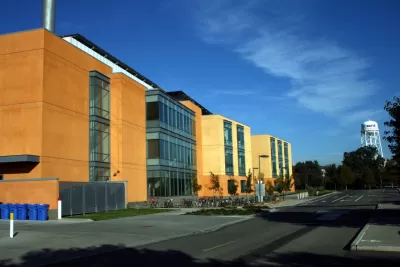
Ground has been broken on a large-scale housing project meant to house close to 3,300 students, The Green at West Village at UC Davis. Costing $575 million, the project covers 34 acres and includes nine four-story residence buildings and a 10,000 square-foot community building, along with recreational fields.
According to coverage from The Mercury News, "work on the site began in December 2018, and the first 1,000 beds are expected to be available for fall 2020. The project is the largest student-housing construction project in the U.S." The project is aiming for 100 percent zero net energy use.
The Green at West Village is only one part of the university's "new Long Range Development Plan, which projects adding 9,050 beds for students and housing 100 percent of any growth in student enrollment on campus."
Originally, the university's plans called for 1,875 beds. But UC Davis and its partners, including The Michaels Organization and Stantec, "worked to develop a plan that provides reduced space for student vehicles and more living space, allowing for more residential units."
FULL STORY: UC Davis breaks ground on largest student housing project in US


How College Campuses Fulfill an Urbanist Dream
Most college campuses in the United States are inherently walkable, mixing various uses with diverse housing options and transit networks.

Foreign Firm Wants to Bring Privately Run Student Housing to Boston
The British firm Scape says it wants to spend $1 billion to build privately operated student housing in Boston. Unaffiliated with any one school, the concept is already popular in London.
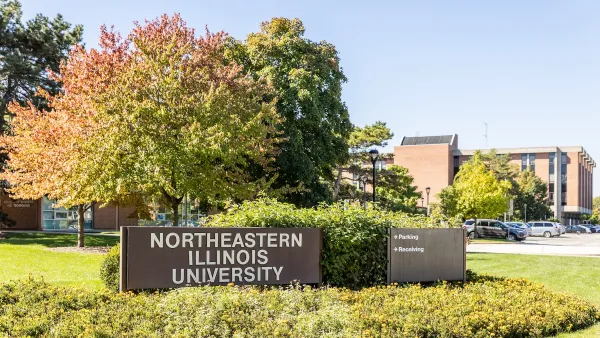
This university-owned city block in Chicago has languished for over a decade. Neighbors say it's time to let go
The university never built its planned student housing, letting a row of storefronts sit vacant for years.

The state-sanctioned urbicide of Austin
People don’t kill cities. Freeways do.

US to reduce Colorado River water deliveries to Mexico
A new Colorado Treaty amendment reduces Mexico’s Colorado River water allocation by 250,000 acre feet.

New Jersey’s second-largest city bans standalone data centers
Jersey City will continue to allow co-location facilities, such as those meant for research institutions that store their own data.

Amtrak not solely to blame for New Jersey commuter rail's unreliability, report finds
A new study from the Garden State Initiative found that NJ Transit’s budget grew 20% across a 4 year period, but reliability declined significantly over the same period.

EPA erases limits on planet-warming pollution from power plants
Under Monday’s plan, power plants would still have some limits on how much mercury, arsenic and other contaminants they can emit.

Phoenix announces new on-demand transit service, more frequent RAPID buses
Both new services will launch in October, and are part of Phoenix's Project Effective Access Solutions for Easing Congestion.

FREE Course: Walkable City 1: Why Walkability?
After describing his path towards focusing on walkability as the essence of good planning, Jeff Speck marches through his five principal reasons for making more walkable places.
Reinventing Malls: Planning Alchemy—Turning Gray Fields Into Gold
The course focuses on the opportunities and imperatives that shape reinvention of mall sites.

Eagle County Government
Harvard University Graduate School of Design
Nashville Planning Department
The Architects Foundation
University of Cincinnati Online
The Pocatello Development Authority
The Urban Renewal Agency of the City of Pocatello
Journal of the American Planning Association