Federal officials have given TxDOT the go-ahead to resume work on a small portion of a controversial interstate widening project in downtown Houston.


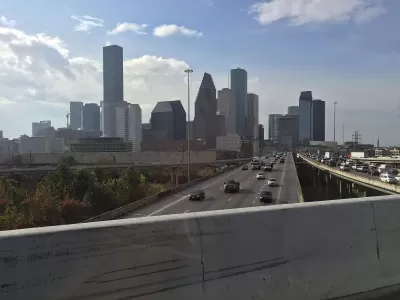
A controversial freeway widening project in Houston is taking a step forward after federal officials halted work on the project when Harris County sued the state, citing concerns about environmental impacts and displacement. As Dug Begley writes, "Giving the go-ahead to two parts of the $10 billion-plus project — work along Interstate 69 and at Texas 288 to rebuild where the three freeways converge near Third Ward — staves off the possibility of state officials removing all of the project’s funding from Texas’ 10-year highway plan and provides a glimmer of hope that officials locally, in Austin and Washington can find some common ground."
But the I-45 expansion has faced fierce opposition from local officials, residents, and community groups who argue that the project, which would cut through historic Black neighborhoods and destroy hundreds of homes and businesses, would once again perpetuate the structures of inequity and injustice wrought by the Interstate Highway System, which has led to the decline of countless neighborhoods across the country. A letter from Stop TxDOT I-45, Air Alliance Houston, and 14 other advocacy groups calls on Transportation Secretary Pete Buttigieg to oppose the project, saying "Highway construction and expansion interrupt lives, displace people from their homes and businesses, and decimate generational wealth, especially in communities of color." According to Jeff Speck, the expansion also comes with high financial costs: by destroying the homes of roughly 5,000 people and more than 300 businesses, Houston would lose around $135 million in annual property and sales taxes.
Meanwhile, the FHWA will allow TxDOT to "proceed with 'detailed design work' of the southernmost stretches of the project," but state, local, and federal agencies will continue discussions to address the thornier issues of displacement and environmental impact.
FULL STORY: Feds, TxDOT agree to restart on pieces of I-45 project, but deal is a long way from resolving issues

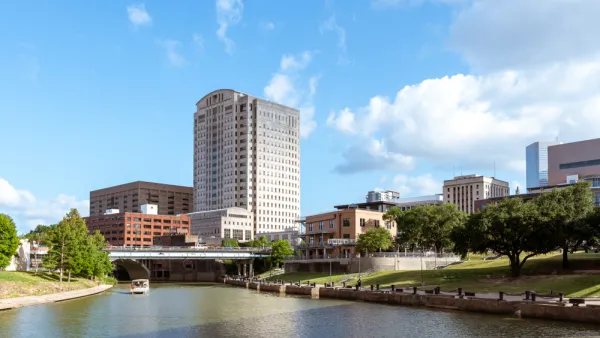
Proposed Park Yet Another Hurdle for Houston Interstate Expansion
The Interstate 45 widening project, halted by a federal order and opposed by many local officials and organizations, could hit a new snag if White Oak Bayou becomes a city park.
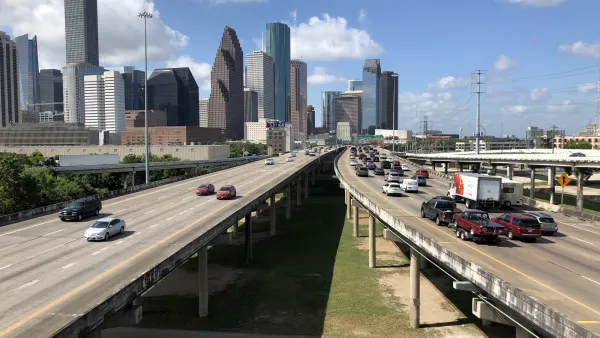
TxDOT Faces Lawsuit from Harris County Over I-45 Plan
The lawsuit over the controversial I-45 project, which has been plagued by local opposition, calls for a new environmental review.
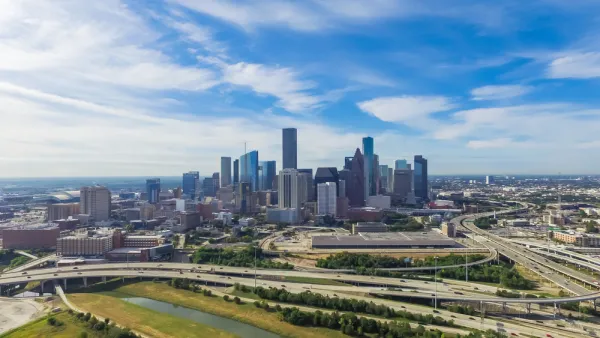
Details for Houston Interstate Project Remain Hazy
With the project still under federal investigation, local and state agencies say they are moving forward with the development of design details for the contentious freeway redesign.

The state-sanctioned urbicide of Austin
People don’t kill cities. Freeways do.

US to reduce Colorado River water deliveries to Mexico
A new Colorado Treaty amendment reduces Mexico’s Colorado River water allocation by 250,000 acre feet.

New Jersey’s second-largest city bans standalone data centers
Jersey City will continue to allow co-location facilities, such as those meant for research institutions that store their own data.

Amtrak not solely to blame for New Jersey commuter rail's unreliability, report finds
A new study from the Garden State Initiative found that NJ Transit’s budget grew 20% across a 4 year period, but reliability declined significantly over the same period.

EPA erases limits on planet-warming pollution from power plants
Under Monday’s plan, power plants would still have some limits on how much mercury, arsenic and other contaminants they can emit.

Phoenix announces new on-demand transit service, more frequent RAPID buses
Both new services will launch in October, and are part of Phoenix's Project Effective Access Solutions for Easing Congestion.

FREE Course: Walkable City 1: Why Walkability?
After describing his path towards focusing on walkability as the essence of good planning, Jeff Speck marches through his five principal reasons for making more walkable places.
Reinventing Malls: Planning Alchemy—Turning Gray Fields Into Gold
The course focuses on the opportunities and imperatives that shape reinvention of mall sites.


Eagle County Government
Harvard University Graduate School of Design
Nashville Planning Department
The Architects Foundation
University of Cincinnati Online
The Pocatello Development Authority
The Urban Renewal Agency of the City of Pocatello
Journal of the American Planning Association