Absurd as it may sound, minor children are sometimes named in eviction filings. If a child’s name makes in onto official court records—especially if those records are public and online—the damage can be irreversible.


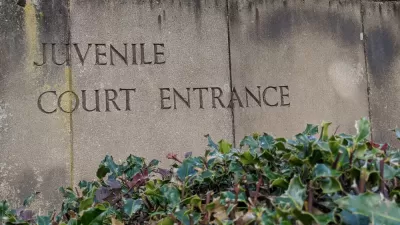
*Linda’s children were too young to write their own names when they were entered as defendants into a New York state housing court computer. Both kids, now 3 and 7, are identified as legal parties in a pending eviction case against their mother.
Absurd as that may sound, it’s not a fluke. Minor children are sometimes named in eviction filings. When it happens, the damage is acute and difficult to repair even if it’s caught quickly. If a child’s name makes in onto official court records, especially if those records are public and online, the damage can be irreversible.
Almost a year ago, Linda’s landlord banged on her apartment door and quizzed her then-6-year-old, asking the child to spell both kids’ names. The landlord showed up unannounced while Linda was in the bathroom, and her older child opened the door before Linda could intervene.
“I was so upset and disturbed and angry,” she says. “This is an adult situation, why are the children involved? When I spoke with the landlord, he said his lawyer told him that to evict everyone from the premises, everyone’s name should be listed on the eviction notice.”
Attorneys familiar with the issue say kids are sometimes named in evictions to intentionally harass or intimidate tenants, though usually the landlords (or their attorneys) misunderstand the laws and/or have little regard for the long-term consequences evictions inflict on children and families.
In New York, children are being named in eviction fillings more often recently as an unintended consequence of the state’s Housing Security and Tenant Protection Act of 2019. A provision in the law uses language that can be misinterpreted to mean ...
Read the full story: Minor Defendants: Kids Are Being Named in Evictions

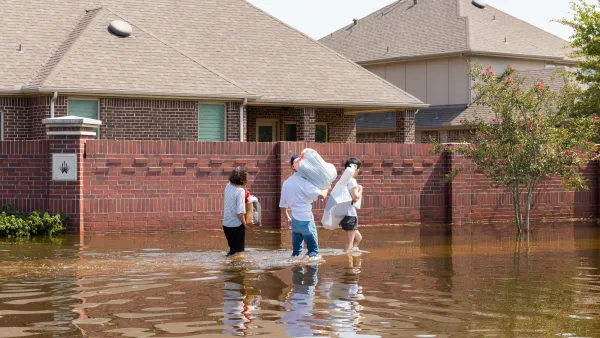
Study: 'Sudden shocks' are driving up homelessness rates
Evictions and climate disasters are leading causes of sharp spikes in unhoused populations.

Texas Bills Could Push More People Into Homelessness
A proposal to speed up the eviction process and a bill that would accelerate enforcement of an existing camping ban could make the state’s homelessness crisis worse, advocates say.

Idaho Data: Unexpected Vehicle Repairs Exacerbate Housing Instability, Eviction Risk
Over 21 percent of clients struggle with transportation barriers.

Planetizen Federal Action Tracker
A weekly monitor of how Trump’s orders and actions are impacting planners and planning in America.

The state-sanctioned urbicide of Austin
People don’t kill cities. Freeways do.

US to reduce Colorado River water deliveries to Mexico
A new Colorado Treaty amendment reduces Mexico’s Colorado River water allocation by 250,000 acre feet.

Nation's most wind-powered state turns to coal as data centers increase energy demand
For the first time in decades, Iowa has increased its generation of coal power.

NYC cools commuters with city's first rain garden above a bus stop
New York City officials say the plants in the rain garden can absorb 16 gallons of rainwater during heavy storms.

Brightline West’s future may rely on $6 billion federal loan
The company has until Nov. 2 to make a $400 million equity investment into its proposed high-speed rail line.

FREE Course: Walkable City 1: Why Walkability?
After describing his path towards focusing on walkability as the essence of good planning, Jeff Speck marches through his five principal reasons for making more walkable places.
Reinventing Malls: Planning Alchemy—Turning Gray Fields Into Gold
The course focuses on the opportunities and imperatives that shape reinvention of mall sites.

Greater Baltimore Committee
Eagle County Government
Harvard University Graduate School of Design
The Architects Foundation
University of Cincinnati Online
The Pocatello Development Authority
The Urban Renewal Agency of the City of Pocatello
Journal of the American Planning Association