TxDOT is pushing ahead with plans for a massive freeway expansion project through downtown Austin despite opposition from virtually all local leaders.


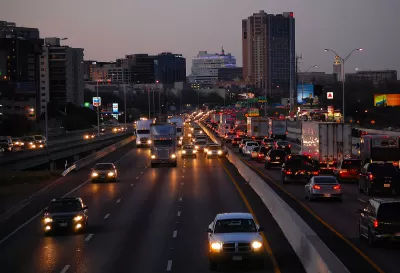
Despite Austin Mayor Steve Adler's acknowledgement that "major transportation investments in our past have done more to deepen inequality, to segregate rather than connect, to displace rather than benefit" and the city's commitment to "a $7.1 billion grid of light rail trains and bus rapid transit," Henry Grabar reports that the Texas Department of Transportation (TxDOT) is pushing ahead with plans to "expand eight miles of I-35 through downtown to a whopping 20 lanes wide," a plan opposed by almost all city leaders.
"Like in Houston, which has won temporary reprieve from a similar project, Austin’s local politicians are almost uniformly displeased with the plans from the Texas Department of Transportation, or TxDOT." But, lacking an interstate ring road, Austin faces an additional challenge. I-35 "runs from Laredo, Texas, to Duluth, Minnesota" and "TxDOT is focused on keeping that traffic moving, as well as serving fast-growing exurbs north and south of the city." The department argues that without the expansion, "[b]y 2035, the 19-mile commute from downtown Austin to Round Rock will take two-and-a-half hours."
Anti-highway advocates disagree, pointing to the well-documented phenomenon of induced demand, saying that "new patterns of development and transportation would take shape long before traffic reached that level of congestion." Transportation planners often "rely on population forecasts that assume the highway has been widened," often missing the mark on their projections for highway expansion projects. On one segment of State Highway 130, which TxDOT expanded in 2003, "traffic counts on the I-35 alternate were so low that the toll road operator filed for bankruptcy in 2016."
In a letter signed by Austin's mayor and almost every city council member, the city requested several changes, including a more narrow right-of-way, more crossings and highway decks, and a delay of the project until planned transit lines are completed.
FULL STORY: The 20-Lane Highway Texas Wants to Force Through Austin

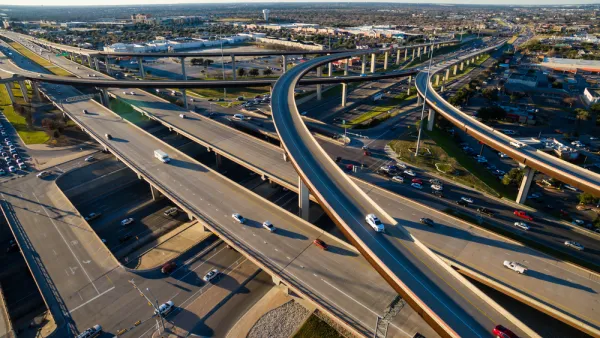
Austin Interstate Expansion Plan Draws Opposition
A proposal to widen I-35 has drawn criticism from community members who want to see the city shift away from car-centric development.
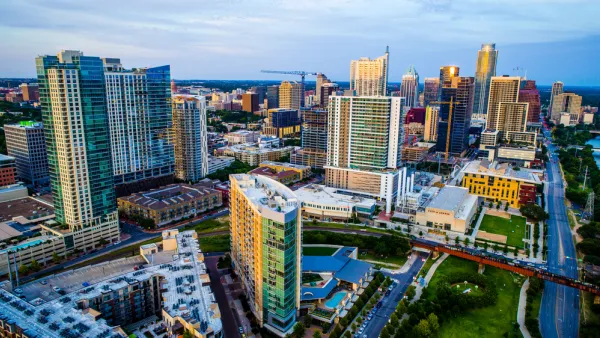
Austin City Council Urges TxDOT to Reconsider I-35 Expansion
In a letter to the department, the city called for an increased focus on shifting demand away from single-occupancy vehicles and boosting other forms of transportation.
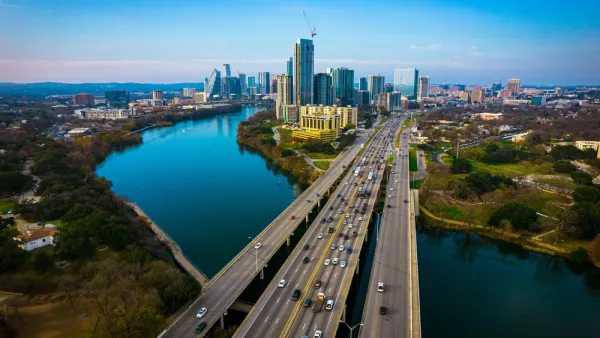
Highway Expansion Moves Forward in Austin Despite Local Opposition
The Texas Department of Transportation plans to build an elevated freeway segment as part of its plan to widen Interstate 35 through central Texas.

Planetizen Federal Action Tracker
A weekly monitor of how Trump’s orders and actions are impacting planners and planning in America.

The state-sanctioned urbicide of Austin
People don’t kill cities. Freeways do.

US to reduce Colorado River water deliveries to Mexico
A new Colorado Treaty amendment reduces Mexico’s Colorado River water allocation by 250,000 acre feet.

Mamdani overhauls NYC's Vision Zero plan with 100 new policy goals
The overhaul aims to reduce traffic deaths and make streets safer for pedestrians, cyclists and drivers through lower speed limits, new safety infrastructure and more.

Amtrak not solely to blame for New Jersey commuter rail's unreliability, report finds
A new study from the Garden State Initiative found that NJ Transit’s budget grew 20% across a 4 year period, but reliability declined significantly over the same period.

EPA erases limits on planet-warming pollution from power plants
Under Monday’s plan, power plants would still have some limits on how much mercury, arsenic and other contaminants they can emit.

FREE Course: Walkable City 1: Why Walkability?
After describing his path towards focusing on walkability as the essence of good planning, Jeff Speck marches through his five principal reasons for making more walkable places.
Reinventing Malls: Planning Alchemy—Turning Gray Fields Into Gold
The course focuses on the opportunities and imperatives that shape reinvention of mall sites.


Eagle County Government
Harvard University Graduate School of Design
Nashville Planning Department
The Architects Foundation
University of Cincinnati Online
The Pocatello Development Authority
The Urban Renewal Agency of the City of Pocatello
Journal of the American Planning Association