With the governor stepping down, the state's transit agencies have an opportunity to reevaluate controversial projects and shift their priorities.


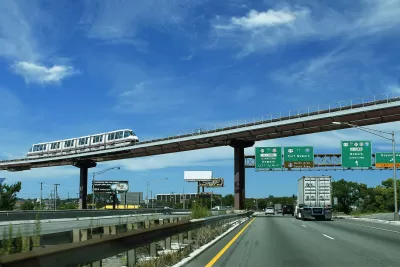
As Governor Cuomo steps down from his post amid scandal, writes Alissa Walker, the state gets 'a reprieve' from transportation policies that, according to a letter from Port Authority staffers, were made through "non-transparent, politically motivated decisions, including decisions that squander the trust and money of our bondholders, customers, and the general public." The letter also called for halting the controversial AirTrain project, championed by Cuomo.
According to Stephen Nessen, "[a]s governor, Cuomo has lorded over transportation projects for better and worse, and has called the shots from Albany on many matters that affect the daily commute in the New York City region. Most prominently, he controls the MTA by recommending the majority of its 21 board members, and approving all of them." Walker argues this holds true for other proposals that withered on the governor's desk, including congestion pricing, which could raise as much as one billion dollars a year for public, and "the Fast Forward proposal for the MTA, an ambitious, necessary, achievable vision proposed by New York City Transit head Andy Byford to make the subway system more efficient and accessible and then derailed by the governor’s ego."
As federal funds from the Infrastructure Investment and Jobs Act starts to flow into the state, Walker writes, "[t]he big question for Kathy Hochul — who will become the state’s first woman governor in two weeks — is whether she can dismantle the gubernatorial institutions that wreaked havoc on the state’s transportation systems."
Read the full story: We Just Got a Reprieve From Cuomo’s Worst Transit Ideas
Critiquing Gov. Cuomo's LaGuardia Airtrain Proposal
LaGuardia lacks an AirTrain, unlike the two other airports that serve the New York City area, so public transit access is available via Queens and Manhattan buses. But would a $450 million proposal by New York Gov. Andrew Cuomo remedy the problem?
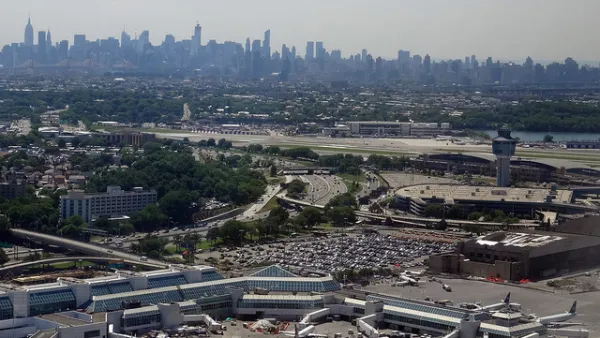
La Guardia AirTrain Plan Moves Forward, Circuitous Route and All
Not everyone thinks the governor’s expensive plan to improve access to the beleaguered airport will actually improve access.
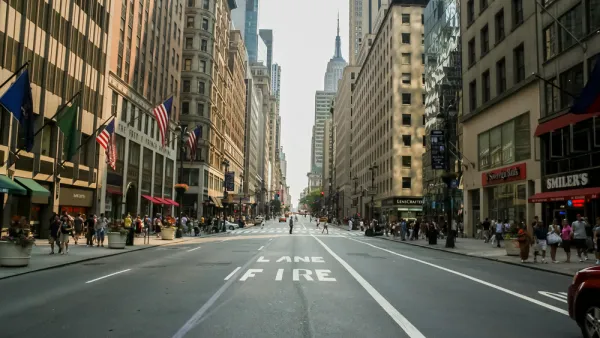
Done Deal: Manhattan Congestion Pricing
Finally, congestion pricing, as applied to city cordons, not highways, will be coming to the U.S., thanks to a budget deal approved by the New York State Legislature early Sunday morning. Tolls below 60th Street should begin by Jan. 1, 2021.

Planetizen Federal Action Tracker
A weekly monitor of how Trump’s orders and actions are impacting planners and planning in America.

California plans to bury El Niño’s downpour
If the state plays its cards right, it may be able to store a billion acre-feet of El Niño’s water in aquifers.

Desperate measures: Advocates weigh draining Lake Powell to fill Colorado River
Draining the reservoir could reduce evaporation losses by a couple hundred thousand acre-feet.

US buildings threatened, destroyed by fires set to triple by 2060
Researchers found a high fire risk for socioeconomically vulnerable neighborhoods in the American West.

LA residents may be allowed to paint their own crosswalks
Councilwoman Katy Yaroslavsky put out a motion instructing the Los Angeles Department of Public Transportation to study the feasibility of allowing volunteers to paint crosswalks.

Dallas moves to overhaul its zoning code
The city's zoning reform will allow more multi-family and mixed-use developments.

FREE Course: Walkable City 1: Why Walkability?
After describing his path towards focusing on walkability as the essence of good planning, Jeff Speck marches through his five principal reasons for making more walkable places.
Reinventing Malls: Planning Alchemy—Turning Gray Fields Into Gold
The course focuses on the opportunities and imperatives that shape reinvention of mall sites.

City of Rosemead
Rutgers University, Edward J. Bloustein School of Planning and Public Policy
One Hundred Miles
Hunter College, City University of New York (CUNY)
The Architects Foundation
University of Cincinnati Online
City of Cambridge
Montrose County
The Pocatello Development Authority