A study, a debate, and an awards show—all included in the wild west politics of parking in the Big Apple.


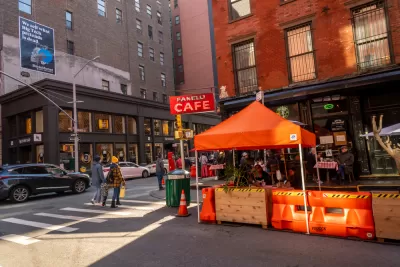
Writing for the New York Post, David Meyer and Kevin Sheehan report city data that tags the number of parking spaces transformed from car storage to outdoor dining in New York City at 8,550. That number of parking spots is the result of 11,500 restaurants making use of the outdoor dining program implemented as an emergency effort to help restaurants and other retail businesses stay open during the pandemic.
The testimonials from restaurant owners included in the article offer a mixed bag—alternatively glowing or critical. The debate about the longevity of New York City's outdoor programing has been going on for months, as lockdown spurred many New Yorkers to buy cars for the first time. (Controversy over the same issues has been conspicuously absent in many other U.S. cities.) In addition to the debate reported by Meyer and Sheehan, Erika Adams shared some of the debate that followed the New York Post report.
While the debate rages on, a coalition of nonprofit planning organizations in the city announced the first ever Alfresco Awards, which will announce winners in July, according to a paywalled article in the Wall Street Journal. The application portal for the awards opened on May 26.
The awards are kicking off the larger Alfresco NYC initiative, led by the Design Trust for Public Space, the Regional Plan Association (RPA), and the Tri-State Transportation Campaign. Alfresco NYC "aims to develop design guidelines around outdoor structures, ensure they are achievable for small businesses and communities hit hard by the pandemic across the five boroughs, and to support and celebrate the diverse culinary scene across our city," according to a May 26 press release.
FULL STORY: NYC gave up 8,550 parking spots for al fresco dining amid COVID

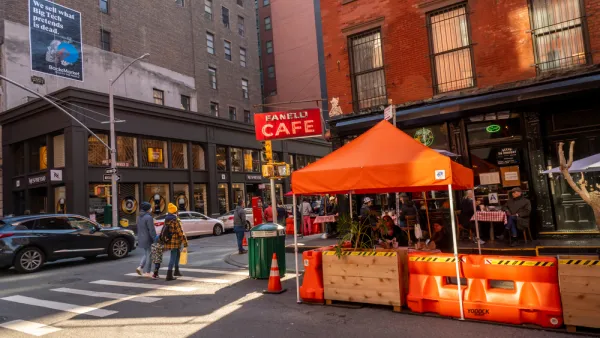
Opinion: Keep Outdoor Dining Without Thwarting Creativity
While New York City's effort to make its outdoor dining program permanent is a welcome reimagining of public space, some worry that regulations will reduce design diversity and increase costs for small restauranteurs.
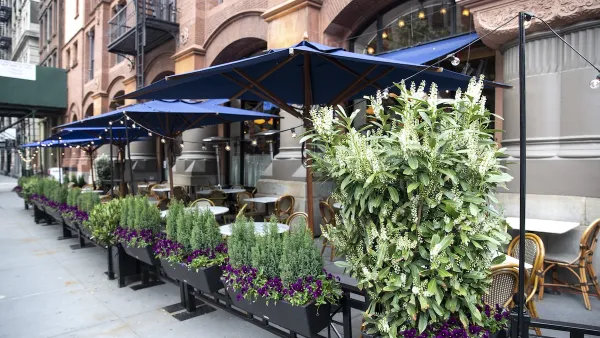
NYC Approves Only 40 of Over 1,300 of Outdoor Dining Applications
Restaurant owners say they’ve been in limbo for months as city departments point fingers at each other for delays in permit approvals.
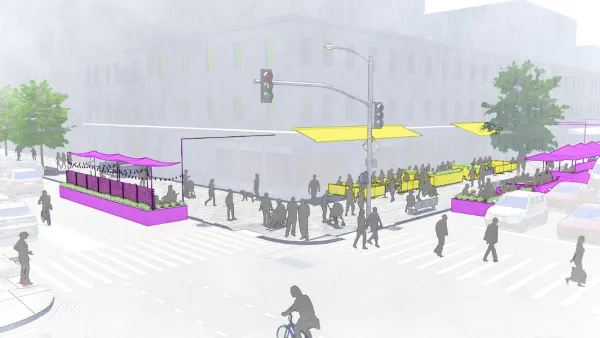
NYC Releases Outdoor Dining Designs
New guidelines for the city’s ‘streeteries’ are set to go into effect next April.

Planetizen Federal Action Tracker
A weekly monitor of how Trump’s orders and actions are impacting planners and planning in America.

The state-sanctioned urbicide of Austin
People don’t kill cities. Freeways do.

US to reduce Colorado River water deliveries to Mexico
A new Colorado Treaty amendment reduces Mexico’s Colorado River water allocation by 250,000 acre feet.

Mamdani overhauls NYC's Vision Zero plan with 100 new policy goals
The overhaul aims to reduce traffic deaths and make streets safer for pedestrians, cyclists and drivers through lower speed limits, new safety infrastructure and more.

Amtrak not solely to blame for New Jersey commuter rail's unreliability, report finds
A new study from the Garden State Initiative found that NJ Transit’s budget grew 20% across a 4 year period, but reliability declined significantly over the same period.

EPA erases limits on planet-warming pollution from power plants
Under Monday’s plan, power plants would still have some limits on how much mercury, arsenic and other contaminants they can emit.

FREE Course: Walkable City 1: Why Walkability?
After describing his path towards focusing on walkability as the essence of good planning, Jeff Speck marches through his five principal reasons for making more walkable places.
Reinventing Malls: Planning Alchemy—Turning Gray Fields Into Gold
The course focuses on the opportunities and imperatives that shape reinvention of mall sites.

Eagle County Government
Harvard University Graduate School of Design
Nashville Planning Department
The Architects Foundation
University of Cincinnati Online
The Pocatello Development Authority
The Urban Renewal Agency of the City of Pocatello
Journal of the American Planning Association