New guidelines for the city’s ‘streeteries’ are set to go into effect next April.



New York City has released proposed designs for on-street dining setups, known locally as ‘streeteries,’ reports Christopher Bonanos in Curbed, in anticipation of a new program that will make the al fresco patios permanent—with some caveats.
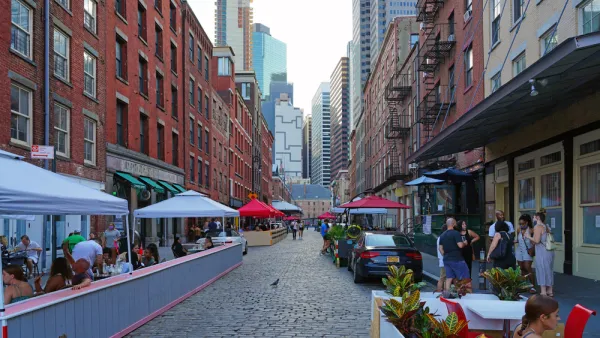
As Bonanos explains, “As before, there are two types of setups. Those on the sidewalk will face minimal change. They’re going to be allowed year-round, much as they have for decades, under umbrellas and awnings. The city is lowering the price of the permit, which suggests a stance of benign encouragement.”
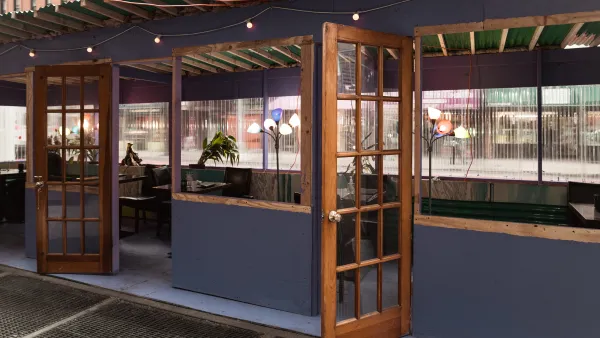
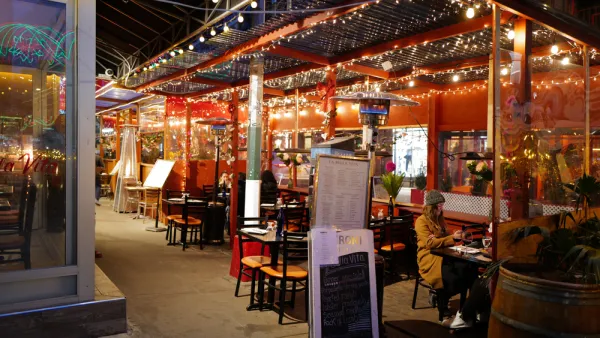
The design for ‘roadway sheds,’ on the other hand, will look vastly different from the Covid-era bubble enclosures. “The new open-air-dining experience will put the emphasis on the open-air part. Apart from the big heavy barrier meant to defend against moving vehicles, the mostly waist-high structures will be rather lightly constructed and roofless but for fabric canopies (an umbrella is always an option too).”
The on-street structures will have to be dismantled between November 31 and March 31. “That will allow the streets to be plowed, should it ever snow again, and perhaps diminish the number of winter-storm blow-downs.”
FULL STORY: The 2024 Streetery Is Taking Shape

New York City Legalizes Outdoor Dining
Some restaurant owners worry the new requirements will make it too expensive to maintain outdoor dining structures.
Open Streets and Outdoor Dining Are Best for Business, Report Says
Most business owners believe that they'd be out of business without on-street parking near their front door. The experience of New York City during the pandemic proves otherwise.
Who Should Manage New York’s Outdoor Dining Program?
A proposal to shift responsibility away from the Department of Transportation has met staunch resistance from industry groups and advocates of the program.

The state-sanctioned urbicide of Austin
People don’t kill cities. Freeways do.

US to reduce Colorado River water deliveries to Mexico
A new Colorado Treaty amendment reduces Mexico’s Colorado River water allocation by 250,000 acre feet.

New Jersey’s second-largest city bans standalone data centers
Jersey City will continue to allow co-location facilities, such as those meant for research institutions that store their own data.

Amtrak not solely to blame for New Jersey commuter rail's unreliability, report finds
A new study from the Garden State Initiative found that NJ Transit’s budget grew 20% across a 4 year period, but reliability declined significantly over the same period.

EPA erases limits on planet-warming pollution from power plants
Under Monday’s plan, power plants would still have some limits on how much mercury, arsenic and other contaminants they can emit.

Phoenix announces new on-demand transit service, more frequent RAPID buses
Both new services will launch in October, and are part of Phoenix's Project Effective Access Solutions for Easing Congestion.

FREE Course: Walkable City 1: Why Walkability?
After describing his path towards focusing on walkability as the essence of good planning, Jeff Speck marches through his five principal reasons for making more walkable places.
Reinventing Malls: Planning Alchemy—Turning Gray Fields Into Gold
The course focuses on the opportunities and imperatives that shape reinvention of mall sites.

Eagle County Government
Harvard University Graduate School of Design
Nashville Planning Department
The Architects Foundation
University of Cincinnati Online
The Pocatello Development Authority
The Urban Renewal Agency of the City of Pocatello
Journal of the American Planning Association