The current work will expand the freeway to three lanes in each direction and shift a notorious bottleneck farther west.


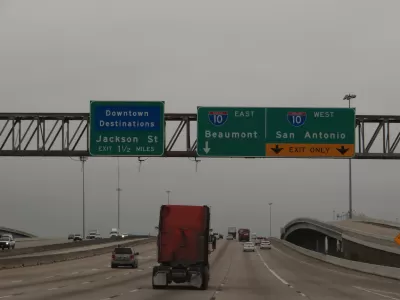
Drivers who travel between Houston and Austin are familiar with exactly where traffic usually slows down. "Coming from Houston, it is just past Katy," says Kristina Hernandez, a resident who makes the drive frequently. Now, reports Dug Begley for the Houston Chronicle, the Texas Department of Transportation (TxDOT) is expanding Interstate 10 there as "part of a generation-long goal of having three lanes in each direction along I-10 from Houston to San Antonio." The current project, which will cost close to $570 million, will shift the bottleneck that now occurs in the area near Sealy farther west. "When the work is completed in mid-2022, drivers will have three lanes in each direction through Sealy, as opposed to the well-known bottleneck west of Brookshire."
Local leaders hope the expansion will benefit Sealy's economy by making the 50-mile trip to and from downtown Houston faster. "The work comes with changes in Sealy’s appearance, however. New freeway lanes and frontage roads — in many spots the work is replacing rural two-way frontage roads typically on one side of the interstate with more urban and suburban styled one-way boulevards on both sides — will mean new businesses and intersections."
Read the full story: Brookshire bottleneck moving west as part of $570 million I-10 widening project
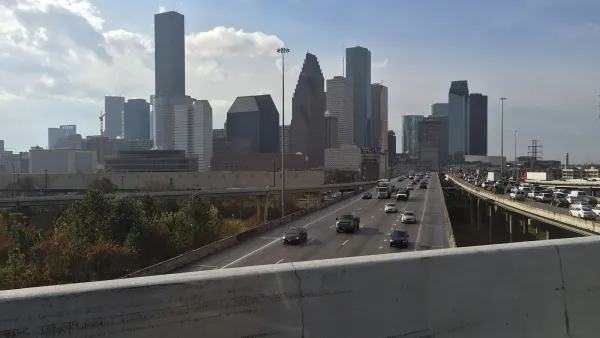
Contentious Houston Freeway Widening Project Inches Forward
Federal officials have given TxDOT the go-ahead to resume work on a small portion of a controversial interstate widening project in downtown Houston.
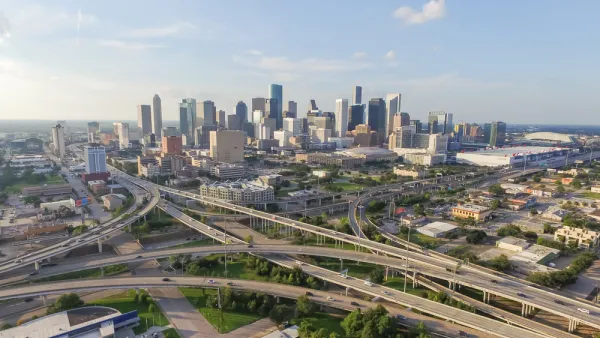
Halted Interstate Expansion Could Proceed in Houston
Local and state officials have come to an ‘historic’ agreement that could move the stalled project forward.
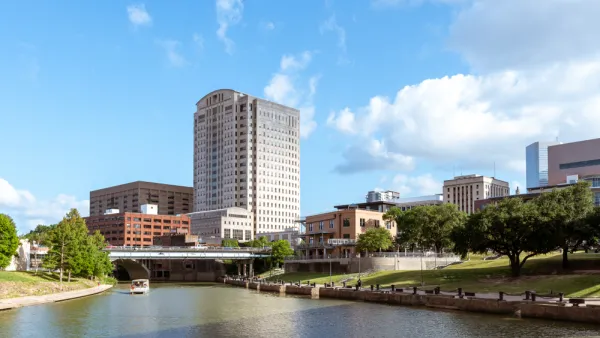
Proposed Park Yet Another Hurdle for Houston Interstate Expansion
The Interstate 45 widening project, halted by a federal order and opposed by many local officials and organizations, could hit a new snag if White Oak Bayou becomes a city park.

Planetizen Federal Action Tracker
A weekly monitor of how Trump’s orders and actions are impacting planners and planning in America.

Washington state to charge fee to drivers with fuel-efficient cars
Revenue from the fee will go towards supporting the state’s highways.

Illinois considers spending $1 billion in taxpayer money on data center
A quantum computing campus and data center are currently under construction in Chicago.

Some incoming, leading US House Dems urge a national moratorium new data centers
McGovern, the top Democrat on the House Rules Committee, called for “an immediate change to the status quo.”

People Mover delayed again, LAX and contractor trade barbs
The automated train was last slated to open in January 2027.

Trump to blast ‘hydrocarbon highway’ through ‘world’s longest art gallery’
Environmental and historic preservation groups are suing to stop the project.

FREE Course: Walkable City 1: Why Walkability?
After describing his path towards focusing on walkability as the essence of good planning, Jeff Speck marches through his five principal reasons for making more walkable places.
Reinventing Malls: Planning Alchemy—Turning Gray Fields Into Gold
The course focuses on the opportunities and imperatives that shape reinvention of mall sites.

City of Charlotte
City of Rosemead
Rutgers University, Edward J. Bloustein School of Planning and Public Policy
University of Michigan School for Environment and Sustainability (SEAS)
Hunter College, City University of New York (CUNY)
The Architects Foundation
University District Partnership