The connection between housing policy and climate change is made clear by the increasing damage of wildfires in California.


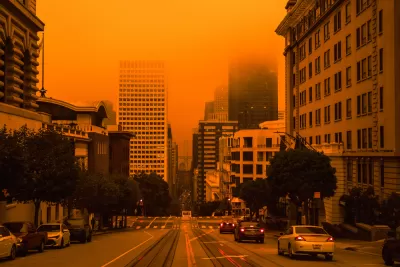
An article by Amanda Brown-Stevens, Brian Hanlon, and Sarah Karlinsky lays out the unprecedented crisis of climate and housing in California and also offers a few policy recommendations to combat wildfire risk and save lives, homes, and communities.
"The seven largest wildfires in recorded California history have all taken place in the last four years," they write. "At the same time, the state is experiencing a massive housing shortage, which is driving up the cost of housing and forcing people to move farther away from job centers in search of more affordable housing."
The article reflects a series of principles developed in partnership between SPUR, Greenbelt Alliance, and California YIMBY. The three principles read as follows, with more detail included in the source article.
- Support higher density growth in in-fill locations that aren’t impacted by wildfire risk
- Differentiate between different levels of wildfire risk and develop regional planning tools for determining fire risk to inform growth plans
- Don’t build new housing or job centers in areas of the highest wildfire risk as defined by regional planning processes such as the Sustainable Communities Strategy
- Develop guidance to inform how existing towns and cities with higher fire risk should approach growth and mitigation
- Harden existing structures and create defensible space requirements
- Align utility planning and insurance regulation policies with wildfire risk and growth plans.
FULL STORY: Managing Wildfire Risk and New Development

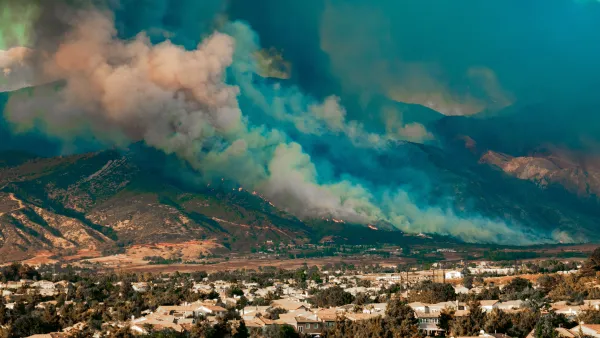
Home Insurers Are Fleeing California
Homeowners in the state are finding it increasingly difficult to secure insurance policies thanks to the growing risks of wildfire, drought, and other climate threats.

$50 Billion 'Wildfire Risk Strategy' Targets the Wildland-Urban Interface
The U.S. Department of Agriculture in January announced an ambitious, and only partially funded, new plan to reduce wildfire risks for communities around the United States.
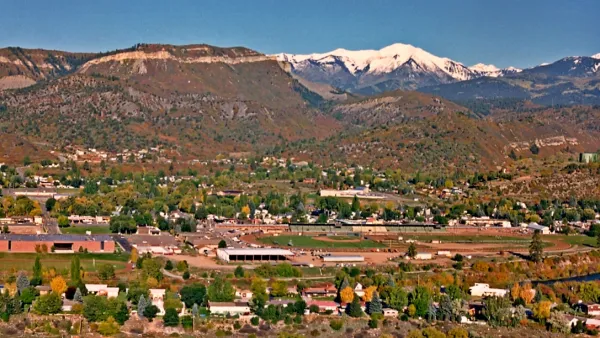
More Colorado Suburbs at Risk for Wildfires
Experts warn that more intense fires fueled by a warming climate are threatening an increasing number of Colorado's suburban communities.

The state-sanctioned urbicide of Austin
People don’t kill cities. Freeways do.

US to reduce Colorado River water deliveries to Mexico
A new Colorado Treaty amendment reduces Mexico’s Colorado River water allocation by 250,000 acre feet.

New Jersey’s second-largest city bans standalone data centers
Jersey City will continue to allow co-location facilities, such as those meant for research institutions that store their own data.

Amtrak not solely to blame for New Jersey commuter rail's unreliability, report finds
A new study from the Garden State Initiative found that NJ Transit’s budget grew 20% across a 4 year period, but reliability declined significantly over the same period.

EPA erases limits on planet-warming pollution from power plants
Under Monday’s plan, power plants would still have some limits on how much mercury, arsenic and other contaminants they can emit.

Phoenix announces new on-demand transit service, more frequent RAPID buses
Both new services will launch in October, and are part of Phoenix's Project Effective Access Solutions for Easing Congestion.

FREE Course: Walkable City 1: Why Walkability?
After describing his path towards focusing on walkability as the essence of good planning, Jeff Speck marches through his five principal reasons for making more walkable places.
Reinventing Malls: Planning Alchemy—Turning Gray Fields Into Gold
The course focuses on the opportunities and imperatives that shape reinvention of mall sites.

Eagle County Government
Harvard University Graduate School of Design
Nashville Planning Department
The Architects Foundation
University of Cincinnati Online
The Pocatello Development Authority
The Urban Renewal Agency of the City of Pocatello
Journal of the American Planning Association