With 90 percent of its usual commuters still working from home and a full return to the office highly unlikely, what will become of New York City's towering office buildings?


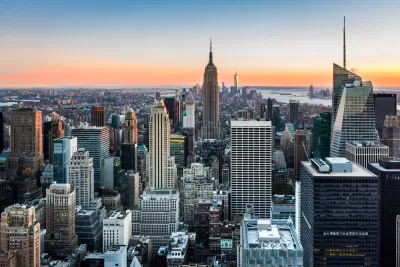
As companies evaluate the effects of work-from-home policies on their productivity and their bottom lines, there's no doubt that a sizable percentage of remote workers will continue working from home, and many of Manhattan's massive office buildings will "probably never be full again." With companies like Spotify, Twitter, and SalesForce announcing drastic reductions in their in-person operations, writes Matthew Haag in the New York Times, the landscape of Manhattan real estate will change drastically, even after the pandemic is over.
Manhattan is, writes Haag, "an island whose economy has been sustained, from the corner hot dog vendor to Broadway theaters, by more than 1.6 million commuters every day." At the moment, "about 90% of Manhattan office workers are working remotely," with less than half estimated to return to the office by September of this year. "The consequences for New York could be far-reaching, not just for the city’s restaurants, coffee shops and other small businesses, but for municipal finances, which depend heavily on commercial real estate." The loss of daily commuters "has caused the market value of commercial properties that include office buildings to plunge nearly 16 percent during the pandemic, triggering a sharp decline in tax revenue that pays for essential city services, from schools to sanitation."
Others see a light at the end of the tunnel. "The surge in available commercial real estate has actually been a boon for some new businesses that have been able to find spaces at rents that are lower than they were before the pandemic." Brian S. Waterman, executive vice chairman of commercial real estate services firm Newmark, expressed optimism that New York offices would see a "much fuller occupancy" by this fall. Some leading tech companies have also added to their footprint in the city, with Facebook securing 1 million square feet of office space and Apple adding two floors to their Midtown offices. A group of developers and landlords is also calling for the city and state to change zoning rules to allow the adaptive reuse of office buildings into apartments to make more efficient use of the space and alleviate the city's housing shortage.
FULL STORY: Remote Work Is Here to Stay. Manhattan May Never Be the Same.

Office Landlords Luring Tenants Back With Incentives
Landlords are offering generous incentives in an effort to prop up the struggling U.S. office market.
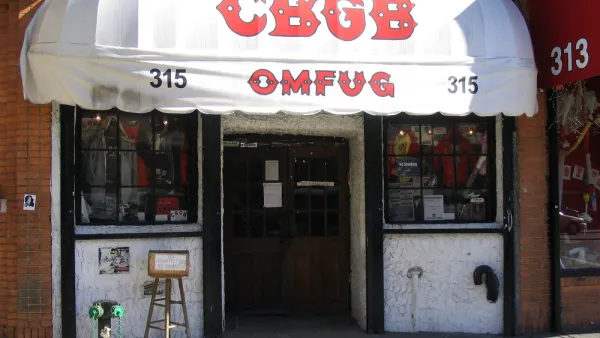
Opinion: Lower Rents Will Give Downtown Spaces Back to the ‘Weirdos’
Introducing the “CBGB theory of city planning.”
Manhattan’s Population Is on the Rebound
After the ‘urban exodus’ brought on by the pandemic, most of New York City’s boroughs are regaining their population.

The state-sanctioned urbicide of Austin
People don’t kill cities. Freeways do.

US to reduce Colorado River water deliveries to Mexico
A new Colorado Treaty amendment reduces Mexico’s Colorado River water allocation by 250,000 acre feet.

New Jersey’s second-largest city bans standalone data centers
Jersey City will continue to allow co-location facilities, such as those meant for research institutions that store their own data.

Amtrak not solely to blame for New Jersey commuter rail's unreliability, report finds
A new study from the Garden State Initiative found that NJ Transit’s budget grew 20% across a 4 year period, but reliability declined significantly over the same period.

EPA erases limits on planet-warming pollution from power plants
Under Monday’s plan, power plants would still have some limits on how much mercury, arsenic and other contaminants they can emit.

Phoenix announces new on-demand transit service, more frequent RAPID buses
Both new services will launch in October, and are part of Phoenix's Project Effective Access Solutions for Easing Congestion.

FREE Course: Walkable City 1: Why Walkability?
After describing his path towards focusing on walkability as the essence of good planning, Jeff Speck marches through his five principal reasons for making more walkable places.
Reinventing Malls: Planning Alchemy—Turning Gray Fields Into Gold
The course focuses on the opportunities and imperatives that shape reinvention of mall sites.

Eagle County Government
Harvard University Graduate School of Design
Nashville Planning Department
The Architects Foundation
University of Cincinnati Online
The Pocatello Development Authority
The Urban Renewal Agency of the City of Pocatello
Journal of the American Planning Association