The transit agency must renew its search for an appropriate facility for an expanded trolley barn as part of its plan to modernize its aging fleet.


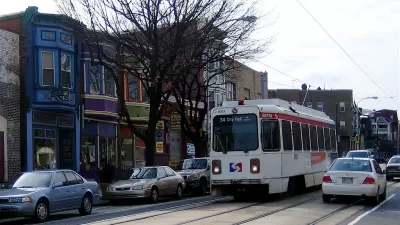
According to a report by Ryan Briggs and Darryl C. Murphy for WHYY, "plans for a new SEPTA [Southeastern Pennsylvania Transportation Authority] trolley barn in Southwest Philadelphia — meant to support a larger overhaul of its aging light rail fleet — are on hold due to a competing proposal from online mega-retailer Amazon to build a new warehouse at the same location." Although SEPTA had started the process of securing ownership of the site, "PlanPhilly confirmed the agency has been effectively outbid by Amazon," with SEPTA's Assistant General Manager for Public & Government Affairs Fran Kelly quoted as saying the agency must go "back to the drawing board" to find a suitable location for its facility.
"The collapsing land deal comes as the agency faces a broader decline in ridership and revenue due to the coronavirus pandemic. It is also a setback for what would have been a major first step toward a long-planned overhaul of the trolley network," a $1.6 billion modernization plan that "has made little progress" since its inception. Vincent Thompson, spokesperson for City Councilmember Kenyatta Johnson, "described the facility as a 'last mile' logistics site that could potentially host hundreds of jobs to a section of the city with above-average unemployment." Critics of the e-commerce giant dispute the benefits of an Amazon facility in the neighborhood. According to Kendra Van de Water, co-founder of YEAHPhilly, "the employment opportunities Amazon would bring to her neighborhood are part of a predatory strategy, where employees, many of them young people, are caught in a 'hamster wheel of survival.'"
Amazon did not respond to a request for comment. "The retailer is due to appear at another Civic Design Review meeting on April 6 and is negotiating a community benefits agreement."
FULL STORY: Primed: New Amazon warehouse derails land deal for SEPTA trolley facility

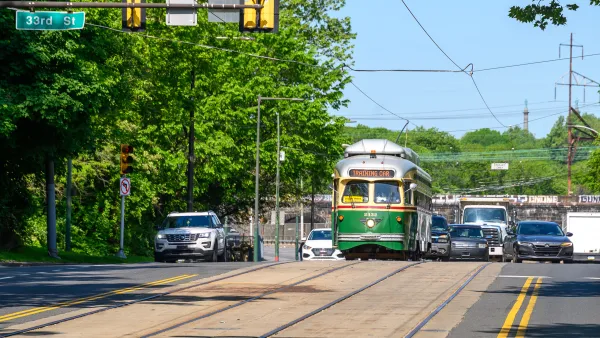
Retro Trolleys Returning to Philadelphia
The freshly restored vintage fleet will maintain service frequency on Route 15 before eventually being replaced by newer models.
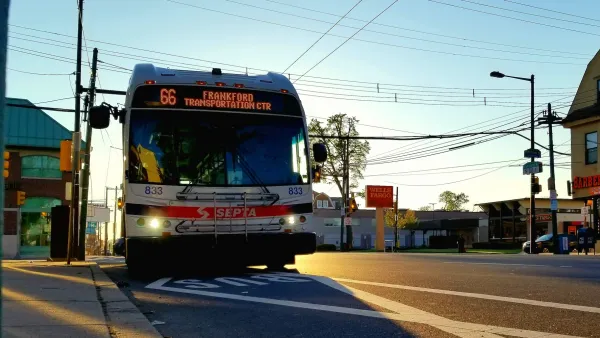
SEPTA's bus-mounted lane enforcement cameras cut travel times by up to 6%
The AI-assisted cameras have issued nearly 200,000 citations to drivers blocking bus lanes.
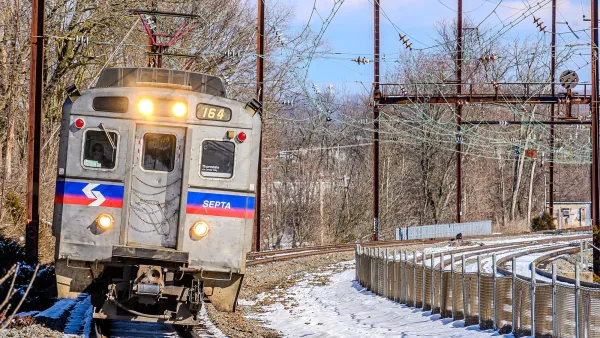
SEPTA Borrows Maryland's Rail Cars to Replace Fleet That Kept Catching Fire
The agency’s efforts to repair its Silverliner fleet is being hampered by supply chain delays.

The state-sanctioned urbicide of Austin
People don’t kill cities. Freeways do.

US to reduce Colorado River water deliveries to Mexico
A new Colorado Treaty amendment reduces Mexico’s Colorado River water allocation by 250,000 acre feet.

New Jersey’s second-largest city bans standalone data centers
Jersey City will continue to allow co-location facilities, such as those meant for research institutions that store their own data.

Amtrak not solely to blame for New Jersey commuter rail's unreliability, report finds
A new study from the Garden State Initiative found that NJ Transit’s budget grew 20% across a 4 year period, but reliability declined significantly over the same period.

EPA erases limits on planet-warming pollution from power plants
Under Monday’s plan, power plants would still have some limits on how much mercury, arsenic and other contaminants they can emit.

Phoenix announces new on-demand transit service, more frequent RAPID buses
Both new services will launch in October, and are part of Phoenix's Project Effective Access Solutions for Easing Congestion.

FREE Course: Walkable City 1: Why Walkability?
After describing his path towards focusing on walkability as the essence of good planning, Jeff Speck marches through his five principal reasons for making more walkable places.
Reinventing Malls: Planning Alchemy—Turning Gray Fields Into Gold
The course focuses on the opportunities and imperatives that shape reinvention of mall sites.

Eagle County Government
Harvard University Graduate School of Design
Nashville Planning Department
The Architects Foundation
University of Cincinnati Online
The Pocatello Development Authority
The Urban Renewal Agency of the City of Pocatello
Journal of the American Planning Association