In January, the Sacramento City Council took first steps toward ending single-family zoning citywide. The decision has provoked controversy that is influencing the next steps in the process.


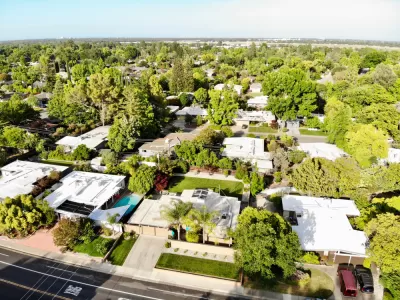
Liam Dillon reports the details of Sacramento's recent decision to end single-family zoning, approved by the City Council in January 2021.
"In an unprecedented move, Sacramento is on the verge of approving a plan that would make the city the first in California, and one of the first in the country, to end zoning that permits only one single-family home on a property," writes Dillon of the historic scale of the decision.
"Under the proposal, up to four homes could be built on lots in neighborhoods long defined by their low-density, traffic-free tranquillity," according to Dillon's explanation of the decision.
The city's decision has provoked opposition from local homeowners and neighborhood groups, but the city is moving forward with the idea in the hopes that relaxed zoning restrictions will create more housing and a stabilizing effect on housing costs in a quickly growing, and changing, city.
The article features in-depth reporting on the local players debating Sacramento's new direction, in addition to providing background on the other efforts underway at local levels (like in Minneapolis) and state levels (like California and Oregon).
In addition to providing citywide data about the cost of housing, the article also breaks down the housing market to the neighborhood level.
One big caveat hanging over the entire effort is the experimental nature of this kind of zoning reform. "The city has no formal estimate on how many new homes — either through new construction or the subdivision of existing single-family homes — the proposal would create, but officials believe it’ll be fewer than 100 a year," writes Dillon.
That uncertainty is not lost on opponents of the decision to eliminate single-family zoning. According to Dillon, "those opposed to doing away with single-family home zoning don’t believe that the proposal will integrate neighborhoods, racially or economically. They argue that any new fourplexes in higher-income neighborhoods are likely to be more costly to rent or buy as condominiums than what the average Sacramento resident can afford."
As noted by Dillon, the Sacramento City Council has only taken preliminary steps toward zoning reform, and "city officials don’t expect to receive final sign-off until the end of the year."
FULL STORY: In a first for California, Sacramento poised to allow apartments in single-family home neighborhoods


Citywide Zoning Reforms Approved for Sacramento
The Sacramento City Council took steps toward an updated General Plan that includes a variety of innovative planning proposals, including the elimination of single-family zoning by allowing up to four dwelling units on all residential parcels.

Toronto City Council Removes Most Minimum Parking Requirements
The parking reform movement has a major new feather in its cap: the Toronto City Council has this week adopted sweeping changes to the parking requirements of the city's zoning bylaws.

Major Parking Reform Effort Moving Forward in San Diego
Civic San Diego and San Diego planning commissioners approved new parking standards that would eliminate minimums and set maximums of one space per multifamily unit. Those reforms and more must still be approved by the City Council.

Planetizen Federal Action Tracker
A weekly monitor of how Trump’s orders and actions are impacting planners and planning in America.

The state-sanctioned urbicide of Austin
People don’t kill cities. Freeways do.

US to reduce Colorado River water deliveries to Mexico
A new Colorado Treaty amendment reduces Mexico’s Colorado River water allocation by 250,000 acre feet.

5 New England states march closer to 800 megawatt wind energy project
Securing federal approval for the project may be complicated under the Trump administration, which has historically been hostile towards domestic wind power.

Baltimore to break ground on $50 million Transit Priority Project
The project will bring faster bus trips, safer streets and better bike connections to Baltimore.

Airbnb launches $250 million 'last-dollar financing' housing accelerator, makes first investment in Austin
The company will put $6.4 million towards affordable housing development in Texas’ capital.

FREE Course: Walkable City 1: Why Walkability?
After describing his path towards focusing on walkability as the essence of good planning, Jeff Speck marches through his five principal reasons for making more walkable places.
Reinventing Malls: Planning Alchemy—Turning Gray Fields Into Gold
The course focuses on the opportunities and imperatives that shape reinvention of mall sites.

Eagle County Government
Harvard University Graduate School of Design
Nashville Planning Department
The Architects Foundation
University of Cincinnati Online
The Pocatello Development Authority
The Urban Renewal Agency of the City of Pocatello
Journal of the American Planning Association