On January 8, the U.S. Department of Transportation released "Ensuring American Leadership in Automated Vehicle Technologies: Automated Vehicles 4.0 (AV 4.0)." On January 11, it followed up with the Automated Vehicles Comprehensive Plan (AVCP).


The U.S. Department of Transportation on Monday released the "Automated Vehicles Comprehensive Plan" (AVCP), with stated goals to "promote collaboration and transparency, modernize the regulatory environment, and prepare the transportation system for the safe integration of Automated Driving Systems (ADS)," according to a U.S. DOT press release.
"This comprehensive plan lays out a vision for the safe integration of automated vehicles into America’s transportation system while ensuring that legitimate concerns about safety, security, and privacy are addressed," according to a statement from Secretary Elaine L. Chao, whose controversial resignation from the position became official on the day the AVCP was announced.
The AVCP builds on previous work by the U.S. Government to prepare for autonomous vehicles, outlined most recently in "Ensuring American Leadership in Automated Vehicle Technologies: Automated Vehicles 4.0" (AV 4.0), released earlier this month for attendees of the all-digital CES confab. An article by David Shepardson provides insight into the AV 4.0 document, quoting former Secretary Chao disparaging the approach of the Obama administration to autonomous vehicle regulation.
"The 51-page 4.0 policy document released [on January 8] says the U.S. government will adopt and promote 'flexible, technology-neutral policies that will allow the public, not the federal government or foreign governments, to choose the most economically efficient and effective transportation and mobility solutions,'" writes Shepardson.
FULL STORY: U.S. Department of Transportation Releases Automated Vehicles Comprehensive Plan

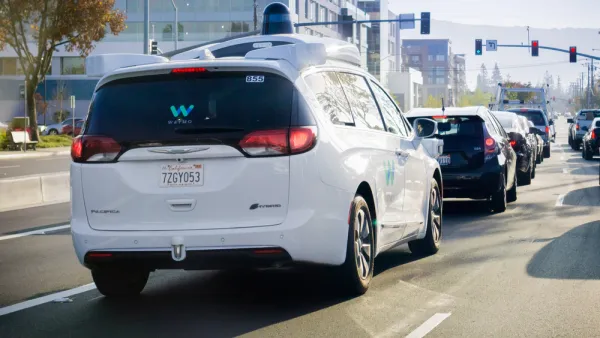
U.S. DOT Reveals Latest Autonomous Vehicle Guidelines
The U.S. Department of Transportation, under fire for not doing enough to prevent an Uber self-driving car from killing a pedestrian in Tempe in 2018, has released the latest iteration of guidelines for autonomous vehicle technology.

Five Years Later, 'Smart Cities Challenge' Promise Unfulfilled
The "Smart Cities Challenge" paid Columbus, Ohio $50 million to kick start a revolution of urban technology. The revolution never arrived, according to a recent assessment by Wired writer Aarian Marshall.

Wanted in the Autonomous Vehicles Debate: A Place at the Table for Local Authorities
How much should the federal government involve local authorities in crafting autonomous vehicle regulations? Officials in New York say they aren't being included enough.

Planetizen Federal Action Tracker
A weekly monitor of how Trump’s orders and actions are impacting planners and planning in America.

The state-sanctioned urbicide of Austin
People don’t kill cities. Freeways do.

US to reduce Colorado River water deliveries to Mexico
A new Colorado Treaty amendment reduces Mexico’s Colorado River water allocation by 250,000 acre feet.

Mamdani overhauls NYC's Vision Zero plan with 100 new policy goals
The overhaul aims to reduce traffic deaths and make streets safer for pedestrians, cyclists and drivers through lower speed limits, new safety infrastructure and more.

Amtrak not solely to blame for New Jersey commuter rail's unreliability, report finds
A new study from the Garden State Initiative found that NJ Transit’s budget grew 20% across a 4 year period, but reliability declined significantly over the same period.

EPA erases limits on planet-warming pollution from power plants
Under Monday’s plan, power plants would still have some limits on how much mercury, arsenic and other contaminants they can emit.

FREE Course: Walkable City 1: Why Walkability?
After describing his path towards focusing on walkability as the essence of good planning, Jeff Speck marches through his five principal reasons for making more walkable places.
Reinventing Malls: Planning Alchemy—Turning Gray Fields Into Gold
The course focuses on the opportunities and imperatives that shape reinvention of mall sites.

Eagle County Government
Harvard University Graduate School of Design
Nashville Planning Department
The Architects Foundation
University of Cincinnati Online
The Pocatello Development Authority
The Urban Renewal Agency of the City of Pocatello
Journal of the American Planning Association