Nuclear regulators have recently given the green light to a new kind of nuclear reactor, the small modular reactor. A recent article in The Urbanist explains the case for a nuclear-powered urbanism.


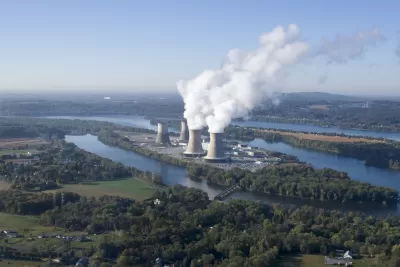
Shaun Kuo provides news and commentary about innovation in the nuclear power sector that might position nuclear power as a resource for the goals of urbanism.
First, the news: The "Department of Energy recently approved a multi-year cost share award of up $1.355 billion to a new entity, the Carbon Free Power Project, to demonstrate and deploy a 12-module small modular reactor (SMR) power plant," according to Kuo. That funding award follows additional news from August that the U.S. Nuclear Regulatory Commission gave first-ever design approval for an SMR for a power plant expected to be built by 2029. NuScale Power designed the 720-megawatt plant, and Utah Associated Municipal Power Systems (UAMPS), which owns the Carbon Free Power Project, hopes to begin construction on the SMR by 2025 at its planned location at the Idaho National Laboratory.
"UAMPS will be distributing energy from the plant to their participating public power utility customers in Utah, California, Idaho, Nevada, New Mexico, and Wyoming. UAMPS CEO noted that this project will complement and enable additional intermittent renewable energy, wind and solar that are a growing part of the agency’s portfolio," according to the article.
After explaining how SMRs differ from the nuclear reactors of history, Kuo ties those distinctions to a question of density, and suggests that SMRs enable a community-level approach to the future deployment of nuclear power. "Whether or not SMRs fit into the niches demanded by our urban areas, it will have to depend on the needs of each community to develop energy portfolios," writes Kuo.
FULL STORY: An Urbanist Case for Small Nuclear Power Reactors

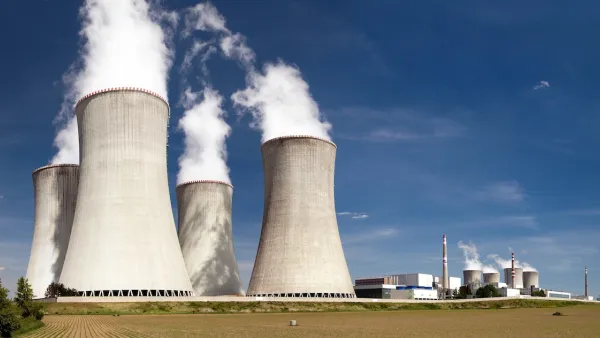
Small-Scale Nuclear Power Dealt Major Setback
The company that made history in January when its 'small modular nuclear reactor' became the first in the nation to receive certification from the Nuclear Regulatory Commission has canceled it due to financial reasons.
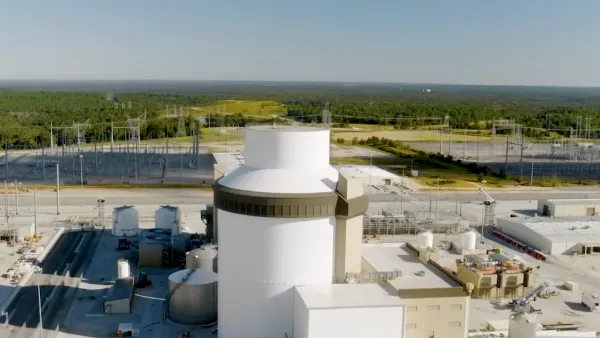
Georgia Makes Clean Energy History in U.S.
The first newly constructed nuclear power plant to generate electricity in the U.S. in over 30 years began operation in Waynesboro, Georgia on July 31.

Legislature Extends $1.4 Billion Lifeline to California's Last Operating Nuclear Power Plant
A bipartisan bill, fiercely opposed by many in the environmental community, would keep the Diablo Canyon Power Plant operating beyond 2025. The bill received overwhelming approval after it was amended to shorten the duration of the extension.

Planetizen Federal Action Tracker
A weekly monitor of how Trump’s orders and actions are impacting planners and planning in America.

The state-sanctioned urbicide of Austin
People don’t kill cities. Freeways do.

US to reduce Colorado River water deliveries to Mexico
A new Colorado Treaty amendment reduces Mexico’s Colorado River water allocation by 250,000 acre feet.

5 New England states march closer to 800 megawatt wind energy project
Securing federal approval for the project may be complicated under the Trump administration, which has historically been hostile towards domestic wind power.

Baltimore to break ground on $50 million Transit Priority Project
The project will bring faster bus trips, safer streets and better bike connections to Baltimore.

Airbnb launches $250 million 'last-dollar financing' housing accelerator, makes first investment in Austin
The company will put $6.4 million towards affordable housing development in Texas’ capital.

FREE Course: Walkable City 1: Why Walkability?
After describing his path towards focusing on walkability as the essence of good planning, Jeff Speck marches through his five principal reasons for making more walkable places.
Reinventing Malls: Planning Alchemy—Turning Gray Fields Into Gold
The course focuses on the opportunities and imperatives that shape reinvention of mall sites.

Eagle County Government
Harvard University Graduate School of Design
Nashville Planning Department
The Architects Foundation
University of Cincinnati Online
The Pocatello Development Authority
The Urban Renewal Agency of the City of Pocatello
Journal of the American Planning Association