After releasing "public scoping" details for a massive widening project in Downtown Austin, a writer slams the Texas Department of Transportation for its car-centric approach to transportation planning.


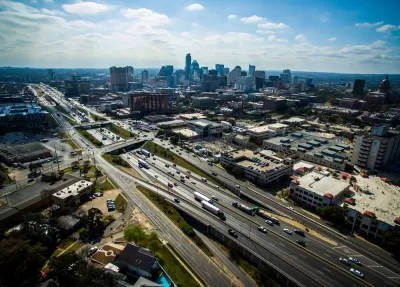
James Rambin reports that the Texas Department of Transportation has released new details of a plan to widen the I-35 Capital Express project to add capacity along eight miles of the freeway between US 290 East and SH 71/Ben White Boulevard. The "public scoping" presentation is available on YouTube, and linked above.
Rambin, who is explicitly critical of the TxDOT's proclivity for widening already massive public highways, notes that the first two design options shown in the video would bring the total number of lanes on I-35 to 20—up from the current 12 lanes. The article includes numerous cross sections to show what that many lanes would look like in reality.
Other than the massive size of the proposed expansion, Rambin says the plan currently has revealed very few details. With the possibility for bus rapid transit, light rail (via Project Connect), or toll lanes to be included in the project, TxDOT is clearly looking a different direction, however. Rambin explains:
The single major adaptation shown in these presentations are each design’s potentially grade-separated or tunneled HOV lanes, which might relieve gridlock slightly — but don’t overlook that the most effective high-occupancy lanes integrate congestion pricing in what’s known as an express HOT lane, and the state government under Gov. Greg Abbott has made it very clear in recent years that tolls are not an option here.
Among the criticisms expressed by Rambin: that the I-35 project would represent a generational failure if built as proposed in this presentation.
FULL STORY: Widening I-35 to 20 Lanes in Downtown Austin is the Anti-Project Connect


Austin City Council Calls for Changes to Interstate Widening Plan
Legally powerless to stop TxDOT’s plans for freeway expansion, Austin city leaders hope to influence the agency to take some mitigation measures as it widens I-35.
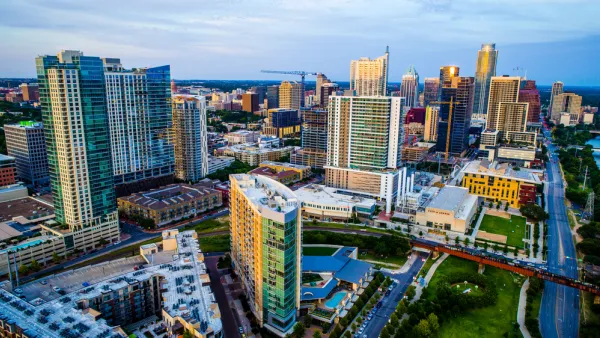
Austin City Council Urges TxDOT to Reconsider I-35 Expansion
In a letter to the department, the city called for an increased focus on shifting demand away from single-occupancy vehicles and boosting other forms of transportation.
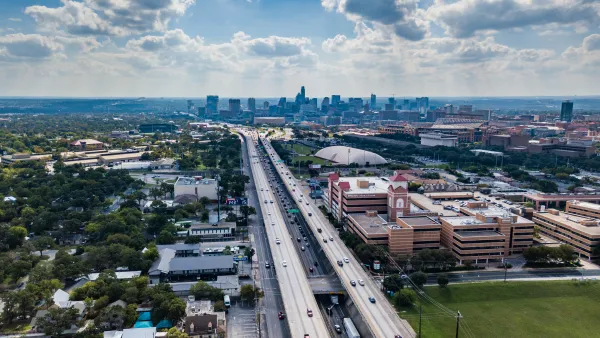
Letter Reveals Changes to I-35 Expansion Plan in Austin
In addition to new HOV lanes and a proposed boardwalk, TxDOT agreed to engineer the freeway for caps in some areas, but the city would have to fund their construction.

Planetizen Federal Action Tracker
A weekly monitor of how Trump’s orders and actions are impacting planners and planning in America.

The state-sanctioned urbicide of Austin
People don’t kill cities. Freeways do.

US to reduce Colorado River water deliveries to Mexico
A new Colorado Treaty amendment reduces Mexico’s Colorado River water allocation by 250,000 acre feet.

5 New England states march closer to 800 megawatt wind energy project
Securing federal approval for the project may be complicated under the Trump administration, which has historically been hostile towards domestic wind power.

Baltimore to break ground on $50 million Transit Priority Project
The project will bring faster bus trips, safer streets and better bike connections to Baltimore.

Airbnb launches $250 million 'last-dollar financing' housing accelerator, makes first investment in Austin
The company will put $6.4 million towards affordable housing development in Texas’ capital.

FREE Course: Walkable City 1: Why Walkability?
After describing his path towards focusing on walkability as the essence of good planning, Jeff Speck marches through his five principal reasons for making more walkable places.
Reinventing Malls: Planning Alchemy—Turning Gray Fields Into Gold
The course focuses on the opportunities and imperatives that shape reinvention of mall sites.

Eagle County Government
Harvard University Graduate School of Design
Nashville Planning Department
The Architects Foundation
University of Cincinnati Online
The Pocatello Development Authority
The Urban Renewal Agency of the City of Pocatello
Journal of the American Planning Association