The Cultural Space Agency, proposed in Seattle, would be a new type of public development authority, a city agency with a mission to preserve and create arts and culture in the face of gentrification.


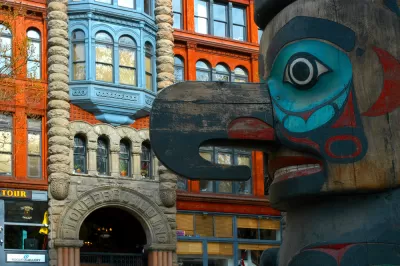
Margo Vansynghel reports on an effort in Seattle to combat cultural displacement and gentrification by creating a 'mission-driven' real estate development company to "create, purchase, manage and lease property for arts and cultural spaces."
The arts and cultural spaces created by the new "Cultural Space Agency" could include galleries, bookstores, nonprofit dance companies, and cultural community centers," according to Vansynghel. "The new entity would likely also develop and manage a new 'Creative Economy Hub' on the second floor of the city-owned King Street Station."
If granted final approval from Seattle Mayor Jenny Durkan and the Seattle City Council, the Cultural Space Authority will be governed as a public development authority (PDA), also known as a public corporation, according to Vansynghel. "The Office of Arts & Culture is dedicating $1 million to fund the startup costs for the next two years, $500,000 of which is earmarked in the 2021 budget currently in deliberation, and will add money to that pot through capital campaigns and philanthropy."
The article also includes some historical perspective on the move for the city to create a PDA—usually PDAs are reserved in Washington State for the preservation of historic areas, like Pioneer Square and the Chinatown-International District in Seattle.
"With the move, the city is following in the footsteps of King County, which established the 4Culture agency in late 2002 in reaction to the post-9/11 economic recession and funding cuts at King County’s arts offices," according to Vansynghel.
FULL STORY: City launches real estate company to save and create Seattle art spaces

Seattle Residents Look to Community Land Trusts to Insulate from Displacement
Community land trusts are gaining popularity as a tool for building and protecting affordable housing. Seattle residents are the latest to consider the option in the face of rapid gentrification and displacement.
Disaster Gentrification and COVID-19
Disaster gentrification is a widely documented phenomenon, like in New Orleans after Hurricane Katrina. The coronavirus and the resulting economic downturn could have similar consequences.
Report Explores Future of Seattle Interbay Armory Site
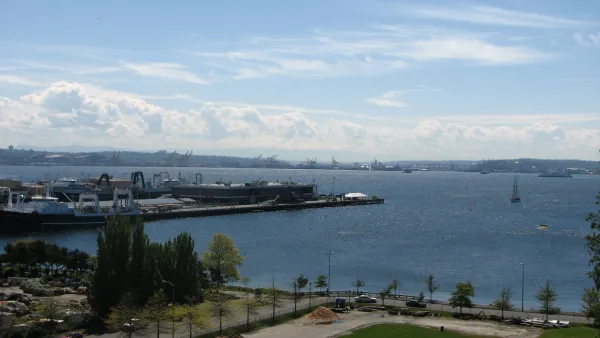
The 25-acre site will be vacant after the National Guard relocates, and a new report says a public development authority should manage the property.

Planetizen Federal Action Tracker
A weekly monitor of how Trump’s orders and actions are impacting planners and planning in America.

The state-sanctioned urbicide of Austin
People don’t kill cities. Freeways do.

US to reduce Colorado River water deliveries to Mexico
A new Colorado Treaty amendment reduces Mexico’s Colorado River water allocation by 250,000 acre feet.

Mamdani overhauls NYC's Vision Zero plan with 100 new policy goals
The overhaul aims to reduce traffic deaths and make streets safer for pedestrians, cyclists and drivers through lower speed limits, new safety infrastructure and more.

Amtrak not solely to blame for New Jersey commuter rail's unreliability, report finds
A new study from the Garden State Initiative found that NJ Transit’s budget grew 20% across a 4 year period, but reliability declined significantly over the same period.

EPA erases limits on planet-warming pollution from power plants
Under Monday’s plan, power plants would still have some limits on how much mercury, arsenic and other contaminants they can emit.

FREE Course: Walkable City 1: Why Walkability?
After describing his path towards focusing on walkability as the essence of good planning, Jeff Speck marches through his five principal reasons for making more walkable places.
Reinventing Malls: Planning Alchemy—Turning Gray Fields Into Gold
The course focuses on the opportunities and imperatives that shape reinvention of mall sites.

Eagle County Government
Harvard University Graduate School of Design
Nashville Planning Department
The Architects Foundation
University of Cincinnati Online
The Pocatello Development Authority
The Urban Renewal Agency of the City of Pocatello
Journal of the American Planning Association