A new toolkit shares 22 actions governments should take to get the economy restarted, including the regulatory or policy tools needed to implement the actions.


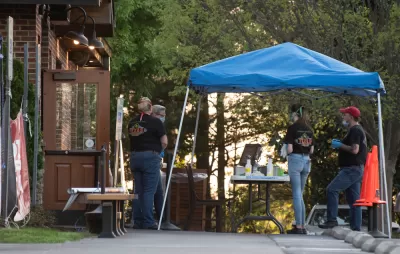
What’s likely to linger in the aftermath of the global COVID crisis are the impacts on local and regional governments that provide the services citizens experience most directly in their daily lives. Faced with budget shortfalls, growing to-do lists for routine tasks delayed by the emergency, and general uncertainty about a “new normal,” how might governments address the uncertainty and respond effectively to the challenges?
That’s the goal of the just-released Pandemic Toolkit from PlaceMakers LLC.
“We’ve spent the last eight months observing and contributing to best practices,” says PlaceMakers president Hazel Borys, “and have distilled those interventions in an easy-to-use format. Our hope is that the toolkit helps rebuild municipal budgets quickly, by supporting local businesses and reducing the bureaucratic process.”
Borys goes on to give an overview of the toolkit, along with pointers for its use. The toolkit is shareware with the compendium its based on being crowdsourced, so it is likely to grow in time.
Read the full story: Pandemic Toolkit: Actions for rebuilding health and opportunity
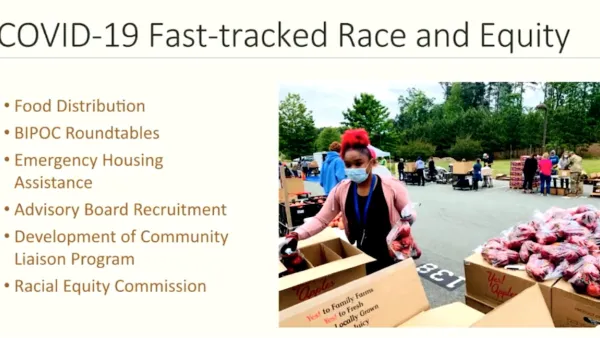
Equity and 'Righting Past Wrongs' to Start the 2021 National Planning Conference
The American Planning Association's 2021 National Planning Conference started streaming this morning, with an obvious focus on equity and the historical role of the planning profession in perpetuating systemic racism.

Pre-Existing Conditions
Vital urbanism and a prescription for the post-pandemic city.
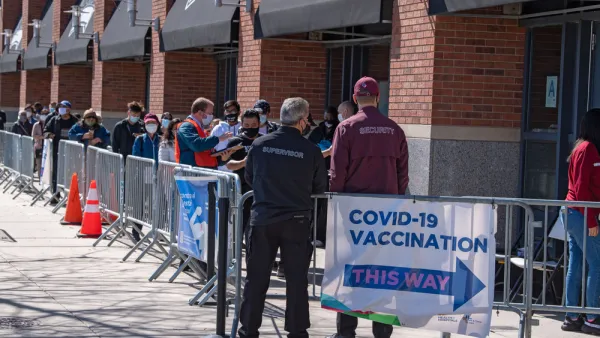
Light at the End of the Tunnel Reveals the Work to Come
The latest edition of an ongoing compendia of articles trying to make sense of the deep uncertainties of the pandemic—and what it all means for the future of cities.

Planetizen Federal Action Tracker
A weekly monitor of how Trump’s orders and actions are impacting planners and planning in America.

California plans to bury El Niño’s downpour
If the state plays its cards right, it may be able to store a billion acre-feet of El Niño’s water in aquifers.

Desperate measures: Advocates weigh draining Lake Powell to fill Colorado River
Draining the reservoir could reduce evaporation losses by a couple hundred thousand acre-feet.

In Texas, data centers are swallowing promised parkland
Residents who moved to Taylor, Texas for a rural community now have to contend with three data centers in their backyard.

How a Chicago-sized wind farm beat the odds and powered on
The project spanned five presidential administrations and a standoff with a U.S. military base.

MTA gives itself 30 days to transform pit into basketball court
The site has been under construction since 2022; the city originally estimated it would finish the court in 2024.

FREE Course: Walkable City 1: Why Walkability?
After describing his path towards focusing on walkability as the essence of good planning, Jeff Speck marches through his five principal reasons for making more walkable places.
Reinventing Malls: Planning Alchemy—Turning Gray Fields Into Gold
The course focuses on the opportunities and imperatives that shape reinvention of mall sites.

City of Rosemead
Rutgers University, Edward J. Bloustein School of Planning and Public Policy
One Hundred Miles
Hunter College, City University of New York (CUNY)
The Architects Foundation
University of Cincinnati Online
City of Cambridge
Montrose County
The Pocatello Development Authority