Advocates are calling out regional and state transportation planning agencies for a failure of racial justice as plans to widen a freeway in Southern California move forward.


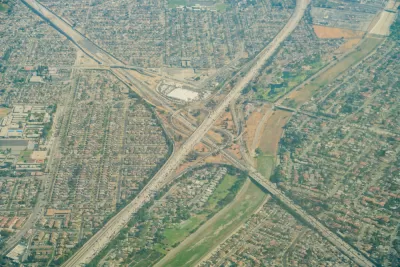
Joe Linton reports: "The full details are not yet entirely clear, but Metro and Caltrans are finalizing plans to widen portions of the 605 and 5 Freeways – and the project will destroy hundreds of homes, primarily in the city of Downey."
The "I-605 Corridor Improvement Project," as it's known at the Los Angeles County Metropolitan Transportation Authority (Metro) would work on portions of the I-5, I-10, I-105, and California State Route 60, in addition to I-605, while crossing jurisdictional lines and touching nine cities and additional unincorporated areas, according to Linton.
The possibility of the highway widening encroaching on existing residential properties is found in the project alternatives from an August presentation for Metro’s $10 billion SR-91/I-605/I-405 “Hot Spots” Program. All three of the current project alternatives under consideration by metro would add two additional lanes to each side of the 605 Freeway, according to Linton.
A chart in the presentation lists the number of parcels to be acquired by Metro and Caltrans to make space for the new lanes: 360+ full acquisitions, 320+ partial acquisitions, and 540+ easements.
Linton gives a hat tip to Downey resident Alexandria Contreras, who raised the alarm about the project's plans to expand into existing private properties via Twitter. Mainstream local news has also picked up the story, like this on-air report by NBC Los Angeles.
A lot more detail, maps, and soundbites are found in the source article.
FULL STORY: Metro Plans to Take Out 200+ Downey Homes to Widen 5 and 605 Freeways

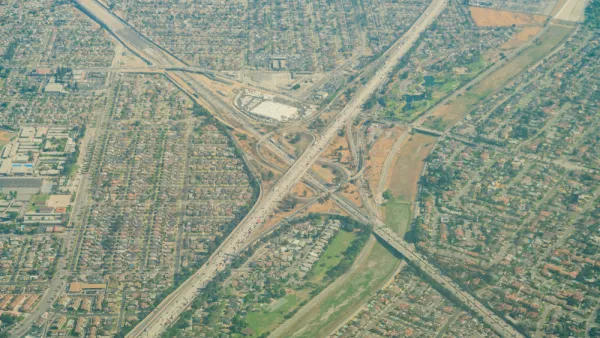
Not So Fast: Metro Board Hits the Brakes on Southern California Highway Expansion Plans
Political opposition to the controversial I-605 Corridor Improvement Project is gaining traction on the Los Angeles County Metropolitan Transportation Authority Board of Directors.
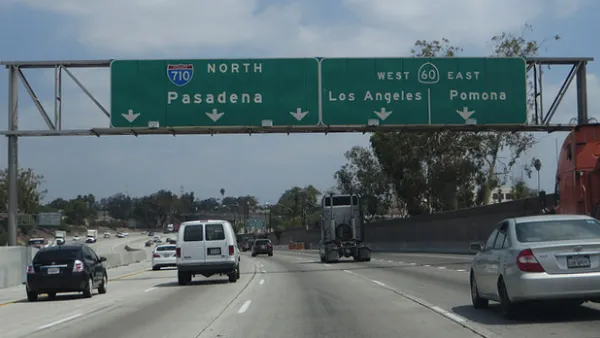
L.A. Metro Denounces—but Doesn't Scrap—710 Freeway Expansion Plan
The agency's board members spoke out forcefully against air pollution and displacement, but stopped short of completely rejecting the project, looking instead to cleaner vehicles and regulations that mitigate community concerns.
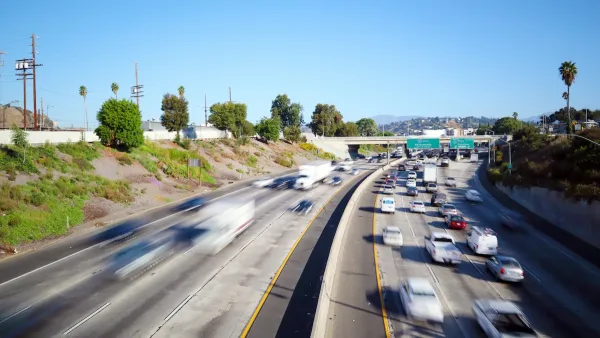
Opinion: LA Should Reject ‘Misguided’ Car-Centric Policies
Even as the city highlights clean energy and transportation for the 2028 Olympics, Metro and Caltrans move forward with plans to expand highways.

Planetizen Federal Action Tracker
A weekly monitor of how Trump’s orders and actions are impacting planners and planning in America.

The state-sanctioned urbicide of Austin
People don’t kill cities. Freeways do.

US to reduce Colorado River water deliveries to Mexico
A new Colorado Treaty amendment reduces Mexico’s Colorado River water allocation by 250,000 acre feet.

Mamdani overhauls NYC's Vision Zero plan with 100 new policy goals
The overhaul aims to reduce traffic deaths and make streets safer for pedestrians, cyclists and drivers through lower speed limits, new safety infrastructure and more.

Amtrak not solely to blame for New Jersey commuter rail's unreliability, report finds
A new study from the Garden State Initiative found that NJ Transit’s budget grew 20% across a 4 year period, but reliability declined significantly over the same period.

EPA erases limits on planet-warming pollution from power plants
Under Monday’s plan, power plants would still have some limits on how much mercury, arsenic and other contaminants they can emit.

FREE Course: Walkable City 1: Why Walkability?
After describing his path towards focusing on walkability as the essence of good planning, Jeff Speck marches through his five principal reasons for making more walkable places.
Reinventing Malls: Planning Alchemy—Turning Gray Fields Into Gold
The course focuses on the opportunities and imperatives that shape reinvention of mall sites.

Eagle County Government
Harvard University Graduate School of Design
Nashville Planning Department
The Architects Foundation
University of Cincinnati Online
The Pocatello Development Authority
The Urban Renewal Agency of the City of Pocatello
Journal of the American Planning Association