Emergency outdoor dining regulations approved in June and set to expired in December could now be extended through the coming year.


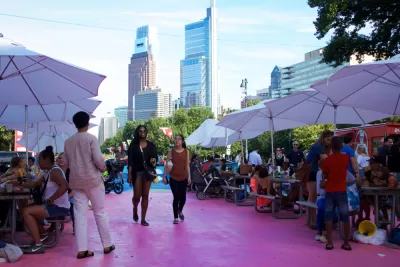
In June, Philadelphia adopted outdoor seating regulations "to make it easier for restaurants and bars with kitchens to serve outdoors," offering a lifeline to restaurant businesses in the city, according to an article by Darryl C. Murphy. Those rules are set to expire in December, when the public health concerns of the COVID-19 pandemic are still expected to linger, perhaps even in a large, second wave.
As Murphy reports, Philadelphia's outdoor dining innovation revolution now has a chance to be continued all the way through 2021:
With this in mind, City Councilmember Allan Domb introduced on Thursday two bills that would extend regulations for expanded outdoor dining another 12 months, through the end of 2021. One bill would authorize sidewalk cafes to continue operating under the coronavirus emergency rules while another would extend the regulation allowing the city’s Streets Department to close the public right-of-way to cars so diners could enjoy expanded al fresco options.
The article includes anecdotes from the experiences of restaurant owners who have converted to outdoor dining in recent months, as well as data about how many restaurants in the city are placing tables in locations previously reserved for cars (as also reported previously by Billy Penn), and the ongoing decline in sales at restaurants driving the need for innovation.
The news about Philadelphia's intentions to extend its COVID-19 outdoor dining rules came the same week as an announcement by New York City Mayor Bill de Blasio that outdoor dining rules would be made permanent in the Big Apple.
FULL STORY: Philly City Council wants to keep expanded outdoor dining options through 2021

Seattle Extends Outdoor Dining for a Year, Eases Rules on Heaters for the Winter
Outdoor dining is going to hang out for a bit.
Outdoor Dining: Too Popular to Abandon
Some cities that took the almost unprecedented step to loosen restrictions on outdoor dining in the early days of the pandemic are deciding to make their new outdoor dining rules permanent.
Winter Is Coming—Capitalize on It
Outdoor dining programs have provided relief for local restaurants and retailers, while offering an oasis of social life for residents. The winter months will challenge that momentum, but creative, flexible approaches can save the day again.

Planetizen Federal Action Tracker
A weekly monitor of how Trump’s orders and actions are impacting planners and planning in America.

The state-sanctioned urbicide of Austin
People don’t kill cities. Freeways do.

US to reduce Colorado River water deliveries to Mexico
A new Colorado Treaty amendment reduces Mexico’s Colorado River water allocation by 250,000 acre feet.

5 New England states march closer to 800 megawatt wind energy project
Securing federal approval for the project may be complicated under the Trump administration, which has historically been hostile towards domestic wind power.

Baltimore to break ground on $50 million Transit Priority Project
The project will bring faster bus trips, safer streets and better bike connections to Baltimore.

Airbnb launches $250 million 'last-dollar financing' housing accelerator, makes first investment in Austin
The company will put $6.4 million towards affordable housing development in Texas’ capital.

FREE Course: Walkable City 1: Why Walkability?
After describing his path towards focusing on walkability as the essence of good planning, Jeff Speck marches through his five principal reasons for making more walkable places.
Reinventing Malls: Planning Alchemy—Turning Gray Fields Into Gold
The course focuses on the opportunities and imperatives that shape reinvention of mall sites.

Eagle County Government
Harvard University Graduate School of Design
Nashville Planning Department
The Architects Foundation
University of Cincinnati Online
The Pocatello Development Authority
The Urban Renewal Agency of the City of Pocatello
Journal of the American Planning Association