Outdoor dining is going to hang out for a bit.


The city of Seattle has extended its outdoor dining program until October 2021, according to an article by Gabe Guarente. The city's free, expedited permit program had been scheduled to expire at the end of the month.
"In addition, the city will now be issuing free tent and heater permits for restaurants who wish to winterize their patios, and outdoor dining equipment can remain outside 24/7. Previously, the Seattle Fire Department did not allow heating elements outside without a special costly permit, even if the establishment already had sidewalk space or streets cordoned off, and restaurants needed to properly store equipment (like heat lamps) inside after closing," reports Guarante.
At the time of Guarente's writing, the city had issued 151 outdoor dining permits. Compare that total to recently reported figures from San Francisco, where 328 permits for the city's shared spaces platform (SSP) program have allowed restaurants to place tables in parking spaces.
Seattle now joins a growing roster of cities that have extended outdoor dining programs installed during the coronavirus pandemic. In September, New York City announced that its program would be made permanent.
FULL STORY: Seattle Extends Free Outdoor Seating Permits for Restaurants Until Next October

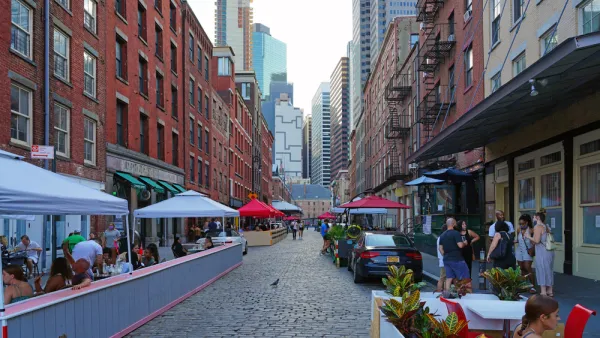
New York Outdoor Dining, Open Streets Programs Now Permanent
New York City will now be measurably less car-centric for the indefinite future.
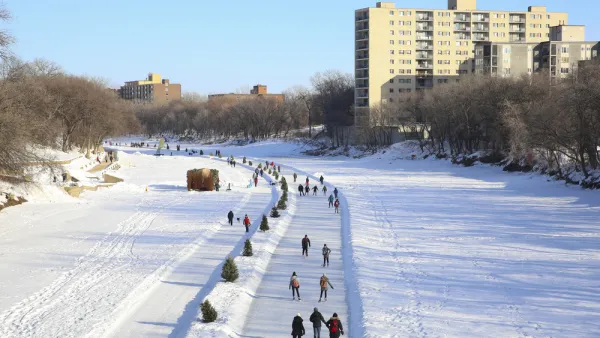
Serpentine Maze: Pop-Up Parks in the Pandemic
If the combined effects of winter's cold and the pandemic has you bummed, check out this community-building exercise in the frozen North.

Winter Is Coming—Capitalize on It
Outdoor dining programs have provided relief for local restaurants and retailers, while offering an oasis of social life for residents. The winter months will challenge that momentum, but creative, flexible approaches can save the day again.

The state-sanctioned urbicide of Austin
People don’t kill cities. Freeways do.

US to reduce Colorado River water deliveries to Mexico
A new Colorado Treaty amendment reduces Mexico’s Colorado River water allocation by 250,000 acre feet.

New Jersey’s second-largest city bans standalone data centers
Jersey City will continue to allow co-location facilities, such as those meant for research institutions that store their own data.

Amtrak not solely to blame for New Jersey commuter rail's unreliability, report finds
A new study from the Garden State Initiative found that NJ Transit’s budget grew 20% across a 4 year period, but reliability declined significantly over the same period.

EPA erases limits on planet-warming pollution from power plants
Under Monday’s plan, power plants would still have some limits on how much mercury, arsenic and other contaminants they can emit.

Phoenix announces new on-demand transit service, more frequent RAPID buses
Both new services will launch in October, and are part of Phoenix's Project Effective Access Solutions for Easing Congestion.

FREE Course: Walkable City 1: Why Walkability?
After describing his path towards focusing on walkability as the essence of good planning, Jeff Speck marches through his five principal reasons for making more walkable places.
Reinventing Malls: Planning Alchemy—Turning Gray Fields Into Gold
The course focuses on the opportunities and imperatives that shape reinvention of mall sites.

Eagle County Government
Harvard University Graduate School of Design
Nashville Planning Department
The Architects Foundation
University of Cincinnati Online
The Pocatello Development Authority
The Urban Renewal Agency of the City of Pocatello
Journal of the American Planning Association