A great many factors converged to create the culture and music of the 1960s. A powerful, but often overlooked, factor was the Los Angeles neighborhood of Laurel Canyon. A new documentary provides a case study in urban creativity.


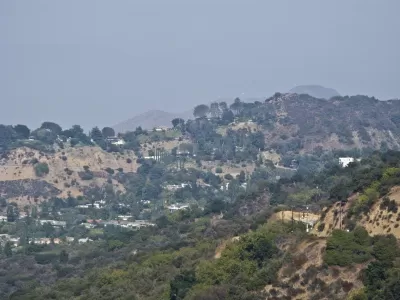
"Multiple interviews over Laurel Canyon’s four-hour span refer to parties, jam sessions, and spontaneous dropping in. Many of the musicians of Laurel Canyon did not seek stardom. They sought to collaborate, to hang out. Music was their medium for doing both. Friends and strangers alike knocked on doors, guitar in one hand and a bag of grass in the other, and invited themselves in to jam, co-write, and collaborate. This was, of course, before cellphones made distance OK and Spotify made albums irrelevant. The artists of Laurel Canyon lived in splendid proximity."
"Here’s why this matters: designers and planners could never create Laurel Canyon, either in form or spirit. They could never envision ramshackle cabins, the Oedipal fury of Morrison, the extraterrestrial weirdness of Zappa, the thoughtfulness of Browne, or the bemusement of Crosby. They just cannot. But as they go about their important work, be it bureaucratic minutiae or large-scale envisioning, they should remember that places can be special—sometimes, very special."
FULL STORY: Laurel Canyon: The Classic California Urban Ecosystem

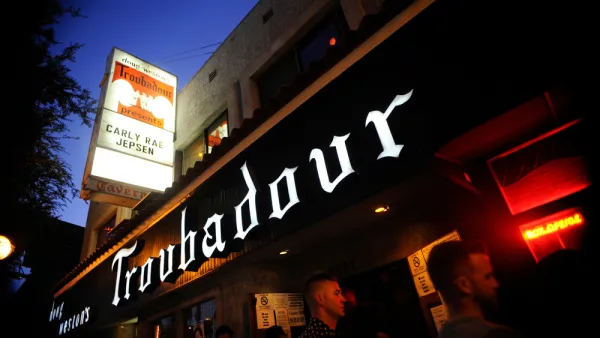
Independent Music Venues Face a Tough Road Ahead
Where have all the venues gone?
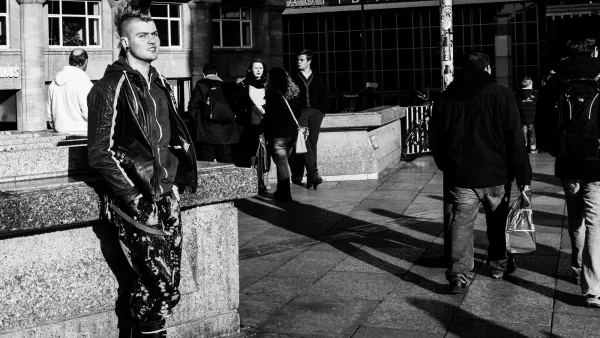
Explosive Subculture: Cities and the Punk Movement
From London to Los Angeles, the punk movement was always an urban phenomenon. But punks needed to fight hard for a place in the cities they called home.
The Most Musical Cities in North America
This chart from the Martin Prosperity Institute at the University of Toronto looks at North America's musical epicenters -- cities where the most music is produced.

Planetizen Federal Action Tracker
A weekly monitor of how Trump’s orders and actions are impacting planners and planning in America.

The state-sanctioned urbicide of Austin
People don’t kill cities. Freeways do.

US to reduce Colorado River water deliveries to Mexico
A new Colorado Treaty amendment reduces Mexico’s Colorado River water allocation by 250,000 acre feet.

5 New England states march closer to 800 megawatt wind energy project
Securing federal approval for the project may be complicated under the Trump administration, which has historically been hostile towards domestic wind power.

Baltimore to break ground on $50 million Transit Priority Project
The project will bring faster bus trips, safer streets and better bike connections to Baltimore.

Airbnb launches $250 million 'last-dollar financing' housing accelerator, makes first investment in Austin
The company will put $6.4 million towards affordable housing development in Texas’ capital.

FREE Course: Walkable City 1: Why Walkability?
After describing his path towards focusing on walkability as the essence of good planning, Jeff Speck marches through his five principal reasons for making more walkable places.
Reinventing Malls: Planning Alchemy—Turning Gray Fields Into Gold
The course focuses on the opportunities and imperatives that shape reinvention of mall sites.

Eagle County Government
Harvard University Graduate School of Design
Nashville Planning Department
The Architects Foundation
University of Cincinnati Online
The Pocatello Development Authority
The Urban Renewal Agency of the City of Pocatello
Journal of the American Planning Association