It's not clear if President Trump is aware that his administration has been working to rescind the Affirmatively Furthering Fair Housing rule since 2018, but he's recently doubled down on messaging that pit suburbs against the Fair Housing Act.


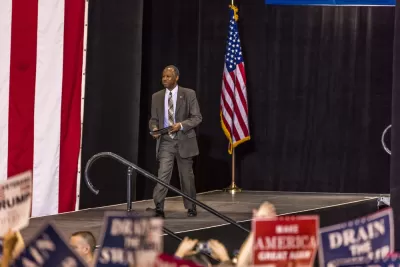
"With President Trump facing sagging support in the suburbs, his administration on Thursday targeted an Obama-era affordable housing regulation, the latest in a series of appeals to white voters’ fears of crime and declining property values," report Chris Megerian, Liam Dillon, and Eli Stokols for the Los Angeles Times.
"The U.S. Department of Housing and Urban Development announced that it would scrap a regulation known as Affirmatively Furthering Fair Housing," marking a final escalation to threats made by the Trump administration since the election to roll back the Affirmatively Furthering Fair Housing (AFFH) rule, approved by the Obama administration to strengthen the Fair Housing Act of 1968.
"The new regulation from the Trump administration would allow local governments much broader latitude in deciding if their policies were racially discriminatory," according to the article.
The Los Angeles Times coverage includes discussion of the political context for the announcement, which includes previous criticisms of the president's recent statement and action on the AFFH as a straw man intended to sow division and marshal voter support ahead of the November election.
Meanwhile, reactions to the Trump administration's actions against the AFFH have drawn mixed results even from conservative audiences. Stanley Kurtz, whose June article in the National Review inspired this sudden spate of interest from the Trump administration, spoke glowingly of the decision in a new article for the same publication. Writing for The Week, Bonnie Kristian, pushed back on the fear mongering inherent in Trump's recent threats about the impending Democratic threat to the suburbs, making the case that the suburbs are actually a symbol of exactly the kind of government intervention conservatives are supposed to oppose. Charles Marohn made a similar argument recently, regarding the exclusionary zoning practices which serves as the regulatory backbone of almost every community in the country.
FULL STORY: Trump repeals rule meant to integrate neighborhoods, further stoking racial divisions in campaign

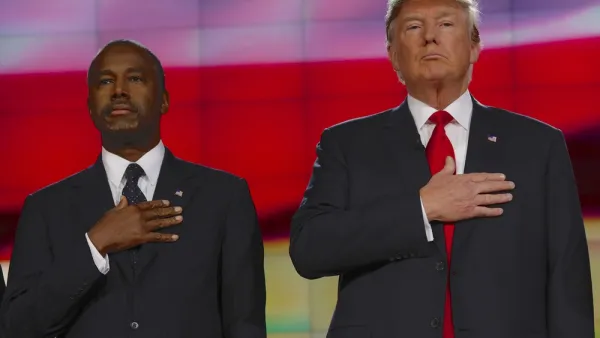
Outrage Over Trump's Fair Housing Victory Lap
President Trump took to Twitter today to celebrate his administration's decision to rescind the Affirmatively Furthering Fair Housing rule, approved by the Obama administration to strengthen the Fair Housing Act of 1968.
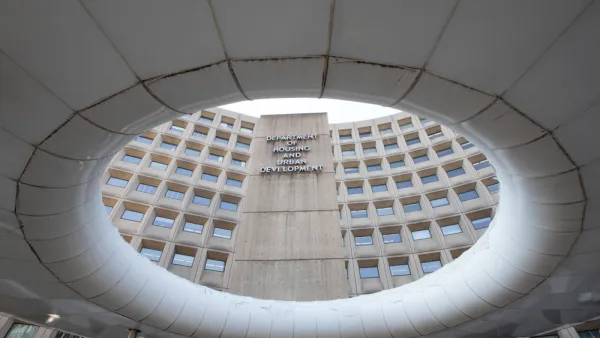
President Trump Stirs the Fair Housing Pot, Again
In a move probably made to appeal to suburban voters in an election year, President Trump sent a late night tweet claiming that the Obama-era Affirmatively Furthering Fair Housing Rule is having a 'devastating impact' on suburbs.
Trump Administration Proposal Would Eliminate Fair Housing Protections
The Trump administration last week published its latest attempt to undermine a fair housing rule adopted during the Obama administration.

Planetizen Federal Action Tracker
A weekly monitor of how Trump’s orders and actions are impacting planners and planning in America.

The state-sanctioned urbicide of Austin
People don’t kill cities. Freeways do.

US to reduce Colorado River water deliveries to Mexico
A new Colorado Treaty amendment reduces Mexico’s Colorado River water allocation by 250,000 acre feet.

5 New England states march closer to 800 megawatt wind energy project
Securing federal approval for the project may be complicated under the Trump administration, which has historically been hostile towards domestic wind power.

Baltimore to break ground on $50 million Transit Priority Project
The project will bring faster bus trips, safer streets and better bike connections to Baltimore.

Airbnb launches $250 million 'last-dollar financing' housing accelerator, makes first investment in Austin
The company will put $6.4 million towards affordable housing development in Texas’ capital.

FREE Course: Walkable City 1: Why Walkability?
After describing his path towards focusing on walkability as the essence of good planning, Jeff Speck marches through his five principal reasons for making more walkable places.
Reinventing Malls: Planning Alchemy—Turning Gray Fields Into Gold
The course focuses on the opportunities and imperatives that shape reinvention of mall sites.

Eagle County Government
Harvard University Graduate School of Design
Nashville Planning Department
The Architects Foundation
University of Cincinnati Online
The Pocatello Development Authority
The Urban Renewal Agency of the City of Pocatello
Journal of the American Planning Association