In a move probably made to appeal to suburban voters in an election year, President Trump sent a late night tweet claiming that the Obama-era Affirmatively Furthering Fair Housing Rule is having a 'devastating impact' on suburbs.


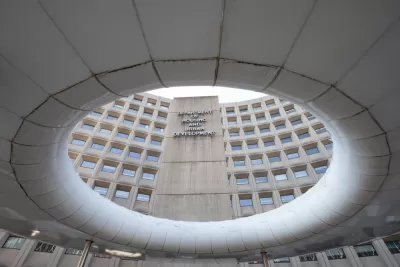
"President Donald Trump threatened to overturn an Obama-era fair-housing regulation meant to eliminate discrimination, claiming that it 'is having a devastating impact on these once thriving Suburban areas,'" reports Lauren Frias.
President Trump expressed his opinions about the Affirmatively Furthering Fair Housing rule in a late night tweet that neglected to mention his administration's ongoing efforts to undermine the rule since coming into office. Planetizen has been closely tracking the administration's actions on the rule, for example:
- Opinion Writers Oppose Trump's Proposed Changes to Fair Housing Laws (February 2020)
- Trump Administration Proposal Would Eliminate Fair Housing Protections (January 2020)
- Sources: Trump Administration Considering an Attack on Disparate Impact (January 2019)
- Trump Deals a Blow to Fair Housing Rules (January 2019)
- Analyzing the Decision to Rewrite the Affirmatively Furthering Fair Housing Rule (August 2018)
- Breaking: HUD Will Rewrite Affirmatively Furthering Fair Housing Rule (August 2018)
Additional news coverage of the president's tweets is also available from Katy O'Donnell, who also points out the Trump administration's previous work to gut fair housing practices and policies.
Numerous commenters on social media noticed that Trump was probably reacting to an article published this week by Stanley Kurtz for the National Review, who sets up a potential democratic presidency as a death knell for the suburbs, as enabled by the AFFH:
Joe Biden and the Democrats want to abolish America’s suburbs. Biden and his party have embraced yet another dream of the radical Left: a federal takeover, transformation, and de facto urbanization of America’s suburbs.
How would Biden and the AFFH accomplish that goal, according to Kurtz? By ending local control.
What surprises me is that Biden has actually promised to go much further than AFFH. Biden has embraced Cory Booker’s strategy for ending single-family zoning in the suburbs and creating what you might call “little downtowns” in the suburbs. Combine the Obama-Biden administration’s radical AFFH regulation with Booker’s new strategy, and I don’t see how the suburbs can retain their ability to govern themselves. It will mean the end of local control, the end of a style of living that many people prefer to the city, and therefore the end of meaningful choice in how Americans can live. Shouldn’t voters know that this is what’s at stake in the election?
It's worth noting that Senator Corey Booker isn't the only person in the federal government that supports the end of single-family zoning. U.S. Department of Housing and Urban Development Secretary Ben Carson, appointed by President Trump, has also expressed support for such reforms, and has even published a report that opposes local control specifically. President Trump also signed an executive order to create the "White House Council on Eliminating Regulatory Barriers to Affordable Housing," which would be tasked with implementing similar zoning changes as those proposed by Senator Booker. Others have noticed the similarities in the land use agendas of the liberal arm of the Yes In My Backyard movement with the position of the HUD secretary and the president himself, even if Kurtz hasn't.
Kurtz, however, has a long history of antagonism toward the AFFH, and of Obama's "war on the suburbs," so Trump's late night tweet prompted a victory lap from Kurtz that continues to position this issue as a wedge that could drive more votes for President Trump in November.

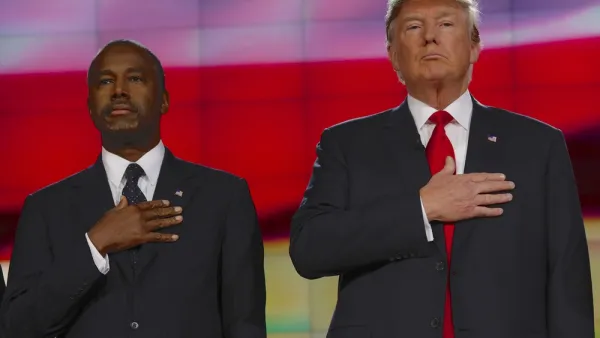
Outrage Over Trump's Fair Housing Victory Lap
President Trump took to Twitter today to celebrate his administration's decision to rescind the Affirmatively Furthering Fair Housing rule, approved by the Obama administration to strengthen the Fair Housing Act of 1968.
The Hypocrisies and Troubles of Local Control
President Trump has opinions about the sanctity of local control that don't agree with his other opinions about local control. This is a cautionary tale.
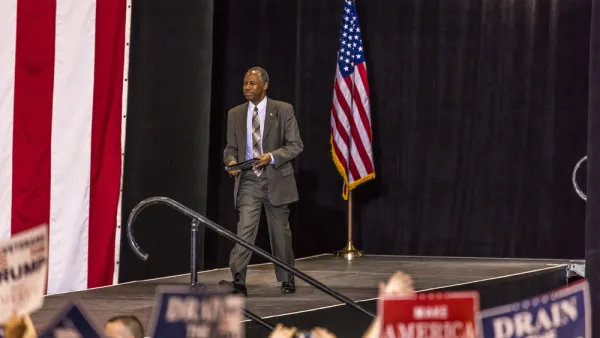
Trump Finally Follows Through on Threat to Gut Obama-Era Fair Housing Rule
It's not clear if President Trump is aware that his administration has been working to rescind the Affirmatively Furthering Fair Housing rule since 2018, but he's recently doubled down on messaging that pit suburbs against the Fair Housing Act.

Planetizen Federal Action Tracker
A weekly monitor of how Trump’s orders and actions are impacting planners and planning in America.

The state-sanctioned urbicide of Austin
People don’t kill cities. Freeways do.

US to reduce Colorado River water deliveries to Mexico
A new Colorado Treaty amendment reduces Mexico’s Colorado River water allocation by 250,000 acre feet.

5 New England states march closer to 800 megawatt wind energy project
Securing federal approval for the project may be complicated under the Trump administration, which has historically been hostile towards domestic wind power.

Baltimore to break ground on $50 million Transit Priority Project
The project will bring faster bus trips, safer streets and better bike connections to Baltimore.

Airbnb launches $250 million 'last-dollar financing' housing accelerator, makes first investment in Austin
The company will put $6.4 million towards affordable housing development in Texas’ capital.

FREE Course: Walkable City 1: Why Walkability?
After describing his path towards focusing on walkability as the essence of good planning, Jeff Speck marches through his five principal reasons for making more walkable places.
Reinventing Malls: Planning Alchemy—Turning Gray Fields Into Gold
The course focuses on the opportunities and imperatives that shape reinvention of mall sites.

Eagle County Government
Harvard University Graduate School of Design
Nashville Planning Department
The Architects Foundation
University of Cincinnati Online
The Pocatello Development Authority
The Urban Renewal Agency of the City of Pocatello
Journal of the American Planning Association