A Trump administration decision not to tighten Clean Air Act restrictions on soot pollution will have more consequences for Black Americans.


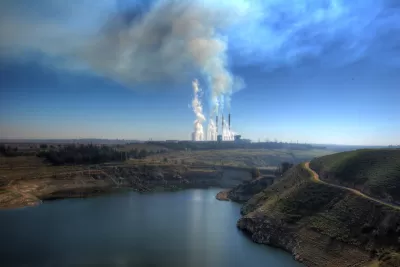
Set against the context of almost daily reports of the disparate health and economic outcomes of the coronavirus pandemic for Black Americans, in addition to the racial disparities in policing that are inspiring protests all over the country, an April decision by the Trump administration to relax environmental regulations on soot, a deadly form of pollution that affects the health of Black Americans in particular, won't come as a surprise.
Soot is the leading form of environmental health risk in the United States, according to another article providing more analysis of the consequences of that decision by David Roberts:
Research has consistently found that inhaling these particles is incredibly harmful to human physiology, at high concentrations over short periods or low concentrations over extended periods. Particulate pollution is linked to increased asthma, especially among children, along with lung irritation and inflammation, blood clots, heart attacks, weakened immune systems, and, according to a wave of recent research, long-term cognitive impacts (reduced productivity, inability to concentrate, and dementia).
And more on the scientific evidence of the disparate impact of soot on Black people in the United States:
A groundbreaking 2019 study from researchers at the Universities of Minnesota and Washington attempted to quantify both sides of particulate pollution, who produces it and who suffers from it. They found that the consumption producing the pollution was concentrated in majority white communities, while exposure to the pollution was concentrated in minority communities.
The U.S. Environmental Protection Agency under Trump's leadership has decided not to tighten standards of soot pollution as determined by the Clean Air Act, which will lead to "well over 10,000 unnecessary deaths in the US every year," according to Roberts. Moreover, the decision not to regulate soot pollution, given the disparate effects for Black Americans, is "yet another way of devaluing black bodies and black lives, yet another expression of the structural racism that Trump has so effectively flushed to the surface," according to Roberts.
FULL STORY: Trump Administration's Environmental Policies Have Consequences for Black Lives

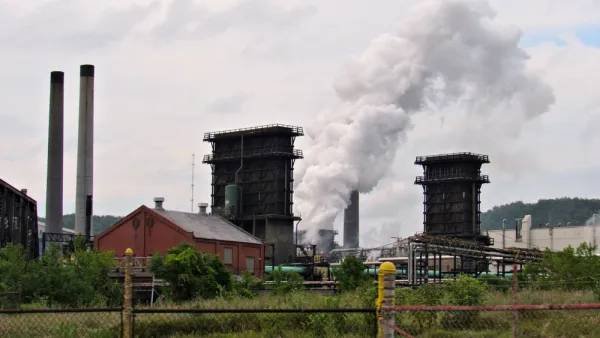
U.S. EPA To Reclassify Thousands of Major Polluters
The U.S. Environmental Protection Agency estimated its new rule change will result in up to 1,258 tons of additional emissions of hazardous materials every year.
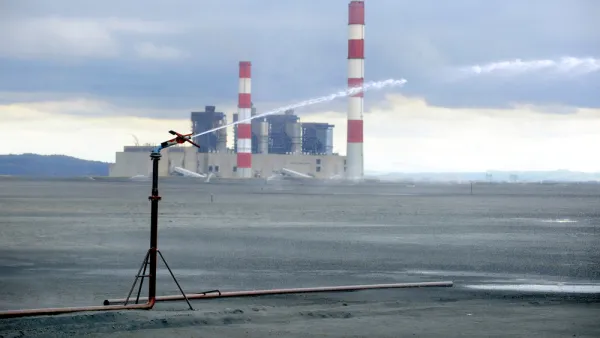
Making Older Coal Power Plants More Efficient Without Making Them Cleaner
At the center of the EPA's newly proposed Affordable Clean Energy rule is doing away with a permitting process known as New Source Review that requires coal power plants to add scrubbers and other expensive pollution control equipment when upgraded.
Breaking: Trump Administration Will Revoke California's Auto Emissions Authority
Sources leaked news of the Trump Administration's plans to dismantle the Obama-era environmental policies. The Trump Administration also aims to dismantle the Golden State's ability to regulate air pollution from vehicles.

Planetizen Federal Action Tracker
A weekly monitor of how Trump’s orders and actions are impacting planners and planning in America.

The state-sanctioned urbicide of Austin
People don’t kill cities. Freeways do.

US to reduce Colorado River water deliveries to Mexico
A new Colorado Treaty amendment reduces Mexico’s Colorado River water allocation by 250,000 acre feet.

5 New England states march closer to 800 megawatt wind energy project
Securing federal approval for the project may be complicated under the Trump administration, which has historically been hostile towards domestic wind power.

Baltimore to break ground on $50 million Transit Priority Project
The project will bring faster bus trips, safer streets and better bike connections to Baltimore.

Airbnb launches $250 million 'last-dollar financing' housing accelerator, makes first investment in Austin
The company will put $6.4 million towards affordable housing development in Texas’ capital.

FREE Course: Walkable City 1: Why Walkability?
After describing his path towards focusing on walkability as the essence of good planning, Jeff Speck marches through his five principal reasons for making more walkable places.
Reinventing Malls: Planning Alchemy—Turning Gray Fields Into Gold
The course focuses on the opportunities and imperatives that shape reinvention of mall sites.

Eagle County Government
Harvard University Graduate School of Design
Nashville Planning Department
The Architects Foundation
University of Cincinnati Online
The Pocatello Development Authority
The Urban Renewal Agency of the City of Pocatello
Journal of the American Planning Association