Media is full of stories about people fleeing the city for suburban or even rural climes during the pandemic. The data from real estate search sites tell a different story.


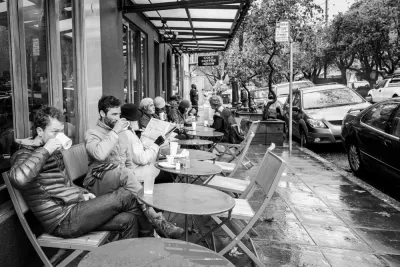
Since the beginning of the coronavirus pandemic in the United States, writers have predicted that downtowns and urban areas would fall out of the favor that had defined the past decade-plus in the United States. According to an article by Marie Patino that cites multiple data sources, those predictions haven't yet come true:
A new report by City Observatory researcher Joe Cortright, made available as an interactive dashboard, suggests that such hand-wringing may be premature. Searches for urban properties on real estate website Zillow increased in 29 of the 35 largest U.S. metropolitan markets in April, compared with April of last year. Data from another website, Apartment List, show that more people were looking to live in New York City during that same month, the darkest one in terms of lives lost in New York, and much of the northeastern U.S.
The article includes soundbites from Cortright explaining the significance of the data reported in the new interactive dashboard, along with the significance of the ongoing preference for city living exhibited by young people.
Read the full story: An Urban Exodus? Not Yet, New Research Shows

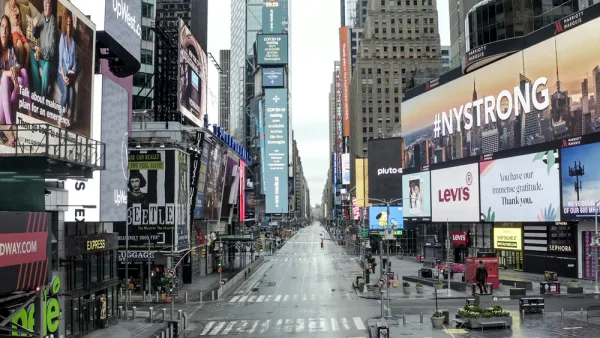
Biden Signs Legislation Ending Covid 19 National Emergency
The Covid 19 national emergency enacted by then-President Donald Trump in March 2020 was officially ended on Monday by President Joe Biden.

Study: Poor Air Quality Fuels COVID Transmission
Communities exposed to higher levels of air pollution experience higher rates of infection, particularly in areas with high population density.
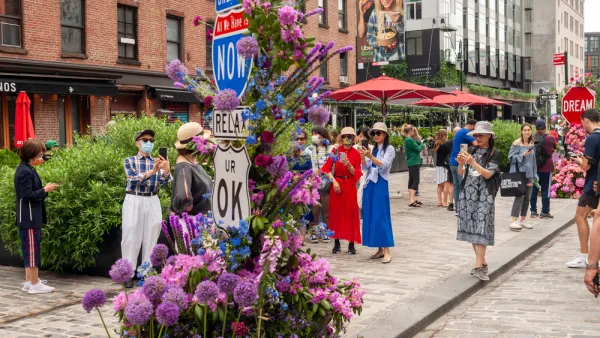
Don't Call it a Comeback: Big Cities Are Outlasting Predictions of Demise
As the new world order of working from home and vaccine hesitancy settles in, it's time to reevaluate assumptions from early in the pandemic about the effect of the public health on the economic health of large cities.

Planetizen Federal Action Tracker
A weekly monitor of how Trump’s orders and actions are impacting planners and planning in America.

The state-sanctioned urbicide of Austin
People don’t kill cities. Freeways do.

US to reduce Colorado River water deliveries to Mexico
A new Colorado Treaty amendment reduces Mexico’s Colorado River water allocation by 250,000 acre feet.

Brightline West’s future may rely on $6 billion federal loan
The company has until Nov. 2 to make a $400 million equity investment into its proposed high-speed rail line.

LA Metro’s ultimatum: no extra buses for LA28 if federal funding isn’t imminently secured
If Metro does not provide additional buses, LA28 organizers will have to find a new way to manage Olympic traffic. LA28’s budget does not include a line item for transit.

Colorado’s Largest Data Center Could Rise Next to Homes — Without a Public Hearing
The proposed campus would consume 11 times the power of Denver International Airport; as it has across the country, opposition mounts.

FREE Course: Walkable City 1: Why Walkability?
After describing his path towards focusing on walkability as the essence of good planning, Jeff Speck marches through his five principal reasons for making more walkable places.
Reinventing Malls: Planning Alchemy—Turning Gray Fields Into Gold
The course focuses on the opportunities and imperatives that shape reinvention of mall sites.

Eagle County Government
Harvard University Graduate School of Design
Nashville Planning Department
The Architects Foundation
University of Cincinnati Online
The Pocatello Development Authority
The Urban Renewal Agency of the City of Pocatello
Journal of the American Planning Association