A noticeable increase in subway ridership has been taking place on subway trains in New York City, but not enough to call it a comeback, yet.


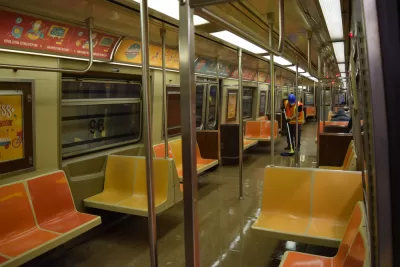
"Subway ridership is ticking up slowly but surely, new turnstile data show, but straphangers are still not coming back as fast as drivers," reports Dave Colon from New York City.
The findings come from Todd Schneider, who provides analysis of publicly available ridership data for the New York Metropolitan Transportation Authority (MTA) subway system. The MTA subway system counted 600,952 riders on May 15, the highest number since the system counted 676,556 riders on March 27.
The information comes with a note of caution: the slight increase on the New York subway is nowhere near enough to overcome the system's fiscal emergency, and most of the city is still staying home, so a return to normal is not suddenly imminent. Moreover, the increase in subway ridership is slower than the number of drives returning to the streets in the city. "Up on the streets, vehicle miles traveled rose from 21,630,000 miles on March 30, one week into PAUSE, to 34,240,000 miles on May 8, an increase of 58 percent," according to Colon.
FULL STORY: Nature Is Healing: Riders Are Slowly Returning To The Subway

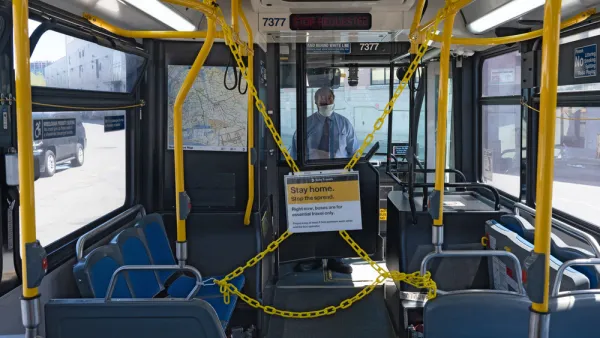
Ridership Up, Speeds Down for Buses in New York City
The new normal might be fleeting on buses in New York City, but it's already different than the normal routine during the early months of the pandemic.
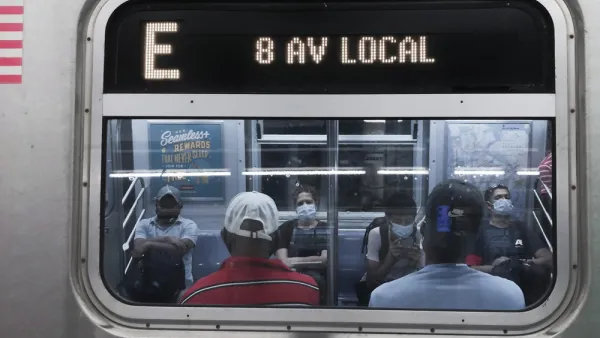
New York Subway Sets Pandemic Ridership Record
With school back in session and Broadway shows open to the public, subway ridership is surging in New York City, but still well below pre-pandemic levels.
Report: New York MTA Facing 'Greatest Crisis' in its History
A new report on the finances of the New York Metropolitan Transportation Authority (MTA) makes a desperate plea for assistance from the federal government.

Planetizen Federal Action Tracker
A weekly monitor of how Trump’s orders and actions are impacting planners and planning in America.

The state-sanctioned urbicide of Austin
People don’t kill cities. Freeways do.

US to reduce Colorado River water deliveries to Mexico
A new Colorado Treaty amendment reduces Mexico’s Colorado River water allocation by 250,000 acre feet.

Mamdani overhauls NYC's Vision Zero plan with 100 new policy goals
The overhaul aims to reduce traffic deaths and make streets safer for pedestrians, cyclists and drivers through lower speed limits, new safety infrastructure and more.

Amtrak not solely to blame for New Jersey commuter rail's unreliability, report finds
A new study from the Garden State Initiative found that NJ Transit’s budget grew 20% across a 4 year period, but reliability declined significantly over the same period.

EPA erases limits on planet-warming pollution from power plants
Under Monday’s plan, power plants would still have some limits on how much mercury, arsenic and other contaminants they can emit.

FREE Course: Walkable City 1: Why Walkability?
After describing his path towards focusing on walkability as the essence of good planning, Jeff Speck marches through his five principal reasons for making more walkable places.
Reinventing Malls: Planning Alchemy—Turning Gray Fields Into Gold
The course focuses on the opportunities and imperatives that shape reinvention of mall sites.

Eagle County Government
Harvard University Graduate School of Design
Nashville Planning Department
The Architects Foundation
University of Cincinnati Online
The Pocatello Development Authority
The Urban Renewal Agency of the City of Pocatello
Journal of the American Planning Association