After a 22% drop in housing starts in March, municipalities and state governments continue to assess whether or not housing construction is essential, weighing factors like workforce safety and availability of construction materials.


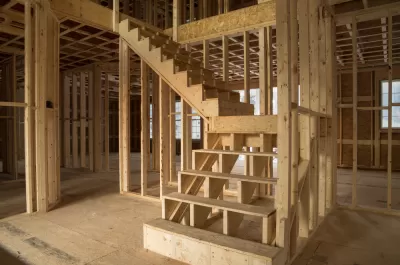
In a Joint Center for Housing Studies of Harvard University blog post, Whitney Airgood-Obrycki identifies four reasons that construction projects could be delayed as a result of the coronavirus pandemic. "COVID-19 will have many effects on housing markets in the coming weeks and years. One of the near-term consequences of the spread of and response to the virus is likely to be delayed construction due to office closures, construction moratoria, supply chain disruptions, and risks to the labor force," writes Airgood-Obrycki.
Closures of city offices and remote work means impeded permitting, inspection, and review. According to a survey by the National Association of Home Builders, 90% of participants reported an increase in the time required to obtain a plan review. Of the same group, 76% experienced delays in inspections.
As of Airgood-Obrycki's writing, construction bans were in place in six states (Michigan, New Jersey, New York, Pennsylvania, Vermont, and Washington) in addition to many cities. New York and New Jersey are allowing construction on affordable housing projects. Difficulties in sourcing materials due to disruption in the global construction material supply chain leaves many projects at a standstill. Concerns about keeping construction workers safe on-site include a lack of access to sanitization products and a shortage of N-95 masks that protect workers from particulate matter. Retention in the construction labor force will depend heavily on the ability of project managers to protect staff where work is available.
FULL STORY: COVID-19 WILL DELAY HOUSING CONSTRUCTION, BUT FOR HOW LONG?

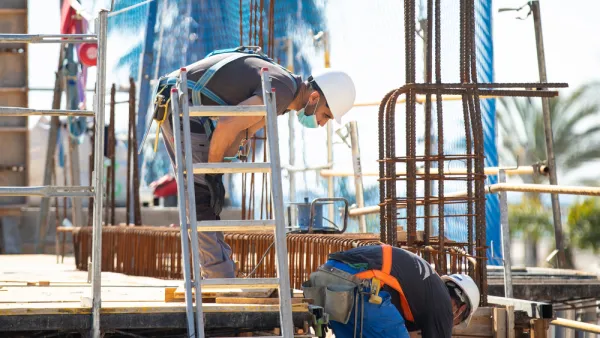
The New Normal for the Construction Industry
The changes coming to the construction industry to protect the safety and health of workers during the pandemic could stay in place for the foreseeable future.
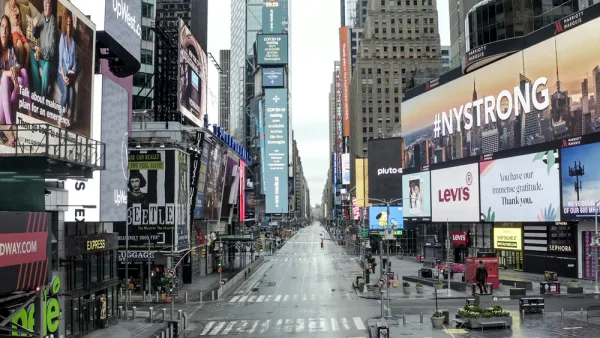
Biden Signs Legislation Ending Covid 19 National Emergency
The Covid 19 national emergency enacted by then-President Donald Trump in March 2020 was officially ended on Monday by President Joe Biden.
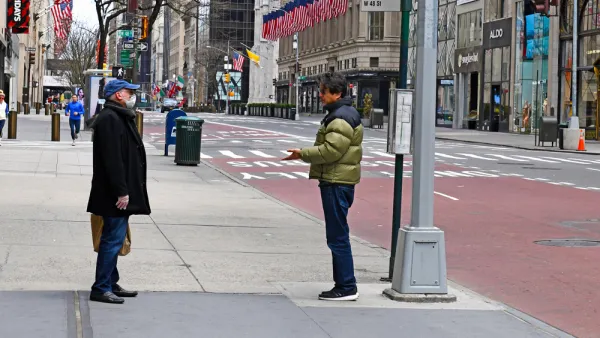
Friday Eye Candy: Covid-19, Then and Now
The New York Times compared images from readers portraying similar scenes in 2020 and 2022.

Planetizen Federal Action Tracker
A weekly monitor of how Trump’s orders and actions are impacting planners and planning in America.

The state-sanctioned urbicide of Austin
People don’t kill cities. Freeways do.

US to reduce Colorado River water deliveries to Mexico
A new Colorado Treaty amendment reduces Mexico’s Colorado River water allocation by 250,000 acre feet.

5 New England states march closer to 800 megawatt wind energy project
Securing federal approval for the project may be complicated under the Trump administration, which has historically been hostile towards domestic wind power.

Baltimore to break ground on $50 million Transit Priority Project
The project will bring faster bus trips, safer streets and better bike connections to Baltimore.

Airbnb launches $250 million 'last-dollar financing' housing accelerator, makes first investment in Austin
The company will put $6.4 million towards affordable housing development in Texas’ capital.

FREE Course: Walkable City 1: Why Walkability?
After describing his path towards focusing on walkability as the essence of good planning, Jeff Speck marches through his five principal reasons for making more walkable places.
Reinventing Malls: Planning Alchemy—Turning Gray Fields Into Gold
The course focuses on the opportunities and imperatives that shape reinvention of mall sites.

Eagle County Government
Harvard University Graduate School of Design
Nashville Planning Department
The Architects Foundation
University of Cincinnati Online
The Pocatello Development Authority
The Urban Renewal Agency of the City of Pocatello
Journal of the American Planning Association