The second most populous city in California, San Diego, wants to revolutionize its approach to planning parks and open space.


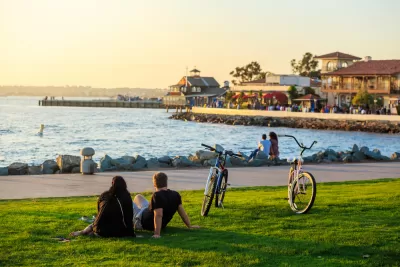
"The city of San Diego is on the precipice of replacing a decades-old way of thinking about its parks, emphasizing quality over quantity in a new planning approach that could have profound effects on disadvantaged neighborhoods and older ones already built to capacity," reports Jennifer Van Grove.
The evolution of parks planning in San Diego is encapsulated in a draft version of the city's new Parks Master Plan, released in April. The previous park plan for the city dates back to 1956.
Among the foundational changes proposed by the draft Parks Master Plan is a points system for quantifying the access of residents to quality parks. Today, the city’s parks standard is 2.8 acres for every 1,000 people. "Going forward, the standard will be 12 points for every 1,000 residents, with points representing the recreational value of the park’s size, features, connection to transit or programming," according to Van Grove.
The city will seek input on the draft from the public until the end of May.
FULL STORY: San Diego shakes up citywide approach to parks with focus on access, amenities

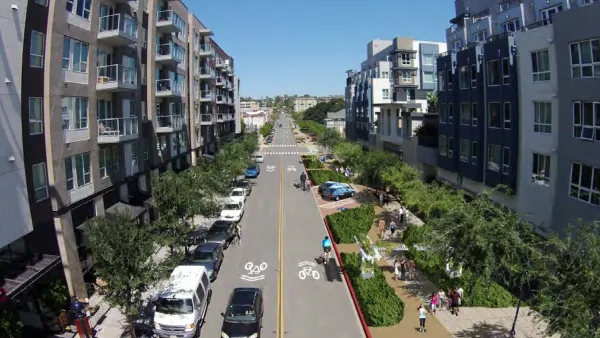
San Diego Swaps Parking Lane for Kid-Friendly Mini Park
The block-long greenway will feature interactive play equipment and landscaping.

Serpentine Maze: Pop-Up Parks in the Pandemic
If the combined effects of winter's cold and the pandemic has you bummed, check out this community-building exercise in the frozen North.

Reimagined Public Spaces and Programming During the Pandemic
Public spaces have become more important than ever. Here are five case studies of innovative and safely designed programming that engages people of all ages and backgrounds.

The state-sanctioned urbicide of Austin
People don’t kill cities. Freeways do.

US to reduce Colorado River water deliveries to Mexico
A new Colorado Treaty amendment reduces Mexico’s Colorado River water allocation by 250,000 acre feet.

New Jersey’s second-largest city bans standalone data centers
Jersey City will continue to allow co-location facilities, such as those meant for research institutions that store their own data.

Amtrak not solely to blame for New Jersey commuter rail's unreliability, report finds
A new study from the Garden State Initiative found that NJ Transit’s budget grew 20% across a 4 year period, but reliability declined significantly over the same period.

EPA erases limits on planet-warming pollution from power plants
Under Monday’s plan, power plants would still have some limits on how much mercury, arsenic and other contaminants they can emit.

Phoenix announces new on-demand transit service, more frequent RAPID buses
Both new services will launch in October, and are part of Phoenix's Project Effective Access Solutions for Easing Congestion.

FREE Course: Walkable City 1: Why Walkability?
After describing his path towards focusing on walkability as the essence of good planning, Jeff Speck marches through his five principal reasons for making more walkable places.
Reinventing Malls: Planning Alchemy—Turning Gray Fields Into Gold
The course focuses on the opportunities and imperatives that shape reinvention of mall sites.

Eagle County Government
Harvard University Graduate School of Design
Nashville Planning Department
The Architects Foundation
University of Cincinnati Online
The Pocatello Development Authority
The Urban Renewal Agency of the City of Pocatello
Journal of the American Planning Association