The Community Reinvestment Act of 1977 was the final of a suite of federal laws aimed at fighting racial segregation in housing. Congress is beginning to consider how best to modernize the act to meet the challenges of contemporary times.


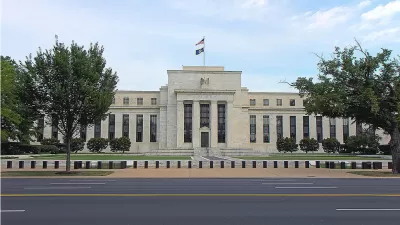
The House Committee on Financial Services recently held a hearing on the Community Reinvestment Act, one of the Federal Reserve's oversight duties, according to an article by Claudia Sahm.
News coverage of the hearing, such as that found here or here, as well as the hearing itself, can be hard to follow. You thought monetary policy was a black box? Debates about the Community Reinvestment Act are a bewildering mix of technical jargon and heated “she said-he said” exchanges.
Sahm makes it clear why Americans should care about the Community Reinvestment Act, and calls for improvements to the Community Reinvestment Act that will "make it accountable to Main Street."
Since the Community Reinvestment Act was adopted in 1977, Congress updated the act once, in 1995, and is now preparing to do the same again. According to Sahm, "The purpose of the act is not yet fulfilled—neighborhoods today still differ sharply and substantially by race and income. Massive differences in wealth remain."
FULL STORY: Encouraging banks to serve the credit needs of everyone

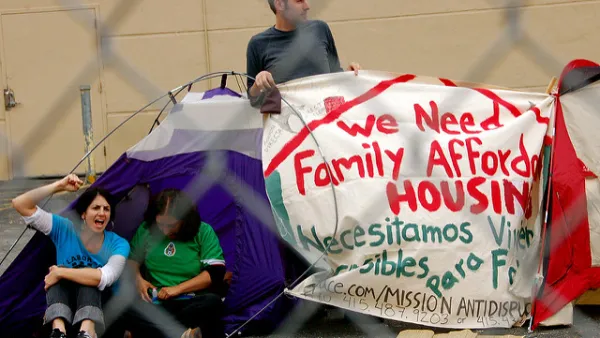
More Fallout on Affordable Housing from Tax Bill
While the low income housing tax credit was retained, banks will be much less willing to purchase them due to their reduced corporate tax rate. That's just one way H.R. 1 will exacerbate divisions between the rich and poor in America's cities.

How a Government-Sponsored Enterprise Turned Away From its Housing Mission
A coalition of housing advocates is calling on the Federal Home Loan Bank system to return to its original purpose — lending to support housing.
Carbon Tax-and-Dividend Bill to Be Reintroduced
Two members of Congress, a Democrat and a Republican, both from Florida, will reintroduce their bill to put a tax on carbon emissions and return the revenue to the people in the form of a dividend.

The state-sanctioned urbicide of Austin
People don’t kill cities. Freeways do.

US to reduce Colorado River water deliveries to Mexico
A new Colorado Treaty amendment reduces Mexico’s Colorado River water allocation by 250,000 acre feet.

New Jersey’s second-largest city bans standalone data centers
Jersey City will continue to allow co-location facilities, such as those meant for research institutions that store their own data.

Amtrak not solely to blame for New Jersey commuter rail's unreliability, report finds
A new study from the Garden State Initiative found that NJ Transit’s budget grew 20% across a 4 year period, but reliability declined significantly over the same period.

EPA erases limits on planet-warming pollution from power plants
Under Monday’s plan, power plants would still have some limits on how much mercury, arsenic and other contaminants they can emit.

Phoenix announces new on-demand transit service, more frequent RAPID buses
Both new services will launch in October, and are part of Phoenix's Project Effective Access Solutions for Easing Congestion.

FREE Course: Walkable City 1: Why Walkability?
After describing his path towards focusing on walkability as the essence of good planning, Jeff Speck marches through his five principal reasons for making more walkable places.
Reinventing Malls: Planning Alchemy—Turning Gray Fields Into Gold
The course focuses on the opportunities and imperatives that shape reinvention of mall sites.

Eagle County Government
Harvard University Graduate School of Design
Nashville Planning Department
The Architects Foundation
University of Cincinnati Online
The Pocatello Development Authority
The Urban Renewal Agency of the City of Pocatello
Journal of the American Planning Association