Enough European cities have shown it can be done. It's time for U.S. cities to follow suit.



According to an article by James Nevius, cities in Europe are blazing a new trail of multi-modal planning, and it's time for the United States to get on board.
It can be easier to imagine European cities car-free because for so much of their histories—whether they are 300 or 3,000 years old—they were. Streets evolved as pedestrian thoroughfares, and cars still seem like interlopers. If you are a city with actual medieval walls, like York in the U.K.—a pioneer in pedestrianizing its old city—those walls can offer easy templates for vehicular “no-go” zones. This is true in large cities, too, such as London and Madrid. It’s no coincidence that the Madrid Central plan, which keeps older vehicles out of the center of Spain’s largest metropolis, covers the 1.8 square miles once surrounded by the ancient city walls or that London’s Ultra Low Emission Zone is rolling out in the densest and oldest part of that city.
Nevius argues that cities in the United States are capable of the same kinds of changes—because most cities in the United States are older than the automobile.
Nevius also lists the kinds of steps U.S. cities could take, "relatively quickly and inexpensively," to effect auto-independence:
- Make streets multimodal
- Implement congestion pricing and/or limited traffic zones
- Eliminate street parking
- Boost transit options
- Reclaim plazas and other public space for people
The article includes details on each of these policy proposals to help get U.S. cities headed in the car-free direction.
Read the full story: How to end traffic

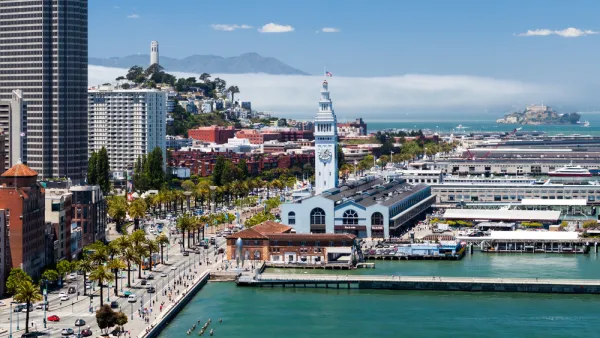
Economic Justice Includes Highway Removals
A $435 billion "economic justice" bill proposed by Democrats in the U.S. Senate includes $10 billion for projects that remove highways and build community-oriented assets in their place.
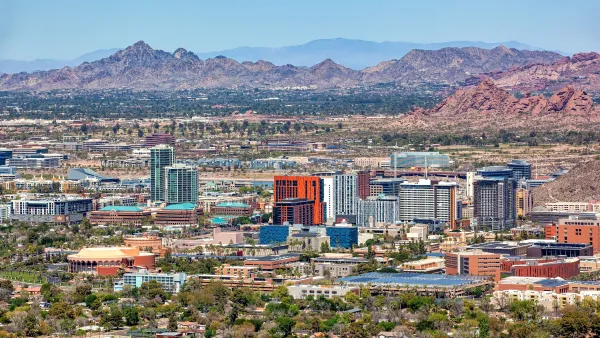
‘Tempe Tomorrow’ Plans for Expected Population Growth
Tempe planners are preparing a General Plan update scheduled for voter approval in March 2024.
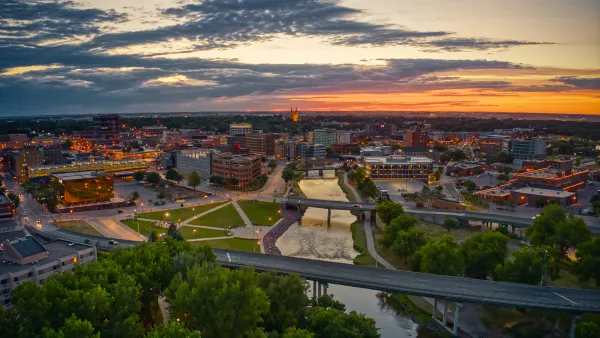
Sioux Falls Multi-Family Development Outpaces Transportation Improvements
Sioux Falls, South Dakota is undergoing a multi-family development boom. Residents are increasingly concerned about the traffic the development brings, according to local news reports.

Amtrak, CN end decades-long dispute with eight-year agreement
The new operating agreement establishes an updated framework for the companies to work together, including processes to resolve disputes.

Judges permit Denver to divert 77,000 acre feet from the Colorado River for reservoir expansion
Overuse and climate change have caused the Colorado River’s water levels to plummet.

Nation's most wind-powered state turns to coal as data centers increase energy demand
For the first time in decades, Iowa has increased its generation of coal power.

Boston has spent millions making the Green Line more accessible — and there’s no end in sight
While the city has invested millions into expanding and adding platforms to the Green Line to make it more accessible, new train cars set to arrive next year will be too tall for disabled passengers to board without raising the current platforms.

Idaho may see an 18% drop in federal surface transit funding — the largest estimated cut in the US
Transit systems in rural communities are much more reliant on federal funding to provide their services.

How ‘post-disaster gentrification’ alters neighborhoods after natural calamities
After hurricanes, fires or other calamities, the original residents of a community are often replaced by younger, wealthier residents.

FREE Course: Walkable City 1: Why Walkability?
After describing his path towards focusing on walkability as the essence of good planning, Jeff Speck marches through his five principal reasons for making more walkable places.
Reinventing Malls: Planning Alchemy—Turning Gray Fields Into Gold
The course focuses on the opportunities and imperatives that shape reinvention of mall sites.


City of Wisconsin Rapids
Harvard University Graduate School of Design
KFH Group Inc.
The Architects Foundation
University of Cincinnati Online
The Pocatello Development Authority
The Urban Renewal Agency of the City of Pocatello