The D.C. Department of Energy and Environment has read the writing on the wall.



"A DC agency is considering changes to the city's floodplain regulations which would restrict construction in areas expected to be underwater in 2100," reports Nena Perry-Brown.
Namely, the Department of Energy and Environment (DOEE) "may amend its Flood Hazard Rules to expand the agency's purview over DC's floodplain, covering the 500-year floodplain rather than just the 100-year," according to Perry-Brown.
Those initial steps could all be prelude for an eventual decision by the DOEE to restrict development within the high tide mark—areas that are expected to be underwater by 2100.
"DOEE's proposed changes were included as part of a zoning application the Office of Planning (OP) filed to remove use prohibitions within the 100-year floodplain from the zoning code," adds Perry-Brown.
Read the full story: DC Agency May Restrict Construction in Areas That May Eventually Be Underwater

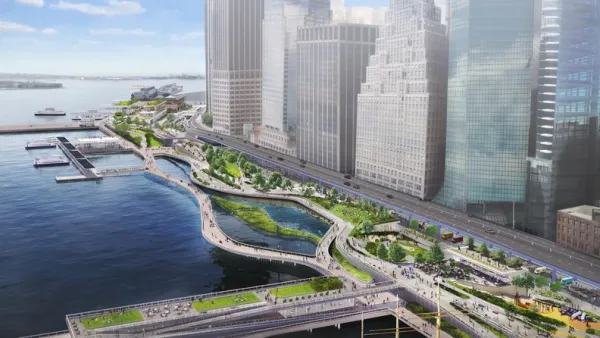
Lower Manhattan Climate Resilience Plan Released
The Financial District and Seaport Climate Resilience Master Plan will extend the shoreline in Lower Manhattan by up to 200 feet.
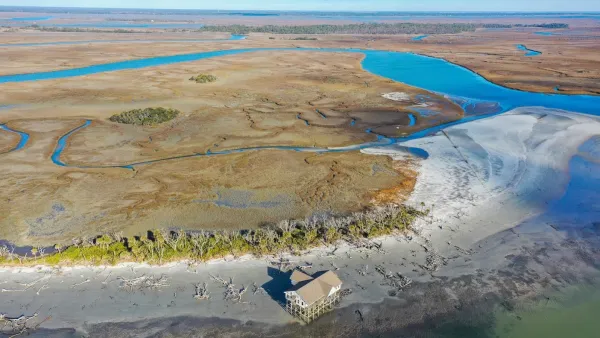
An Open Space Plan for Cultural Landscapes, Resilience, and Growth in the Coastal Southeast
The Beaufort County Greenprint Plan, completed in 2020, offers an innovative model of open space planning integrated within a larger planning framework.
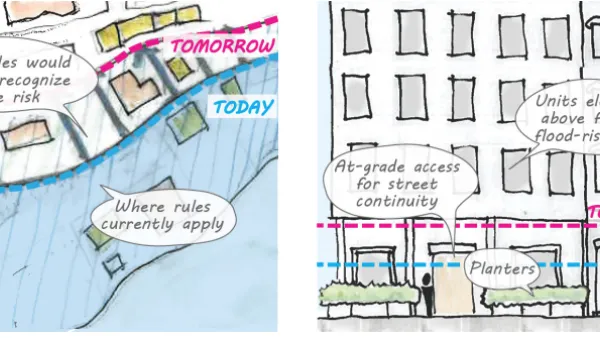
Proposed Citywide Rezoning Would Layer Resilience in New York City
With 520 miles of coastline, New York City is ready to implement the lessons of Hurricane Sandy in the zoning code for the entire city.

Planetizen Federal Action Tracker
A weekly monitor of how Trump’s orders and actions are impacting planners and planning in America.

Amtrak, CN end decades-long dispute with eight-year agreement
The new operating agreement establishes an updated framework for the companies to work together, including processes to resolve disputes.

Northwest rail fans eager for Sept. 30 debut of Amtrak’s Airo fleet
Get ready for that new train smell and more seats. But they won’t go faster or run more frequently on the Cascades route in Washington and Oregon.

LAX SkyLink opening delayed again, contractor won’t commit to new deadline
The project was supposed to open its doors to the public in 2023.

Caltrain may slash over one-third of its stations
If Bay Area voters reject two transit tax measures, Caltrain, BART and AC Transit will see steep service cuts.

A 'dangerous' precedent: North Carolina successfully pressures communities into voting for toll roads
Two mayors resigned from the Charlotte Regional Transportation Planning Organization after it voted in favor of the toll roads.

FREE Course: Walkable City 1: Why Walkability?
After describing his path towards focusing on walkability as the essence of good planning, Jeff Speck marches through his five principal reasons for making more walkable places.
Reinventing Malls: Planning Alchemy—Turning Gray Fields Into Gold
The course focuses on the opportunities and imperatives that shape reinvention of mall sites.

City of Thousand Oaks
City of Wisconsin Rapids
Harvard University Graduate School of Design
The Architects Foundation
University of Cincinnati Online
The Pocatello Development Authority
The Urban Renewal Agency of the City of Pocatello