An ambitious plan to connect the Allegheny County cities of Pittsburgh and Oakland is proceeding to final stages of design, despite having fallen a little behind schedule for an expected 2021 opening date.


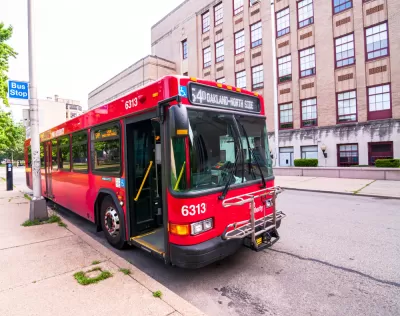
The Port Authority of Allegheny County is moving forward with a plan to connect Downtown Pittsburgh with the suburb of Oakland, albeit a bit behind schedule from originally hoped, according to an article by Ed Blazina.
"On Thursday [November 14], the board’s performance oversight committee recommended extending the contract of AECOM Technical Services Inc. to take design of the system from 60% to completion, adding $7.5 million to the company’s existing $10.5 million contract," writes Blazina.
A major step for the project still looms: applying for federal funding from the Federal Transit Administration's Small Grants program. "The authority is seeking $99.5 million in federal funds for the $225 million project," reports Blazina.
The article includes more details about the expected final form of the project at this point in the process, and some of the feedback received from the public along the way,
Read the full story: Proposed BRT system between Oakland and Downtown Pittsburgh moving to final design

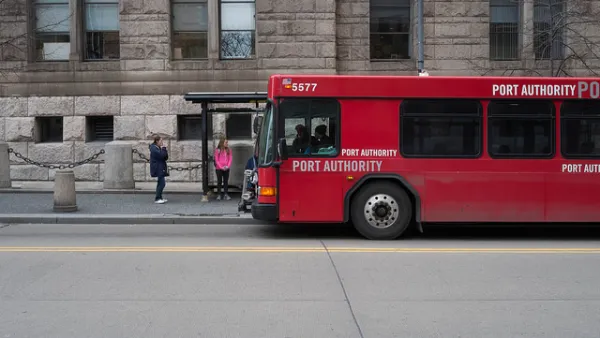
Electric Bus Rapid Transit Between Pittsburgh and Oakland Takes Crucial Steps Forward
The Port Authority of Allegheny County will lead the remainder of a project to deliver major transportation improvements between Downtown Pittsburgh and Oakland.
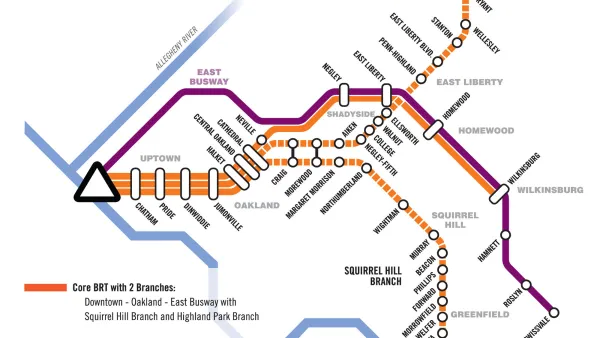
Pittsburgh's Planned Bus Rapid Transit Could Leave Some Riders Behind
A proposed bus rapid transit route connecting Pittsburgh to the neighborhood of Oakland will surely benefit many commuters, but other transit commuters, including some of the poorest in the region, will face new hardships.
Pittsburgh to Oakland BRT Makes Adjustments, Keeps Moving Forward
The Port Authority of Allegheny County is expected to submit a proposal for a $199.5 million electric bus rapid transit system for federal funding.

Planetizen Federal Action Tracker
A weekly monitor of how Trump’s orders and actions are impacting planners and planning in America.

California plans to bury El Niño’s downpour
If the state plays its cards right, it may be able to store a billion acre-feet of El Niño’s water in aquifers.

Chicago breaks ground on $3 billion megadevelopment
The new neighborhood, titled Foundry Park, will one day host 3,700 residences.

Satanic Place Names
From streams and lakes to valleys and canyons, I mapped more than 1,000 places named after the Devil.

California High-Speed Rail Authority CEO resigns after $600,000 scandal
Under Ian Choudri, the authority used taxpayer dollars to fund first class flights and trips to nightclubs.

Want to study the Missouri River? Soon, you may need unanimous approval from 10 states
Legislation would require 10 governors’ permission to study or build projects moving water outside the basin.

FREE Course: Walkable City 1: Why Walkability?
After describing his path towards focusing on walkability as the essence of good planning, Jeff Speck marches through his five principal reasons for making more walkable places.
Reinventing Malls: Planning Alchemy—Turning Gray Fields Into Gold
The course focuses on the opportunities and imperatives that shape reinvention of mall sites.

City of Rosemead
Rutgers University, Edward J. Bloustein School of Planning and Public Policy
One Hundred Miles
Hunter College, City University of New York (CUNY)
The Architects Foundation
University of Cincinnati Online
City of Cambridge
Montrose County
The Pocatello Development Authority