A development deal described as the most complex in recent Southern Nevada history is moving forward. The end result could be another digitally enabled city, in line with efforts in other cities like Toronto and TK.



"Months after announcing plans for a futuristic mini-city in Las Vegas, the developer has reached a deal to buy a project site for more than $300 million," reports Eli Segall.
The deal still needs to close, according to Segall, and there's no guarantee it will. "But the announcement is a key step for a tech-heavy, $7.5 billion project that had been shrouded in mystery in some keys ways since its unveiling — and whose developer, the Review-Journal confirmed, is Janet Garcia-Legrand of Miami, who was arrested in 2017 in connection with an alleged scheme to defraud a south Florida city."
Contributing to that mystery is the developers' reliance on "an arsenal of buzzwords" to describe the project, "saying the project will feature net-zero buildings, artificial intelligence, augmented reality, supertrees and self-healing concrete structures."
More details on the real estate deal and the potential final form of the development are included in the article.
FULL STORY: Developer strikes deal to buy land for futuristic Las Vegas mini-city

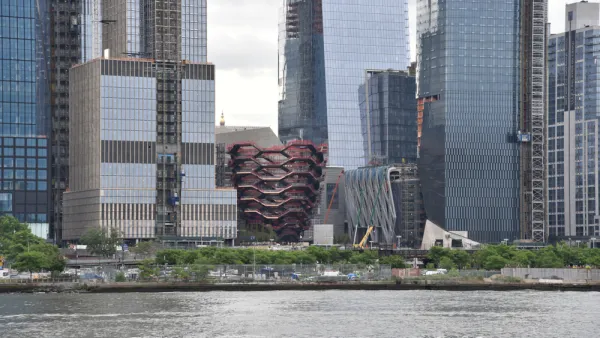
Review: The Hudson Yards Mega-Development, Open to the Public Today
Curbed Architecture Critic Alexandra Lange provides everything you need to know about the $25 billion, "city within the city" that opened to the public in Manhattan today. Also, the review isn't exactly positive.

Nevada sues feds to block Colorado River cuts
The federal government’s newly released plan for managing the Colorado River’s dwindling water supply could cause Nevada to lose over 70% of its allocated water.

Las Vegas debuts new bus rapid transit
The project also brings widened sidewalks and more trees to the Maryland Parkway corridor.

Planetizen Federal Action Tracker
A weekly monitor of how Trump’s orders and actions are impacting planners and planning in America.

The state-sanctioned urbicide of Austin
People don’t kill cities. Freeways do.

US to reduce Colorado River water deliveries to Mexico
A new Colorado Treaty amendment reduces Mexico’s Colorado River water allocation by 250,000 acre feet.

5 New England states march closer to 800 megawatt wind energy project
Securing federal approval for the project may be complicated under the Trump administration, which has historically been hostile towards domestic wind power.

Baltimore to break ground on $50 million Transit Priority Project
The project will bring faster bus trips, safer streets and better bike connections to Baltimore.

Airbnb launches $250 million 'last-dollar financing' housing accelerator, makes first investment in Austin
The company will put $6.4 million towards affordable housing development in Texas’ capital.

FREE Course: Walkable City 1: Why Walkability?
After describing his path towards focusing on walkability as the essence of good planning, Jeff Speck marches through his five principal reasons for making more walkable places.
Reinventing Malls: Planning Alchemy—Turning Gray Fields Into Gold
The course focuses on the opportunities and imperatives that shape reinvention of mall sites.

Eagle County Government
Harvard University Graduate School of Design
Nashville Planning Department
The Architects Foundation
University of Cincinnati Online
The Pocatello Development Authority
The Urban Renewal Agency of the City of Pocatello
Journal of the American Planning Association