The New York Times notes the gentrification of Fort Greene, but caters to the people would looking for places to live in the neighborhood.


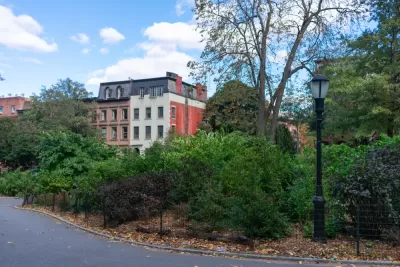
Julie Lasky reports from Fort Green, a neighborhood located in the northwest of the borough of Brooklyn in New York City, which has undergone rapid change in recent years.
Fort Greene is a historically African-American neighborhood, which hosted a cultural revival in the 1980s and 1990s that has been compared to the Harlem Renaissance. According to the Furman Center at New York University, the black population in Community District 2, comprising Fort Greene and Brooklyn Heights, was 25.8 percent in 2017, down from 41.8 percent in 2000.
Still, even recently the neighborhood was missing amenities, like access to banks, because of the "economic ravages of 1970s New York," according to Lasky.
The article functions as a visitors guide to the neighborhood for outsiders (including people looking to buy or rent in the neighborhood) while also providing a review of the land use and development controversies of 2019 Fort Greene.
Filmmaker Spike Lee is a native of Fort Greene, and a famous critic of gentrification, and the varying depictions of the neighborhood in Lee's work make a cameo in the article as well.
FULL STORY: Fort Greene, Brooklyn: Riding the Wave of Gentrification


‘Emergent City’ Documentary Highlights Rare Anti-Gentrification Victory
The film charts the saga of a Brooklyn site called Industry City.

Bitter Irony Behind Brooklyn’s Sweet Domino Sugar Sign
A new feature on the Brooklyn waterfront is a reminder that Domino Sugar has made several unsavory appearances in the history of Puerto Rican communities.
How Broken Planning and Development Processes Hobble the Potential of Neighborhoods
A stinging critique of the public review process in New York City.

Planetizen Federal Action Tracker
A weekly monitor of how Trump’s orders and actions are impacting planners and planning in America.

The state-sanctioned urbicide of Austin
People don’t kill cities. Freeways do.

US to reduce Colorado River water deliveries to Mexico
A new Colorado Treaty amendment reduces Mexico’s Colorado River water allocation by 250,000 acre feet.

5 New England states march closer to 800 megawatt wind energy project
Securing federal approval for the project may be complicated under the Trump administration, which has historically been hostile towards domestic wind power.

Baltimore to break ground on $50 million Transit Priority Project
The project will bring faster bus trips, safer streets and better bike connections to Baltimore.

Airbnb launches $250 million 'last-dollar financing' housing accelerator, makes first investment in Austin
The company will put $6.4 million towards affordable housing development in Texas’ capital.

FREE Course: Walkable City 1: Why Walkability?
After describing his path towards focusing on walkability as the essence of good planning, Jeff Speck marches through his five principal reasons for making more walkable places.
Reinventing Malls: Planning Alchemy—Turning Gray Fields Into Gold
The course focuses on the opportunities and imperatives that shape reinvention of mall sites.

Eagle County Government
Harvard University Graduate School of Design
Nashville Planning Department
The Architects Foundation
University of Cincinnati Online
The Pocatello Development Authority
The Urban Renewal Agency of the City of Pocatello
Journal of the American Planning Association