Seattle has achieved unparalleled success in allowing residents the option to choose not to own a car.


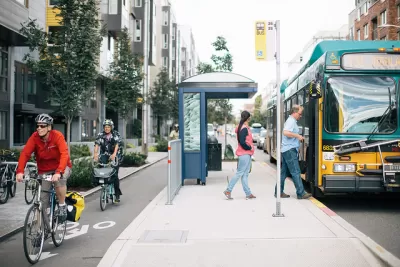
"When it comes to car ownership, Seattle has finally turned a corner," according to an article by Gene Balk.
"Census data released last month shows the city’s car-ownership rate has dropped dramatically in the past several years. In the new estimates, about 81% of Seattle households owned at least one vehicle in 2018 — that’s the lowest rate since the 1980s," reports Balk.
The city of Seattle's drop in car-ownership is the biggest among the 50-most populous cities in the country, and by a wide margin, according to Balk. Granted, U.S. cities are setting a low bar of performance on this metric: only 11 of those 50 cities achieved any decline since 2010.
A follow up article by Patrick Taylor calls the news about Seattle's declining rate of car ownership a "victory for the urbanist vision."
Read the full story: Seattle’s rate of car ownership saw the biggest drop among big U.S. cities — by far

Now 20% Car-Free, Seattle's Population is Growing. Its Traffic is Not.
Since 2017, the number of cars in the city has stayed roughly the same, even as the population continues to grow.
Report: One-Fifth of Seattle Households Are Car-Free
According to one local writer, the city’s low rate of car ownership should encourage officials to support public transit and reduce parking minimums.

AI and Downtown Recovery: Missing the Mark in Seattle?
In his fourth GeekWire article on downtown recovery, Chuck Wolfe reviews the use of AI imagery in a section of the Seattle Downtown Activation Plan and suggests how it may have missed the mark.

Planetizen Federal Action Tracker
A weekly monitor of how Trump’s orders and actions are impacting planners and planning in America.

California plans to bury El Niño’s downpour
If the state plays its cards right, it may be able to store a billion acre-feet of El Niño’s water in aquifers.

Chicago breaks ground on $3 billion megadevelopment
The new neighborhood, titled Foundry Park, will one day host 3,700 residences.

Satanic Place Names
From streams and lakes to valleys and canyons, I mapped more than 1,000 places named after the Devil.

California High-Speed Rail Authority CEO resigns after $600,000 scandal
Under Ian Choudri, the authority used taxpayer dollars to fund first class flights and trips to nightclubs.

Want to study the Missouri River? Soon, you may need unanimous approval from 10 states
Legislation would require 10 governors’ permission to study or build projects moving water outside the basin.

FREE Course: Walkable City 1: Why Walkability?
After describing his path towards focusing on walkability as the essence of good planning, Jeff Speck marches through his five principal reasons for making more walkable places.
Reinventing Malls: Planning Alchemy—Turning Gray Fields Into Gold
The course focuses on the opportunities and imperatives that shape reinvention of mall sites.

City of Rosemead
Rutgers University, Edward J. Bloustein School of Planning and Public Policy
One Hundred Miles
Hunter College, City University of New York (CUNY)
The Architects Foundation
University of Cincinnati Online
City of Cambridge
Montrose County
The Pocatello Development Authority