For many residents, Santiago's subway system and its fare hikes became a nexus for anger over deeper inequities across Chilean society.


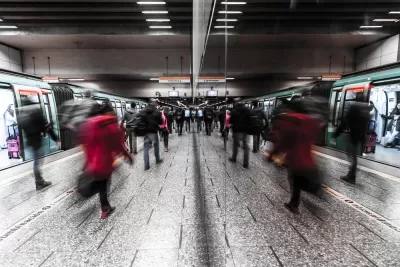
A fare hike of 3.75 percent might not sound like much, but it was enough to spark the massive protests that have engulfed Chile for nearly two weeks. According to reporting by Juan Pablo Garnham and Nicolás Alonso, Santiago's Metro system illuminated, for many, a landscape of rampant inequality that the government had failed to address.
Although 19 Metro stations have suffered arson attacks, many poorer residents appreciate the subway's connective capacity. "Its clean trains and stations full of art have been a metaphor for Chile as the 'good student' of Latin America," Garnham and Alonso write. At the same time, Santiago's Metro "is already one of the most expensive in Latin America, and had seen an increase in fares of almost 100 percent in 12 years."
Read the full story: Why Chile’s Massive Protests Started With a Subway Fare Hike
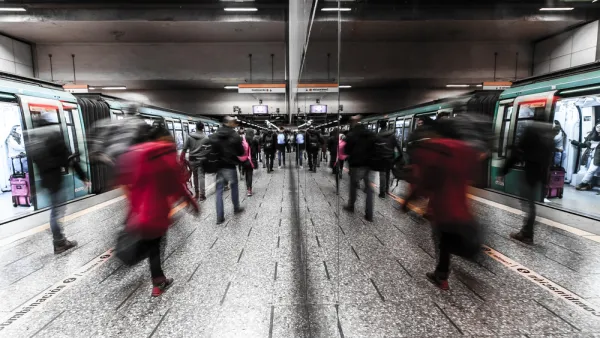
Plans for Huge Expansion of Rail Service in Chilean Capital
Chile's President, Sebastian Piñera, announced that Santiago's rail system will add two new lines and extend one of its existing train routes.
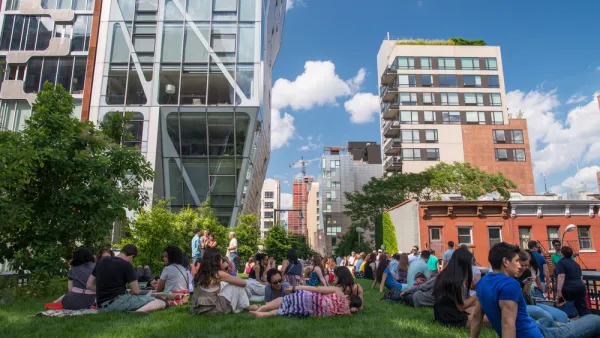
'The New Urban Crisis' and the High Line
A PBS NewsHour two-fer: an interview of urbanologist Richard Florida conducted in a walking tour of New York's famed High Line in the gentrifying West Chelsea neighborhood, a fitting backdrop for his new book, "The New Urban Crisis."
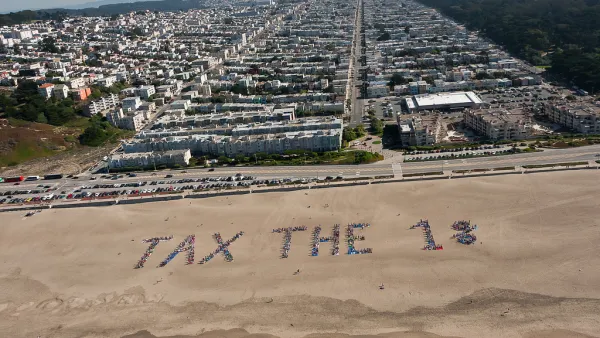
How Falling Inequality Rates Mislead
While the vast majority of cities saw an increase—or no decrease—in neighborhood inequality since 1990, nearly 30 regions became more equal. But paper equality can be problematic when the rich simply up and left town.

Planetizen Federal Action Tracker
A weekly monitor of how Trump’s orders and actions are impacting planners and planning in America.

Washington state to charge fee to drivers with fuel-efficient cars
Revenue from the fee will go towards supporting the state’s highways.

Illinois considers spending $1 billion in taxpayer money on data center
A quantum computing campus and data center are currently under construction in Chicago.

‘Demolition of our heritage:’ Some US tribes speak out against BAAJA
A coalition of indigenous groups in the United States are concerned about provisions in the bill that may weaken their ability to halt large energy projects.

How LA’s new mayor plans to tackle affordable housing crisis
Mayor-elect Nithya Raman has proposed overhauling the city’s permitting process.

Interactive map reveals Pennsylvania's abandoned oil, gas wells — many on residential property
It is difficult for residents to know if a well is near their home, or if it poses a threat to them.

FREE Course: Walkable City 1: Why Walkability?
After describing his path towards focusing on walkability as the essence of good planning, Jeff Speck marches through his five principal reasons for making more walkable places.
Reinventing Malls: Planning Alchemy—Turning Gray Fields Into Gold
The course focuses on the opportunities and imperatives that shape reinvention of mall sites.

City of Charlotte
City of Rosemead
Rutgers University, Edward J. Bloustein School of Planning and Public Policy
University of Michigan School for Environment and Sustainability (SEAS)
Hunter College, City University of New York (CUNY)
The Architects Foundation
University District Partnership