Chile
The Pandemic's New Epicenter
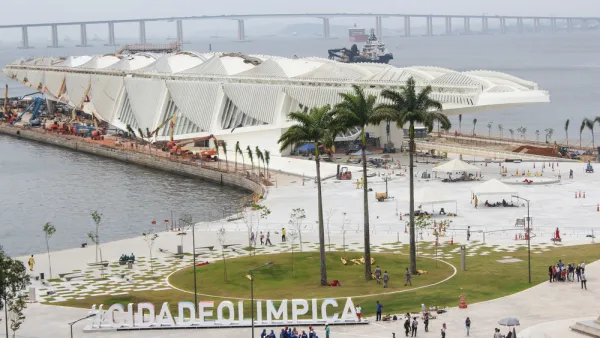
On May 22, the World Health Organization declared Latin America the new epicenter of the coronavirus pandemic. Brazil is second in the world in reported cases after the U.S., and Ecuador, Peru, Chile, and Mexico are also suffering disproportionately.
How a Subway Fare Increase Kicked Off Chile's Largest Protest
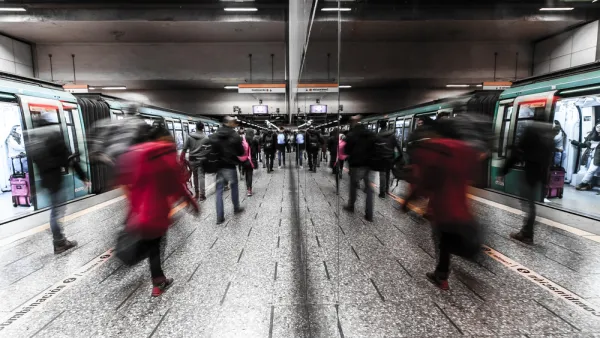
For many residents, Santiago's subway system and its fare hikes became a nexus for anger over deeper inequities across Chilean society.

Demand for Lithium Drops as Global Electric Vehicle Sales Slump
It was long thought that a finite supply of lithium, a key element needed for electric vehicle batteries, would constrain the production of zero-emission vehicles, but the opposite happened: a slow down in EV demand has caused lithium prices to drop.
Plans for Huge Expansion of Rail Service in Chilean Capital
Chile's President, Sebastian Piñera, announced that Santiago's rail system will add two new lines and extend one of its existing train routes.
Biking Boom Takes to the Sidewalks
The city of Santiago, Chile offers a cautionary tale for cities amidst a biking boom that don’t rethink the mode balance on their streets: there’s nowhere for bikers to go except the sidewalk.
Human-Scaled Photos Make Urban Issues Accessible
Chile's most influential newspaper makes urban issues accessible and interesting to millions by using 'human-scaled' and annotated panoramic photos in its local coverage.
Latin America's Most Competitive Cities
Brazilian cities dominated the list compiled by AméricaEconomía. Many traditional Brazilian metropolises rose in the list, while many of its B-level cities like Campinas (20th) and Manaus (29th) were included for the first time.
Chilean Dam Project Approved Amid Controversy
A plan approved to build a $7 billion dam in Chile has some worried about the loss of land, but others excited about looming economic opportunities.
How Building Codes Saved Chile
Chile's 8.5 earthquake resulted in a significantly lower death toll than the recent quake in Haiti. Partly it was the location of the epicenter, but strict building codes played a part as well.

FREE Course: Walkable City 1: Why Walkability?
After describing his path towards focusing on walkability as the essence of good planning, Jeff Speck marches through his five principal reasons for making more walkable places.
Reinventing Malls: Planning Alchemy—Turning Gray Fields Into Gold
The course focuses on the opportunities and imperatives that shape reinvention of mall sites.

Harvard University Graduate School of Design
KFH Group Inc.
Greater Baltimore Committee
The Architects Foundation
University of Cincinnati Online
The Pocatello Development Authority
The Urban Renewal Agency of the City of Pocatello