A plan approved to build a $7 billion dam in Chile has some worried about the loss of land, but others excited about looming economic opportunities.


"Monday's vote - 11 in favor and one abstention - could prove to be pivotal for the future of Chile, which has a booming economy, vast mineral wealth and a determination to join the elite group of first-world nations.
With its energy-intensive mining industry clamoring for more power and living standards improving, some analysts say Chile must triple its capacity in just 15 years, despite having no domestic oil or natural gas. Chile imports 97 percent of its fossil fuels and depends largely on hydropower for electricity, creating a crisis when droughts drain reservoirs or faraway disputes affect energy imports.
Supporters say the economic benefits of the dam project justify carving roads through the heart of Chile's remaining wilderness and running a thousand miles (1,600 kilometers) of transmission lines to power the capital, Santiago."
The dam project would only cause the relocation of three dozen families, but locals are concerned about the 14,000 acres of land that will be flooded and the forests that will be cut down to access the dams.
Read the full story: Chile approves huge dam project on wild rivers, opening remote Patagonia to development
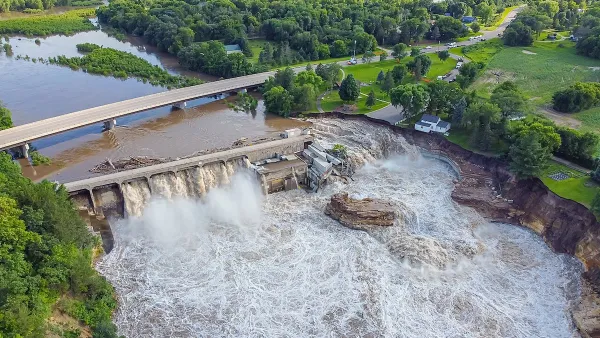
Minnesota Dam Failure Highlights Nationwide Danger
The Rapidan Dam isn’t the only one at risk of imminent failure.

Climate Change in Action: Massive Storms, Dam Failures
The dam failures that sent residents of Michigan scrambling last week can be connected to the extreme weather events created by climate change, according to experts.
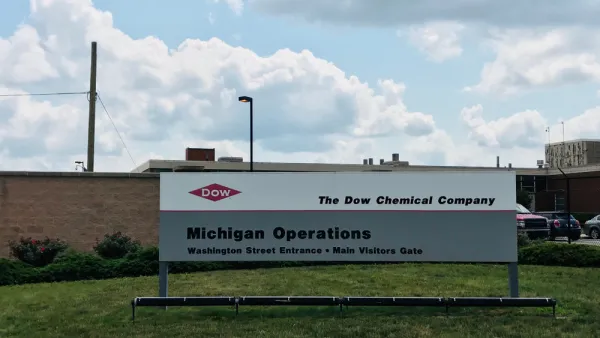
Dams Break in Michigan: Nation's Crumbling Infrastructure Takes Center Stage Again
Reports of catastrophic infrastructure failure today in Michigan, a state already facing some of the worst consequences of the Covid-19 pandemic.

Planetizen Federal Action Tracker
A weekly monitor of how Trump’s orders and actions are impacting planners and planning in America.

Eastern Nebraska is running out of electricity
Data centers and electrification are straining eastern Nebraska’s grid, throttling economic development.

Washington state to charge fee to drivers with fuel-efficient cars
Revenue from the fee will go towards supporting the state’s highways.

Instead of building new housing, LA developers are turning mansions into mega-mansions
In the richest areas, the number of houses valued at $30 million with demolition permits has skyrocketed since 2018.

Illinois considers spending $1 billion in taxpayer money on data center
A quantum computing campus and data center are currently under construction in Chicago.

As development costs rise, Boston moves to lessen affordable housing requirements
The Boston Zoning Commission and the City Council still need to approve Boston Mayor Michelle Wu’s proposed changes

FREE Course: Walkable City 1: Why Walkability?
After describing his path towards focusing on walkability as the essence of good planning, Jeff Speck marches through his five principal reasons for making more walkable places.
Reinventing Malls: Planning Alchemy—Turning Gray Fields Into Gold
The course focuses on the opportunities and imperatives that shape reinvention of mall sites.

City of Charlotte
City of Rosemead
Rutgers University, Edward J. Bloustein School of Planning and Public Policy
University of Michigan School for Environment and Sustainability (SEAS)
Hunter College, City University of New York (CUNY)
The Architects Foundation
University District Partnership
City of Cambridge
The Pocatello Development Authority