Reports of catastrophic infrastructure failure today in Michigan, a state already facing some of the worst consequences of the Covid-19 pandemic.


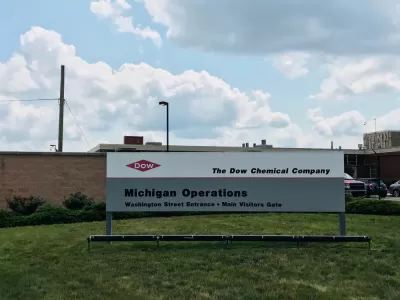
The state of Michigan is dealing with two crises at once today, as two dams broke in the past 24 hours, sending residents downstream scurrying for high ground during the coronavirus public health crisis and the affected watersheds yet to crest.
Melissa Macaya, Mike Hayes, and Meg Wagner are gathering regular updates of the breaking news for CNN, as "Parts of the city of Midland and surrounding areas were virtual lakes Wednesday morning, and it could get worse."
"Downtown in Midland, a city of about 41,000 people downstream of the dams, could eventually be 'under approximately 9 feet of water' on Wednesday, Gov. Gretchen Whitmer said the prior night," according to an earlier CNN report by Jason Hanna, Miguel Marquez and Christina Maxouris.
Another report by Matthew Cappucci and Andrew Freedman for The Washington Post describes the dam failure and flooding as "unprecedented." Here's how this article describes the events as they unfolded in Michigan:
The Edenville Dam was breached Tuesday evening after Midland received 4.7 inches of rain in a 48-hour period, following days of heavy rain across the state. The dam sits about 18 miles upstream of Midland, a city of more than 40,000.
That collapse sent floodwaters gushing into Sanford Lake, where a dam has powered the Boyce Hydroelectric Plant. The Sanford Dam succumbed shortly thereafter, the twin reservoirs of water left with no place to drain but into the city of Midland. A flash flood emergency is in effect for downstream areas of Sanford.
Michigan Governor Gretchen Whitmer declared an emergency for Midland County, on the same day that President Trump threatened to withhold coronavirus relief funding over a false accusation of election fraud connected to absentee ballots.
FULL STORY: Catastrophic flooding in Michigan as dams fail

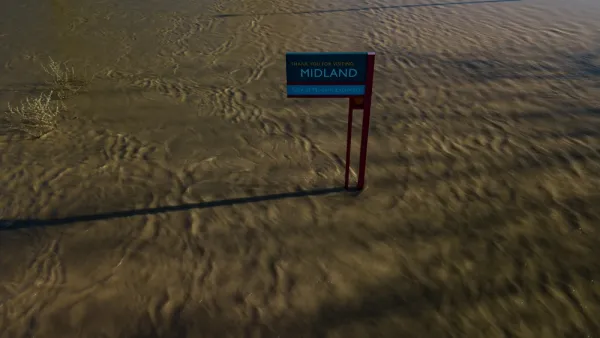
Climate Change in Action: Massive Storms, Dam Failures
The dam failures that sent residents of Michigan scrambling last week can be connected to the extreme weather events created by climate change, according to experts.
First Wave of Lawsuits to Litigate Michigan's Dam Catastrophe
After a series of failures last week sent flood waters spilling into Midland County, Michigan, property owners in the area are filing class action lawsuits to recoup their losses.
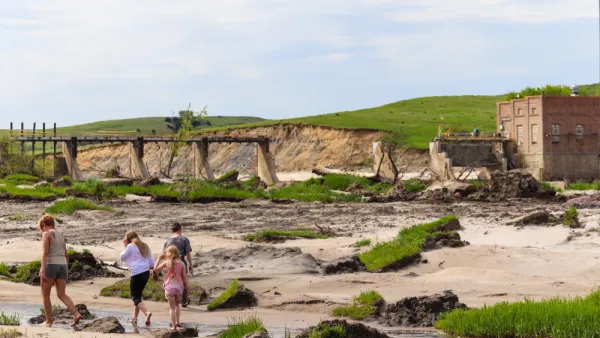
The U.S. of Breaking and Broken Dams
New analysis of high-hazard dams reveals the ubiquity, and risks, of the infrastructure challenges facing the United States.

Planetizen Federal Action Tracker
A weekly monitor of how Trump’s orders and actions are impacting planners and planning in America.

The state-sanctioned urbicide of Austin
People don’t kill cities. Freeways do.

US to reduce Colorado River water deliveries to Mexico
A new Colorado Treaty amendment reduces Mexico’s Colorado River water allocation by 250,000 acre feet.

5 New England states march closer to 800 megawatt wind energy project
Securing federal approval for the project may be complicated under the Trump administration, which has historically been hostile towards domestic wind power.

Baltimore to break ground on $50 million Transit Priority Project
The project will bring faster bus trips, safer streets and better bike connections to Baltimore.

Airbnb launches $250 million 'last-dollar financing' housing accelerator, makes first investment in Austin
The company will put $6.4 million towards affordable housing development in Texas’ capital.

FREE Course: Walkable City 1: Why Walkability?
After describing his path towards focusing on walkability as the essence of good planning, Jeff Speck marches through his five principal reasons for making more walkable places.
Reinventing Malls: Planning Alchemy—Turning Gray Fields Into Gold
The course focuses on the opportunities and imperatives that shape reinvention of mall sites.

Eagle County Government
Harvard University Graduate School of Design
Nashville Planning Department
The Architects Foundation
University of Cincinnati Online
The Pocatello Development Authority
The Urban Renewal Agency of the City of Pocatello
Journal of the American Planning Association