Brazilian cities dominated the list compiled by AméricaEconomía. Many traditional Brazilian metropolises rose in the list, while many of its B-level cities like Campinas (20th) and Manaus (29th) were included for the first time.


Human Capital played a role in determining the rise and fall of certain cities.
Santiago, Chile fell from No.2 to No.3 on the list because of a decline in the cities image and relatively low human capital.
"According to a report by SCImago, a firm that specializes in ranking research institutions, only 2,373 scientific studies per 1 million residents are carried out in the Chilean capital, fewer even than in the nearby Valparaíso-Viña del Mar metropolitan area (2.681). By comparison, the scientific research figure per 1 million residents in Campinas, Brazil is 6,222. For Miami and São Paulo the numbers are 5,198 and 3,445 respectively."
São Paulo rose to second on the 45-city list because infrastructure and connectivity upgrades and increased the amount its airports international destinations.
Read the full story: Ranking Latin America’s Most Competitive Cities

The World's Worst COVID Outbreak
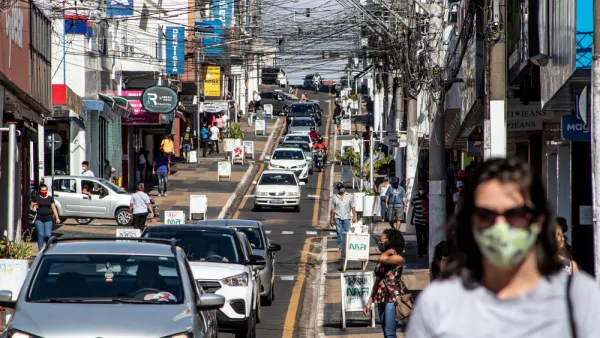
Brazil has surpassed the U.S. and led the world in the daily average of COVID-19 deaths and coronavirus infections during the last week. Experts point to a coronavirus variant and the lack of a federal strategy, leaving states without assistance.
The Pandemic's New Epicenter
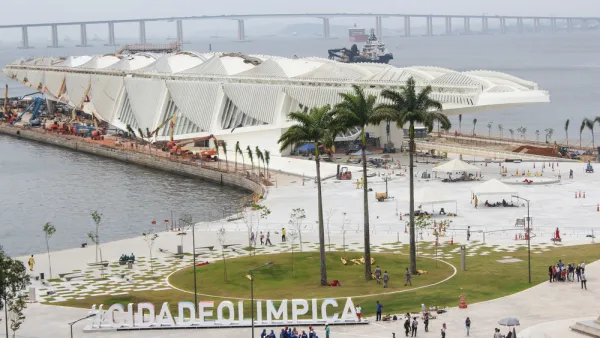
On May 22, the World Health Organization declared Latin America the new epicenter of the coronavirus pandemic. Brazil is second in the world in reported cases after the U.S., and Ecuador, Peru, Chile, and Mexico are also suffering disproportionately.
How a Subway Fare Increase Kicked Off Chile's Largest Protest
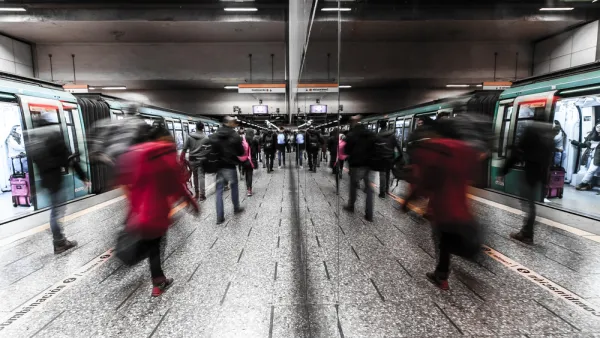
For many residents, Santiago's subway system and its fare hikes became a nexus for anger over deeper inequities across Chilean society.

Planetizen Federal Action Tracker
A weekly monitor of how Trump’s orders and actions are impacting planners and planning in America.

Amtrak, CN end decades-long dispute with eight-year agreement
The new operating agreement establishes an updated framework for the companies to work together, including processes to resolve disputes.

Judges permit Denver to divert 77,000 acre feet from the Colorado River for reservoir expansion
Overuse and climate change have caused the Colorado River’s water levels to plummet.

NYC DOT wants faster, more permanent street upgrades
The city is examining ways to build more concrete infrastructure without getting entangled in 'decades-long' projects.

'Something we’ve never seen before:' rising utility rates could strain city finances nationwide
Data centers, climate change and other factors have caused utility rates in the United States to increase by 38% since 2020.

Trump to overrule local leaders, lease millions of acres of America’s Pacific Island territories’ seafloors to mining companies
International law says that the Indigenous people of America’s territories have a right to prior and informed consent regarding projects that impact their countries.

FREE Course: Walkable City 1: Why Walkability?
After describing his path towards focusing on walkability as the essence of good planning, Jeff Speck marches through his five principal reasons for making more walkable places.
Reinventing Malls: Planning Alchemy—Turning Gray Fields Into Gold
The course focuses on the opportunities and imperatives that shape reinvention of mall sites.

Harvard University Graduate School of Design
KFH Group Inc.
Greater Baltimore Committee
The Architects Foundation
University of Cincinnati Online
The Pocatello Development Authority
The Urban Renewal Agency of the City of Pocatello