The Los Angeles Times crunched data from the 2019 point-in-time count of homelessness in Los Angeles County. What they found diverged profoundly from official findings.


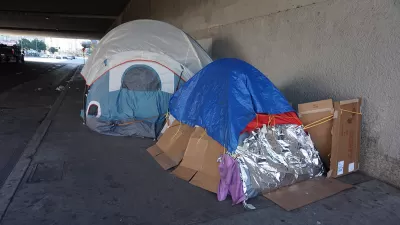
"Mental illness, substance abuse and physical disabilities are much more pervasive in Los Angeles County’s homeless population than officials have previously reported," report Doug Smith and Benjamin Oreskes.
"The Times examined more than 4,000 questionnaires taken as part of this year’s point-in-time count and found that about 76% of individuals living outside on the streets reported being, or were observed to be, affected by mental illness, substance abuse, poor health or a physical disability," add Smith and Oreskes.
Those findings contrast findings from the same data presented by the Los Angeles Homeless Service Authority, the agency which conducted the survey. "In its presentation of the results to elected officials earlier this year, the agency said only 29% of the homeless population had either a mental illness or substance abuse disorder and, therefore, 71% 'did not have [pdf] a serious mental illness and/or report substance use disorder.'"
Leadership at the homeless services authority id not dispute the findings of the Times analysis, instead blaming the discrepancy on the format for the report required by federal regulators.
But wait; there's more: "The Times analysis aligns with a national study released Sunday by the California Policy Lab at UCLA, which found even higher rates in most categories. It also found that a mental health “concern” affected 78% of the unsheltered population and a substance abuse “concern,” 75%."
FULL STORY: Are many homeless people in L.A. mentally ill? New findings back the public’s perception

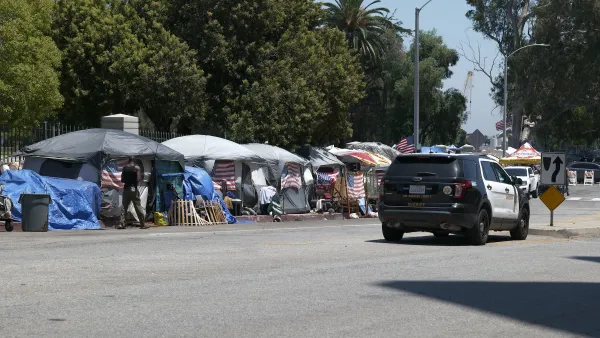
HUD suspends federal funds for LA homelessness agency
HUD is freezing LA's access to Continuum of Care funds after allegations of fraud at the county's homelessness agency.
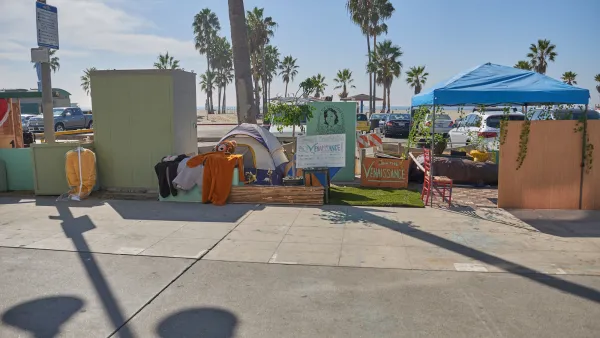
LA Proposal Would Forcibly Remove Unhoused People Near Olympic Venues
Los Angeles County sent city officials a report outlining strategies for clearing homeless encampments, but advocates point out that the report itself notes there are not enough shelte resources to accommodate all unhoused residents.

Tent Encampments: Will the Legal Restraint be Lifted?
A controversial U.S. Ninth Circuit Court of Appeals ruling in 2018 that has hindered the ability of western cities to clear tent encampments on public spaces will likely be revisited and overturned by the Supreme Court, predicts a popular CNN host.

Planetizen Federal Action Tracker
A weekly monitor of how Trump’s orders and actions are impacting planners and planning in America.

The state-sanctioned urbicide of Austin
People don’t kill cities. Freeways do.

US to reduce Colorado River water deliveries to Mexico
A new Colorado Treaty amendment reduces Mexico’s Colorado River water allocation by 250,000 acre feet.

5 New England states march closer to 800 megawatt wind energy project
Securing federal approval for the project may be complicated under the Trump administration, which has historically been hostile towards domestic wind power.

Baltimore to break ground on $50 million Transit Priority Project
The project will bring faster bus trips, safer streets and better bike connections to Baltimore.

Airbnb launches $250 million 'last-dollar financing' housing accelerator, makes first investment in Austin
The company will put $6.4 million towards affordable housing development in Texas’ capital.

FREE Course: Walkable City 1: Why Walkability?
After describing his path towards focusing on walkability as the essence of good planning, Jeff Speck marches through his five principal reasons for making more walkable places.
Reinventing Malls: Planning Alchemy—Turning Gray Fields Into Gold
The course focuses on the opportunities and imperatives that shape reinvention of mall sites.

Eagle County Government
Harvard University Graduate School of Design
Nashville Planning Department
The Architects Foundation
University of Cincinnati Online
The Pocatello Development Authority
The Urban Renewal Agency of the City of Pocatello
Journal of the American Planning Association