People With Disabilities
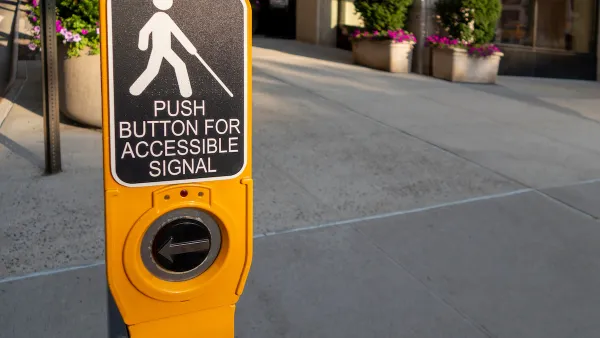
Accessibility and Car-Free Zones
Some critics of car-free zones call them exclusionary to people with disabilities, but other experts argue that, when properly planned, pedestrian enhancements improve safety and accessibility for everyone.
Accessibility and Car-Free Zones
Some critics of car-free zones call them exclusionary to people with disabilities, but other experts argue that, when properly planned, pedestrian enhancements improve safety and accessibility for everyone.
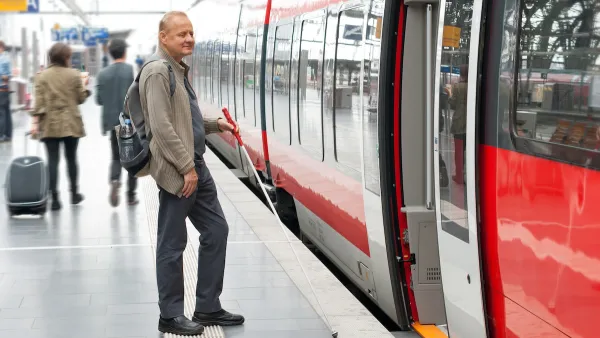
Beyond Compliance: The Crucial Role of the ADA in Planning Great Communities
The Americans with Disabilities Act was passed in 1990 to protect people with disabilities from discrimination, but more work is needed to make U.S. communities accessible to all. And planners have a key role to play.

What Is the Americans With Disabilities Act?
The effects of the landmark Americans With Disabilities Act are visible throughout the built environment—on sidewalks, on buses, and in almost every building and public facility in the country.
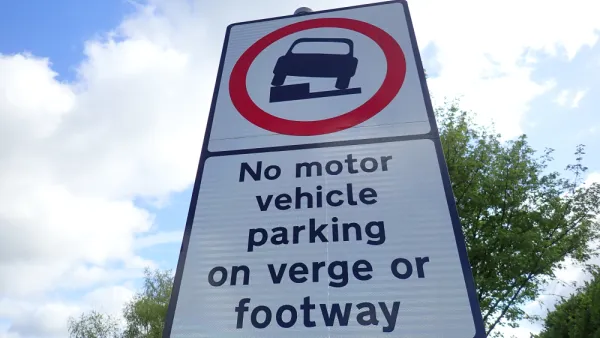
Parking on Sidewalks Could Be Prohibited Throughout the U.K.
The United Kingdom could preempt local laws that allow drivers to park cars on sidewalks. The policy would provide clearer paths for people with disabilities and people choosing active transportation modes.
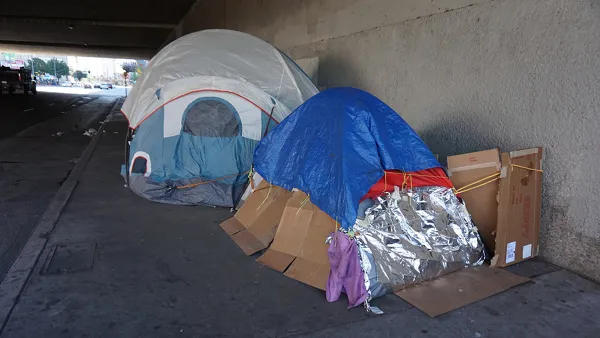
Massive Discrepancies Identified in Official Homeless Counts
The Los Angeles Times crunched data from the 2019 point-in-time count of homelessness in Los Angeles County. What they found diverged profoundly from official findings.
A Policy Change for Special Needs New Yorkers
The Brooklyn Development Center will close Dec. 31. The closure of the state facility is part of a long term goal of deinstitutionalizing the developmentally disabled and integrating them in the community in group homes.
Can Signage Change Perceptions About Disabilities?
With New York City's embrace, the dream of revamping the iconic blue-and-white handicapped symbol is becoming a reality. As NYC adopts "a more active representation of people with physical limitations," activists hope the change has a broader effect.
How Public Transportation is Failing the Disabled
With more than a quarter of disabled Americans who are unable to leave their homes prevented from doing so by transportation difficulties, Sarah Laskow argues it's time for cities to move beyond ADA.
Planners' Sacred Trust
Most professions have special responsibilities to society. Physicians are expected to observe the Hippocratic oath. Police officers must apply the law fairly and refrain from abusing their power. Lawyers and accountants are expected to offer accurate advice and protect client confidentiality.And planners? We have a special responsibility to consider all perspectives and impacts. When evaluating public policy questions most people ask selfishly, “How does this affect me?” Planners, in contrast, should ask selflessly, “How does this affect the community, particularly disadvantaged and underrepresented groups?”
Sidewalk Design Vehicle
A few days ago I posted a blog that discussed the concept of Universal Design (transportation facilities designed to accommodate all possible users, including those with disabilities and other special needs) and the value it provides to individuals and communities. One way to approach this issue is to define the design vehicle for pedestrian facilities.
Universal Design - Accommodating Everybody
I spent the last week teaching a professional development course for young planners in Buenos Aries, Argentina. It’s been a wonderful experience – my students are smart and enthusiastic, and Buenos Aries is a vibrant city with old-world charm. The buildings, plazas and old statues are beautiful and dignified, although a little frayed around the edges.

FREE Course: Walkable City 1: Why Walkability?
After describing his path towards focusing on walkability as the essence of good planning, Jeff Speck marches through his five principal reasons for making more walkable places.
Reinventing Malls: Planning Alchemy—Turning Gray Fields Into Gold
The course focuses on the opportunities and imperatives that shape reinvention of mall sites.

City of Rosemead
Rutgers University, Edward J. Bloustein School of Planning and Public Policy
One Hundred Miles
Hunter College, City University of New York (CUNY)
The Architects Foundation
University of Cincinnati Online
City of Cambridge
Montrose County
The Pocatello Development Authority









