The city’s subway system is lagging in station accessibility, but the MTA has a plan to add elevators to 70 stations.


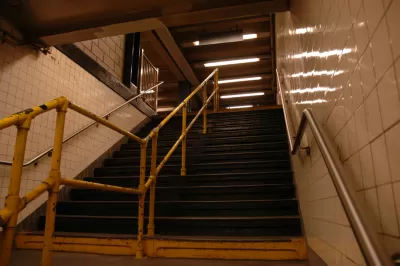
"Only about a quarter of New York City’s 472 subway stations are wheelchair accessible, one of the lowest percentages of any major transit system in the world," write Emma G. Fitzsimmons and Rebecca Liebson. But the Metropolitan Transportation Authority is planning to add elevators to 70 stations over the next five years at a cost of $5.5 billion.
While transit advocates argue the cost is too high, MTA officials say installing elevators can involve additional measures such as moving staircases and utilities and paying for street-level space. "Still, subway leaders have said they want to bring down the costs and are looking to other cities for lessons," say Fitzsimmons and Liebson.
Accessibility is a priority for MTA president Andy Byford. Governor Andrew Cuomo says he also wants to put accessibility at the top of the list. But critics argue that the governor’s plan is failing to address the issues.
"The more than $800 million plan, known as the Enhanced Station Initiative, aimed to give more than two dozen stations a makeover, but none received elevators. Instead, the stations got new tiles and LED lighting — part of a focus by Mr. Cuomo on aesthetics," note Fitzsimmons and Liebson.
Read the full story: M.T.A. Pledges $5 Billion for Subway Elevators. Guess How Many.
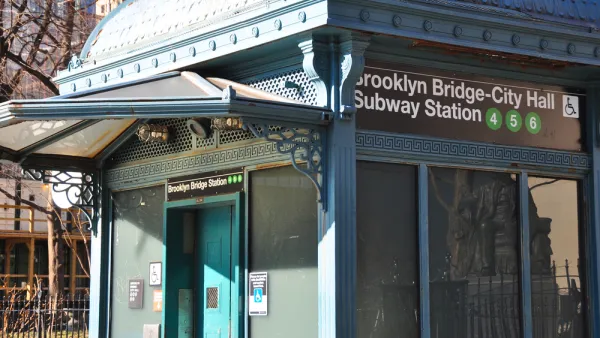
New York City Subway Pledges To Increase Accessibility
After two lawsuits, the New York subway system has announced a 33-year timeline for making 95 percent of its stations fully accessible.
MTA Spending Millions on Cleaning, but Disagreement Over the Need
Deep cleaning of the New York City subway and bus system is part of the Metropolitan Transportation Authority’s coronavirus response. But it is costly and time consuming, and the public health benefits are not entirely clear.
New York MTA Seeks Federal Funding Relief as Ridership Plummets
The Metropolitan Transportation Authority has seen significant ridership drops due to the coronavirus. The agency is asking Congress for $4 billion to help it through the crisis.

Planetizen Federal Action Tracker
A weekly monitor of how Trump’s orders and actions are impacting planners and planning in America.

Eastern Nebraska is running out of electricity
Data centers and electrification are straining eastern Nebraska’s grid, throttling economic development.

Move over, LA: St. Louis gears up for Olympics, invests millions in downtown redevelopment
The Missouri city will host the 2028 Olympic soccer group stage and knockout matches.

Dallas releases zoning code overhaul to officials
The drafted overhaul is over 400 pages long.

NYC renovations for dangerous, ‘mercilessly crammed’ street delayed until 2027
Construction was supposed to begin this fall.

San Diego’s Midway Rising project gets greenlight from city council
The project looks to become the largest affordable housing development in California's history.

FREE Course: Walkable City 1: Why Walkability?
After describing his path towards focusing on walkability as the essence of good planning, Jeff Speck marches through his five principal reasons for making more walkable places.
Reinventing Malls: Planning Alchemy—Turning Gray Fields Into Gold
The course focuses on the opportunities and imperatives that shape reinvention of mall sites.

City of Rosemead
Rutgers University, Edward J. Bloustein School of Planning and Public Policy
One Hundred Miles
University of Michigan School for Environment and Sustainability (SEAS)
Hunter College, City University of New York (CUNY)
The Architects Foundation
City of Cambridge
The Pocatello Development Authority
The Urban Renewal Agency of the City of Pocatello