The Metropolitan Transportation Authority has seen significant ridership drops due to the coronavirus. The agency is asking Congress for $4 billion to help it through the crisis.


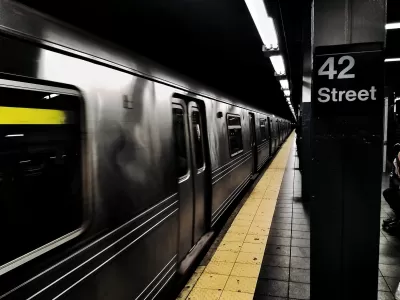
"New York City’s public transportation system, the largest in North America, is seeking a $4 billion federal bailout as the coronavirus pandemic has triggered an extraordinary free fall in ridership and left transit officials facing what is likely to be the worst economic crisis in decades," reports Christina Goldbaum.
The Metropolitan Transportation Authority has seen massive drops in ridership on subways, buses, and commuter rail. For example, subway ridership has dropped 60 percent and bus ridership is down by 49 percent compared to the same day last year.
While systems in other cities have cut back service, the MTA has continued to operate regular service, deemed necessary for essential workers during the crisis. However, the ridership drops come at a difficult time for the agency, which was already facing massive fiscal challenges.
"The authority projects revenue losses of roughly $3.7 billion if ridership trends continue for the next several months, and expects coronavirus-specific expenses, like disinfecting subway cars and stations, to reach around $300 million," says Goldbaum.
FULL STORY: M.T.A., Citing Huge Drop in Riders, Seeks $4 Billion Virus Bailout

MTA Spending Millions on Cleaning, but Disagreement Over the Need
Deep cleaning of the New York City subway and bus system is part of the Metropolitan Transportation Authority’s coronavirus response. But it is costly and time consuming, and the public health benefits are not entirely clear.
MTA Poised to Break Ridership, On-Time Service Records
New York City’s transit system saw strong increases in ridership and improvements in service quality in the first half of 2025.
New York MTA Looks to Suburban TODs as Funding Source
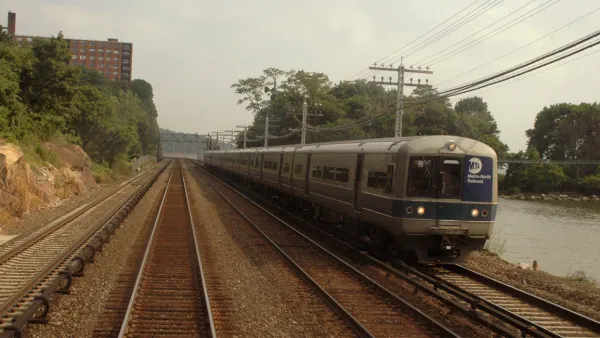
The agency is selling land outside of the city on a commuter rail line in a move that could become more common as a revenue-generating strategy.

The state-sanctioned urbicide of Austin
People don’t kill cities. Freeways do.

US to reduce Colorado River water deliveries to Mexico
A new Colorado Treaty amendment reduces Mexico’s Colorado River water allocation by 250,000 acre feet.

New Jersey’s second-largest city bans standalone data centers
Jersey City will continue to allow co-location facilities, such as those meant for research institutions that store their own data.

Amtrak not solely to blame for New Jersey commuter rail's unreliability, report finds
A new study from the Garden State Initiative found that NJ Transit’s budget grew 20% across a 4 year period, but reliability declined significantly over the same period.

EPA erases limits on planet-warming pollution from power plants
Under Monday’s plan, power plants would still have some limits on how much mercury, arsenic and other contaminants they can emit.

Phoenix announces new on-demand transit service, more frequent RAPID buses
Both new services will launch in October, and are part of Phoenix's Project Effective Access Solutions for Easing Congestion.

FREE Course: Walkable City 1: Why Walkability?
After describing his path towards focusing on walkability as the essence of good planning, Jeff Speck marches through his five principal reasons for making more walkable places.
Reinventing Malls: Planning Alchemy—Turning Gray Fields Into Gold
The course focuses on the opportunities and imperatives that shape reinvention of mall sites.

Eagle County Government
Harvard University Graduate School of Design
Nashville Planning Department
The Architects Foundation
University of Cincinnati Online
The Pocatello Development Authority
The Urban Renewal Agency of the City of Pocatello
Journal of the American Planning Association