A recent report presents evidence that fewer New Yorkers are choosing bikes as an alternative form of transportation.


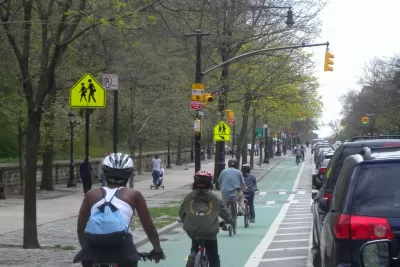
"The number of New Yorkers who regularly ride a bicycle dropped 5 percent in the last two years," reports David Meyer, sharing the latest figures from an city Department of Health survey and presented in Mayor Bill de Blasio's annual "Mayor’s Management Report."
"Approximately 787,000 adult city residents rode at last once a month in fiscal year 2019 — down from 828,000 two years earlier," explains Meyer. The numbers "match up with other recent measurements of cycling in the city that have shown an increase in bike trips within Manhattan but a decrease on trips over the East River bridges, which have historically tracked with citywide cycling overall."
The report also confirms a growing number of cyclist and pedestrian fatalities on the city's streets, a reality that has prompted renewed commitment to traffic safety planning in recent months.
In a bit of comparatively good news for bike ridership, the number of riders on the Citibike bikeshare system continues to increase.
FULL STORY: Fewer New Yorkers are cycling: city report

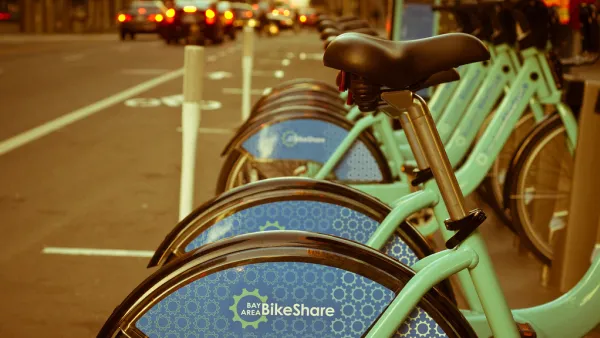
Bike Share Lessons From the Pandemic
Bike share data from six U.S. cities offer insight into how Americans have changed travel patterns during the pandemic.
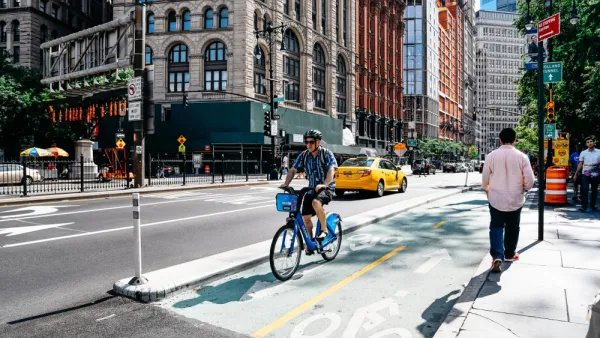
Bikes Are More Popular Than Ever in New York City, City Officials Say
Build safe infrastructure and people on bikes will come, according to New York City officials.
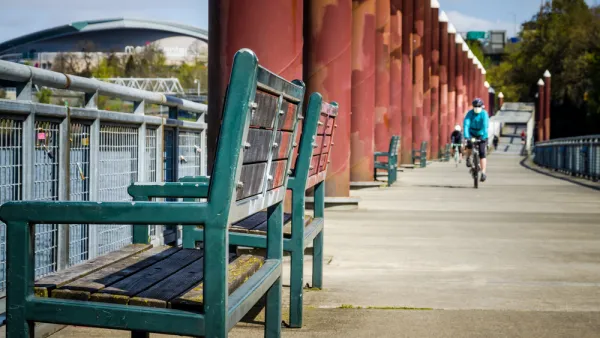
Can Portland's Bike Boom Outlast the Pandemic?
"Anytime the city does something to dramatically improve streets for people and limit car access...it’s hard to take them back."

Planetizen Federal Action Tracker
A weekly monitor of how Trump’s orders and actions are impacting planners and planning in America.

The state-sanctioned urbicide of Austin
People don’t kill cities. Freeways do.

US to reduce Colorado River water deliveries to Mexico
A new Colorado Treaty amendment reduces Mexico’s Colorado River water allocation by 250,000 acre feet.

5 New England states march closer to 800 megawatt wind energy project
Securing federal approval for the project may be complicated under the Trump administration, which has historically been hostile towards domestic wind power.

Baltimore to break ground on $50 million Transit Priority Project
The project will bring faster bus trips, safer streets and better bike connections to Baltimore.

Airbnb launches $250 million 'last-dollar financing' housing accelerator, makes first investment in Austin
The company will put $6.4 million towards affordable housing development in Texas’ capital.

FREE Course: Walkable City 1: Why Walkability?
After describing his path towards focusing on walkability as the essence of good planning, Jeff Speck marches through his five principal reasons for making more walkable places.
Reinventing Malls: Planning Alchemy—Turning Gray Fields Into Gold
The course focuses on the opportunities and imperatives that shape reinvention of mall sites.


Eagle County Government
Harvard University Graduate School of Design
Nashville Planning Department
The Architects Foundation
University of Cincinnati Online
The Pocatello Development Authority
The Urban Renewal Agency of the City of Pocatello
Journal of the American Planning Association