The city council approved funding for a new streetcar line, but cost increases mean the project is behind schedule and federal funds could be in jeopardy.


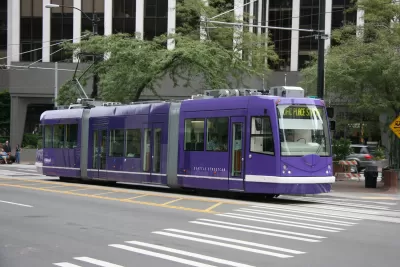
The Seattle City Council recently approved a $9 million loan for design and engineering work for the First Avenue streetcar project, a 1.3-mile route that would connect the system’s two existing lines.
The new line was originally scheduled to open in 2018, but delays related to project cost increases now have the line scheduled to start running in 2026. "The city had secured $50 million of $75 million in expected federal funding for the streetcar, but that could lapse next year," report Heidi Groover and Michelle Baruchman.
Projections show the streetcar system with the new line will triple annual ridership to up to 6 million riders. Proponents say the streetcars have more capacity than buses and the expanded system will have the potential to attract new riders.
But, in addition to the uncertainty about the project schedule and funding, questions have arisen about the system’s vehicles. "Some Seattleites were left scratching their heads at the news that the city ordered cars for the new line that are 9 feet longer and about 21,000 pounds heavier than the cars in use, creating compatibility issues with the existing lines," note Groover and Baruchman.
Read the full story: ‘Do people actually ride the streetcars?’ Your Seattle streetcar questions answered

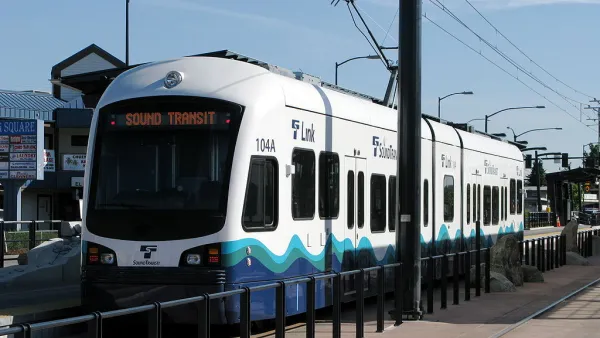
Seattle Light Rail Expansion Brings Redevelopment Boom
The city’s Northgate Link extension has spurred development around the new stations, and one neighborhood is poised to change dramatically.
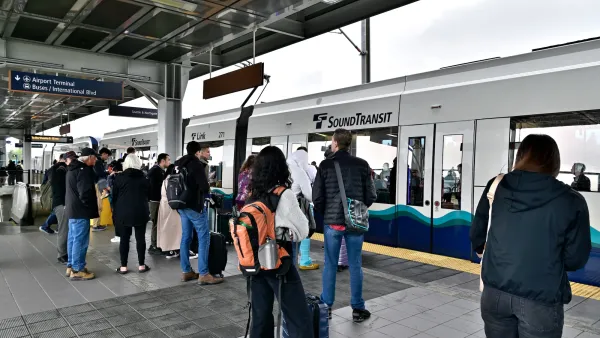
Seattle light rail 'shatters' national ridership records with 155,000 daily rides
Sound Transit rail ridership rose sharply after the agency opened a new cross-lake connection.
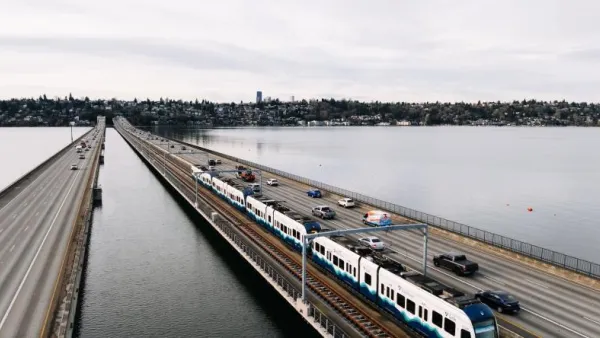
Seattle’s Floating Light Rail Bridge to Open March 28
The new East Link segment of King County’s light rail system crosses Lake Washington on a first-of-its-kind floating bridge.

Planetizen Federal Action Tracker
A weekly monitor of how Trump’s orders and actions are impacting planners and planning in America.

The state-sanctioned urbicide of Austin
People don’t kill cities. Freeways do.

US to reduce Colorado River water deliveries to Mexico
A new Colorado Treaty amendment reduces Mexico’s Colorado River water allocation by 250,000 acre feet.

Nation's most wind-powered state turns to coal as data centers increase energy demand
For the first time in decades, Iowa has increased its generation of coal power.

NYC cools commuters with city's first rain garden above a bus stop
New York City officials say the plants in the rain garden can absorb 16 gallons of rainwater during heavy storms.

Brightline West’s future may rely on $6 billion federal loan
The company has until Nov. 2 to make a $400 million equity investment into its proposed high-speed rail line.

FREE Course: Walkable City 1: Why Walkability?
After describing his path towards focusing on walkability as the essence of good planning, Jeff Speck marches through his five principal reasons for making more walkable places.
Reinventing Malls: Planning Alchemy—Turning Gray Fields Into Gold
The course focuses on the opportunities and imperatives that shape reinvention of mall sites.

Greater Baltimore Committee
Eagle County Government
Harvard University Graduate School of Design
The Architects Foundation
University of Cincinnati Online
The Pocatello Development Authority
The Urban Renewal Agency of the City of Pocatello
Journal of the American Planning Association