A proposed rail line would run from downtown Portland, Oregon, to the suburbs. The budget has increased significantly, and many funding and project scope questions remain.


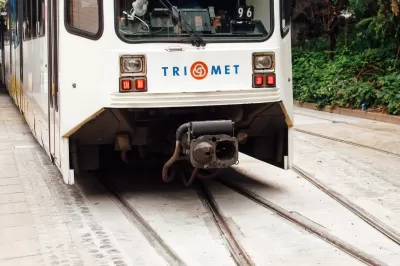
"Projected costs for TriMet’s next light rail project have increased by nearly half a billion dollars, creating a new budget gap that TriMet officials are optimistic can be addressed, but has raised alarm bells for some suburban leaders," writes Andrew Theen.
The planned line would be a 12-mile, 13-station route running from downtown Portland along a southwest corridor. The project cost has increased to $2.87 billion, an increase of about $462 million, notes Theen.
Officials in suburban districts say they will not support the project if the route is shortened or vehicle travel lanes are removed on Barbur Boulevard, a main thoroughfare, to cut project costs. Other options include eliminating some of the project’s park-and-ride lots or stations and using battery-electric trains instead of vehicles that require overhead equipment.
Theen says that the Metro Council has just $50 million of federal funds secured for the project. "The region will seek $1.25 billion from the Federal Transit Administration and will ask voters to contribute $850 million at the November 2020 ballot box. The state, city of Portland, TriMet and Washington County are all expected to contribute significantly as well, but the precise funding sources and firm commitments are still months away."
Read the full story: Barbur light rail project faces $462 million funding gap, tough decisions loom

Transit Planner Speaks Out Against Slashing Bus Service
A Portland transit planner from the days when buses were the primary means of getting around says the system is headed in the wrong direction and service is declining.

Portland gathers to pay respects to the last of its original light rail cars
The TriMet agency has fully replaced its aging fleet of Type 1 cars.
Ridership Numbers Below Target on Portland's One-Year-Old Orange Line
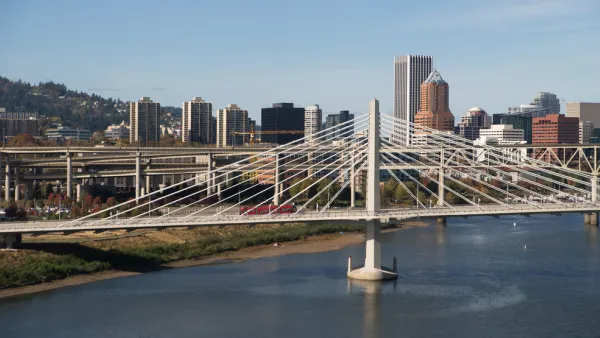
Eliot Njus reports on underwhelming ridership figures for the MAX Orange Line light rail service between Portland and Milwaukie. "Forecasts used to help justify federal funding for the project called for 17,000 average weekday trips in 2016. The

Planetizen Federal Action Tracker
A weekly monitor of how Trump’s orders and actions are impacting planners and planning in America.

California plans to bury El Niño’s downpour
If the state plays its cards right, it may be able to store a billion acre-feet of El Niño’s water in aquifers.

Chicago breaks ground on $3 billion megadevelopment
The new neighborhood, titled Foundry Park, will one day host 3,700 residences.

California High-Speed Rail Authority CEO resigns after $600,000 scandal
Under Ian Choudri, the authority used taxpayer dollars to fund first class flights and trips to nightclubs.

Want to study the Missouri River? Soon, you may need unanimous approval from 10 states
Legislation would require 10 governors’ permission to study or build projects moving water outside the basin.

Desperate measures: Advocates weigh draining Lake Powell to fill Colorado River
Draining the reservoir could reduce evaporation losses by a couple hundred thousand acre-feet.

FREE Course: Walkable City 1: Why Walkability?
After describing his path towards focusing on walkability as the essence of good planning, Jeff Speck marches through his five principal reasons for making more walkable places.
Reinventing Malls: Planning Alchemy—Turning Gray Fields Into Gold
The course focuses on the opportunities and imperatives that shape reinvention of mall sites.

City of Rosemead
Rutgers University, Edward J. Bloustein School of Planning and Public Policy
One Hundred Miles
Hunter College, City University of New York (CUNY)
The Architects Foundation
University of Cincinnati Online
City of Cambridge
Montrose County
The Pocatello Development Authority