As cities around the world face the effects of climate change head on, they have been pushing policy forward and taking action at the local level. But they are also creating networks that have a much broader impact beyond individual cities.


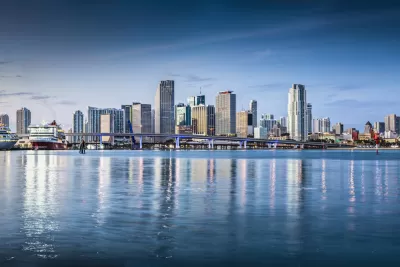
Cornelia Colijn considers the reasons cities are leaders in climate change policy. One reason is that cities are not mobile and compared to individuals who can relocate to avoid threats. "This means that as the effects of climate change take root in our urban areas, cities are forced to be early adopters to cutting edge adaptation strategies. In other words, cities cannot run, but must stand and fight,” says Colijn.
At the city level, it would make sense for cities to focus on adaptation rather than mitigation. But they tend to institute mitigation strategies because residents and public officials view the universal value of climate change policies and because cities participate in fair-share agreements like the Paris Agreement. Cities might also pursue mitigation efforts because of the related benefits, such as improvements in public health.
In addition, networks of cities are a way to challenge national and global governments and institutions to address climate change. "In a future where it is all-too-likely that climate action will be insufficient, creating a network of like-minded urban areas may be the key organizing challenge facing cities that want to do something to respond to climate change," notes Colijn.
FULL STORY: Early adopters in confronting climate: cities

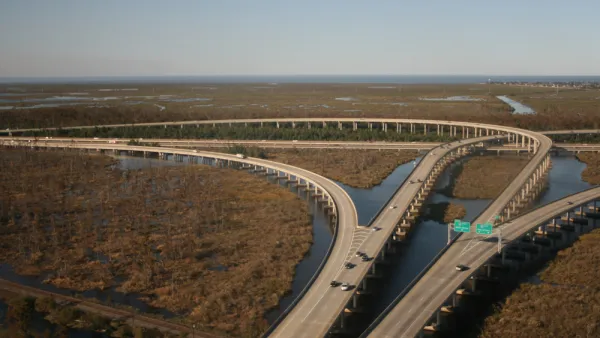
$50 Billion Coastal Master Plan Updated in Louisiana
Louisiana is losing coastal lands, quickly, along with the habitat and economic resources located there. A Coastal Master Plan plots $50 billion in spending to protect the coast.
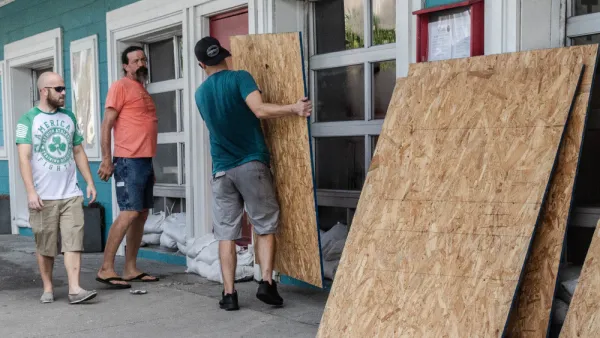
Climate Change: The Most Vulnerable States Are the Least Prepared
The effects of climate change will vary depending on geographic location, so it's incumbent on states to prepare in their own, specific way. Not all states are taking that responsibility seriously, according to a new report.

Mapping the Effects of Climate Change in the United States
A new mapping project from researchers at the University of Pennsylvania illustrates the consequences of inaction on climate change.

Planetizen Federal Action Tracker
A weekly monitor of how Trump’s orders and actions are impacting planners and planning in America.

The state-sanctioned urbicide of Austin
People don’t kill cities. Freeways do.

US to reduce Colorado River water deliveries to Mexico
A new Colorado Treaty amendment reduces Mexico’s Colorado River water allocation by 250,000 acre feet.

5 New England states march closer to 800 megawatt wind energy project
Securing federal approval for the project may be complicated under the Trump administration, which has historically been hostile towards domestic wind power.

Baltimore to break ground on $50 million Transit Priority Project
The project will bring faster bus trips, safer streets and better bike connections to Baltimore.

Airbnb launches $250 million 'last-dollar financing' housing accelerator, makes first investment in Austin
The company will put $6.4 million towards affordable housing development in Texas’ capital.

FREE Course: Walkable City 1: Why Walkability?
After describing his path towards focusing on walkability as the essence of good planning, Jeff Speck marches through his five principal reasons for making more walkable places.
Reinventing Malls: Planning Alchemy—Turning Gray Fields Into Gold
The course focuses on the opportunities and imperatives that shape reinvention of mall sites.

Eagle County Government
Harvard University Graduate School of Design
Nashville Planning Department
The Architects Foundation
University of Cincinnati Online
The Pocatello Development Authority
The Urban Renewal Agency of the City of Pocatello
Journal of the American Planning Association