Scooter opponents in Alexandria, Virginia, claim the devices threaten the historic character of the city, but supporters say the argument is nonsense.


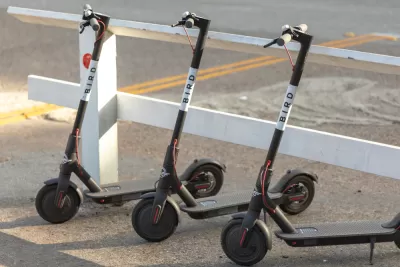
Joanne Tang writes about the dockless scooter debate in Alexandria, Virginia, where a nine-month pilot program started in January. One argument against scooters is that they threaten the historic character of the city, an assertion Tang says residents have used numerous times in the past to oppose outdoor seating, bike lanes, and food trucks.
"Residents who reject scooters because they don’t fit with their perception of the correct look and feel for Old Town, but clamor for parking rights for their cars, are not engaging in a conversation about what is good for the public. Using 'historic nature' as a blanket excuse to oppose new things is arguing in bad faith," says Tang.
She says scooters are a useful mode to encourage walking and tourism in the area without increasing road congestion. The city, Tang believes, can address scooter issues by educating riders, putting in infrastructure to support the devices, and ensuring that operators follow regulations. "But until there are 'Save Historic Alexandria' [stickers] for the cars and SUVs in Old Town, it doesn’t make sense to single out scooters as being anathema to Old Town’s historic charm."
FULL STORY: Why does “save historic Alexandria” mean stopping scooters but not curbing cars?

Avoiding Misplacement of a Place
To balance the interests of current residents and economic well-being, does a city's signature identity need an update?

How One Ride-Hailing Company Is Encouraging a Shift to Micromobility
A small change in the design of ride-hailing apps can make users more likely to choose walking or biking for short trips.
Citizens Fight Cookie-Cutter Design in Birmingham
Residents of Birmingham, Alabama are rallying against a drive-through Chick-fil-A going up in their neighborhood, showing a growing awareness of the effect of development on the character of their community.

The state-sanctioned urbicide of Austin
People don’t kill cities. Freeways do.

US to reduce Colorado River water deliveries to Mexico
A new Colorado Treaty amendment reduces Mexico’s Colorado River water allocation by 250,000 acre feet.

New Jersey’s second-largest city bans standalone data centers
Jersey City will continue to allow co-location facilities, such as those meant for research institutions that store their own data.

Amtrak not solely to blame for New Jersey commuter rail's unreliability, report finds
A new study from the Garden State Initiative found that NJ Transit’s budget grew 20% across a 4 year period, but reliability declined significantly over the same period.

EPA erases limits on planet-warming pollution from power plants
Under Monday’s plan, power plants would still have some limits on how much mercury, arsenic and other contaminants they can emit.

Phoenix announces new on-demand transit service, more frequent RAPID buses
Both new services will launch in October, and are part of Phoenix's Project Effective Access Solutions for Easing Congestion.

FREE Course: Walkable City 1: Why Walkability?
After describing his path towards focusing on walkability as the essence of good planning, Jeff Speck marches through his five principal reasons for making more walkable places.
Reinventing Malls: Planning Alchemy—Turning Gray Fields Into Gold
The course focuses on the opportunities and imperatives that shape reinvention of mall sites.

Eagle County Government
Harvard University Graduate School of Design
Nashville Planning Department
The Architects Foundation
University of Cincinnati Online
The Pocatello Development Authority
The Urban Renewal Agency of the City of Pocatello
Journal of the American Planning Association