Most of the aging 350-megawatt Grayson Power Plant, operated by Glendale Water & Power, will be retired by 2021. The city's utility district has struggled with how to repower it. A compromise reached last month ensures low emissions and reliability.



In April 2018, the city council of Glendale, the fourth largest city in Los Angeles County, opted not to spend $500 million to repower the Grayson Power Plant, built between 1941 and 1977 (with the notable exception of a peaker unit built in 2003 that will remain in operation), as a 262-megawatt natural gas power plant but instead chose "to study clean energy options," reported Julian Spector for Greentech Media (GTM) on April 18, 2018.
"This is a place for the clean energy sector to step up and show that they can do this,” said Angela Johnson Meszaros, an Earthjustice attorney who testified on behalf of the Sierra Club. “If they don’t, the city will approve this power plant and the takeaway will be that the clean energy solutions aren’t there.”
Fast-forward 15 months to July 23 and the outcome is indeed much greener, reports Spector on July 30 (source article). After reviewing an array of clean energy alternatives, the municipal utility district believes it has "selected a diverse portfolio it says will meet reliability needs and save ratepayers $125 million compared to the old portfolio."
In other words, Glendale Water & Power (GWP) went through an energy transition in a little over a year.
The final portfolio, proposed in Glendale Water & Power's new integrated resource plan [pdf], would repower the Grayson Power Plant with a 75-megawatt/300-megawatt-hour Tesla battery installation and up to 93 megawatts of fast-ramping Wärtsilä [natural gas-powered] engines.
In addition, on-site solar panels, distributed generation, and energy efficiency programs will add 50-megawatts to the repowering. But it was the battery storage that made the cleaner alternative possible, notes Spector.
When the earlier planning process started back in 2014, batteries were not on the menu of cost-effective options, so a recognized capacity need — in this case, the retirement of a plant that dates back to the 1940s — essentially guaranteed a gas plant solution.
Since then, large-scale batteries have become competitive, but so have networks of small-scale energy devices [enabling microgeneration] located in homes and businesses.
In fact, Spector reported in June that a 20-megawatt, 80-megawatt-hour lithium-ion battery system will replace a jet-fuel burning peaker plant up the coast in Jack London Square, Oakland.
"It’s an astounding victory," said Meszaros of EarthJustice. "It really does highlight what it looks like when the community turns out and demands better. And good on the Glendale City Council for letting better happen."
End of new natural gas-powered plants in California?
Which brings us to the city council's unanimous vote on July 23 to support the cleaner alternative, reported by Brandon Yung for LAist, affiliated with Southern California Public Radio, in his aptly titled article, "Glendale Approved What May Be California's Last Natural Gas-Lit Power Plant."
Environmental activists had opposed any new gas-fired infrastructure. About 400 protesters showed up at city hall on July 9 to rally against rebuilding the plant, casting it as a reinvestment in fossil fuels during a time of climate crisis.
But they supported approving the plan when the city agreed to attach several conditions suggested by the Glendale Environmental Coalition and Sierra Club...
Glendale Water & Power staff assured the city council that the plan, even with the gas component, will allow the utility to achieve a renewable portfolio standard of 100 percent renewables by 2045, the mandate set by Senate Bill 100. In fact, they are looking into meeting it by 2030, according to Lila Seidman's report in the Glendale News-Press on the council's approval.
Spector agrees with Jung that "[w]ith Grayson's original repowering off the table, viable new gas plant proposals appear to be extinct in California."
Calpine in May abandoned its Mission Rock peaker on the Santa Clara River [in Ventura County], and local opposition scuttled NRG's Puente Plant, which would have occupied the beach at Oxnard [Ventura County]. Los Angeles Mayor Garcetti canceled the renovation of three gas plants in his city's municipal utility territory, committing to entirely clean energy instead.
However, an 840-megawatt natural gas plant was approved by Los Angeles – though that will be built in Millard County, Utah, to replace a much larger coal-powered plant which will shutter in 2025. Glendale will also participate in repowering the Intermountain Power Project – the resolution was placed just below the adoption of the Integrated Resource Plan for the Grayson plant on the July 23 agenda [pdf].
Related in Planetizen:
-
Shuttering a Large Coal Plant: A Tale of Two States, July 23, 2019
-
L.A. Collects Green Bonafides By Canceling Plans for Natural Gas Power, February 15, 2019
Hat tip to Earth Justice's Right to Zero campaign.
FULL STORY: Another California City Drops Gas Peaker in Favor of Clean Portfolio

Shuttering a Large Coal Plant: A Tale of Two States
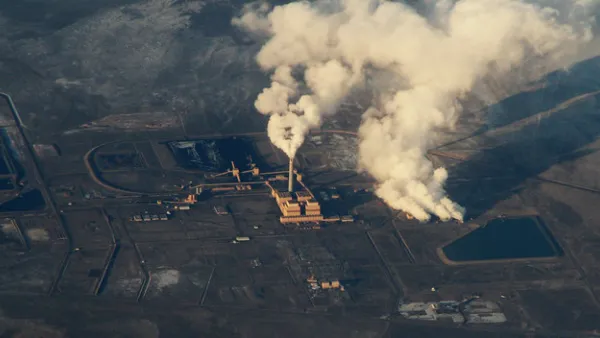
Environmentalists in California are upset that Los Angeles will build a new 840-megawatt natural gas plant to replace a 1,800-megawatt coal plant. The coal plant has been crucial to the economic development of Millard County, Utah.
Green Hydrogen, Plus Storage, Key to Los Angeles' Plan for Carbon-Free Electricity
The Los Angeles municipal utility will convert a Utah coal power plant to run on natural gas in 2025. According to a proposal unveiled Dec. 10, the plant will incrementally be converted to run entirely on hydrogen, a zero-emission fuel, by 2045.
Energy Reliability Vs. the Environment
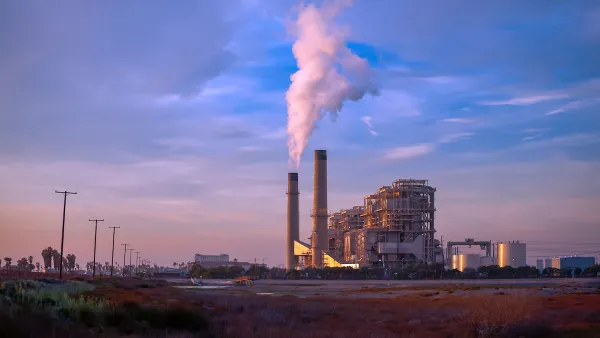
A controversial but unanimous vote by California officials last week to keep three older, coastal natural gas power plants operating beyond their termination dates shows that environmental protection takes a back seat to keeping the lights on.

The state-sanctioned urbicide of Austin
People don’t kill cities. Freeways do.

US to reduce Colorado River water deliveries to Mexico
A new Colorado Treaty amendment reduces Mexico’s Colorado River water allocation by 250,000 acre feet.

New Jersey’s second-largest city bans standalone data centers
Jersey City will continue to allow co-location facilities, such as those meant for research institutions that store their own data.

Amtrak not solely to blame for New Jersey commuter rail's unreliability, report finds
A new study from the Garden State Initiative found that NJ Transit’s budget grew 20% across a 4 year period, but reliability declined significantly over the same period.

EPA erases limits on planet-warming pollution from power plants
Under Monday’s plan, power plants would still have some limits on how much mercury, arsenic and other contaminants they can emit.

Phoenix announces new on-demand transit service, more frequent RAPID buses
Both new services will launch in October, and are part of Phoenix's Project Effective Access Solutions for Easing Congestion.

FREE Course: Walkable City 1: Why Walkability?
After describing his path towards focusing on walkability as the essence of good planning, Jeff Speck marches through his five principal reasons for making more walkable places.
Reinventing Malls: Planning Alchemy—Turning Gray Fields Into Gold
The course focuses on the opportunities and imperatives that shape reinvention of mall sites.

Eagle County Government
Harvard University Graduate School of Design
Nashville Planning Department
The Architects Foundation
University of Cincinnati Online
The Pocatello Development Authority
The Urban Renewal Agency of the City of Pocatello
Journal of the American Planning Association